

The pet food aisle is packed with words like “natural,” “wholesome,” and “clean,” but most of those terms carry zero legal weight when it comes to nutritional completeness or safety. WSAVA guidance cautions pet owners against relying on marketing language and instead urges them to look at company credibility, formulation expertise, and quality control systems. If you’ve ever stared at a bag of kibble wondering whether “natural” actually means anything, this guide will give you the tools to cut through the noise and make genuinely informed choices for your dog or cat.
Table of Contents
- How to evaluate natural ingredients in pet diets
- Top natural ingredients to look for in dog and cat diets
- Natural diets compared: Plant-based, raw, and meat-based options
- Choosing the right approach for your pet
- A holistic take: The uncomfortable truth about ‘natural’ pet diets
- Explore Wild Roots Pet Co. for trusted, natural pet foods and treats
- Frequently asked questions
Key Takeaways
| Point | Details |
|---|---|
| Labels aren’t enough | Only choose foods with evidence-based formulation and transparent ingredient sourcing. |
| Balance matters | Even natural and plant-based diets need vet-reviewed nutrient adequacy, not just good ingredients. |
| Watch for risks | Prepared raw diets may lack key minerals or contain contaminants, so always assess the brand’s safety processes. |
| Choose wisely | Match ingredient choices to your pet’s needs, your values, and always consult your veterinarian for major diet changes. |
How to evaluate natural ingredients in pet diets
The word “natural” sounds reassuring, but it doesn’t tell you much on its own. In the United States, the Association of American Feed Control Officials (AAFCO) defines “natural” as a feed or ingredient derived solely from plant, animal, or mined sources, but that definition says nothing about nutritional balance, safety testing, or quality controls. A food can be 100% natural and still be dangerously incomplete.
What label claims actually mean
When you see “complete and balanced” on a pet food label, that’s the term worth paying attention to. It means the food meets AAFCO nutrient profiles, either through formulation or feeding trials. “Natural” alone guarantees nothing of the sort. “Raw” and “minimally processed” are even less regulated and tell you only about how the food was handled, not whether it’s nutritionally adequate.
- Complete and balanced: Meets AAFCO minimum nutrient standards
- Natural: Derived from plant, animal, or mined sources only; no nutritional guarantee
- Raw: Uncooked or minimally processed; no safety or completeness guarantee
- Grain-free: Removes grains but doesn’t automatically improve nutritional quality
- Limited ingredient: Fewer ingredients, which can help with sensitivities, but not a completeness claim
Questions worth asking before you buy
The WSAVA approach focuses on research-backed formulation and quality control processes rather than ingredient lists or buzzwords. That means asking the hard questions: Who formulated this diet? Is a board-certified veterinary nutritionist involved? Does the company conduct feeding trials or rely only on nutrient analysis? Do they test for contaminants like heavy metals or pathogens? Do they have a recall history?
“The best pet food companies are transparent about who formulates their diets, how they test each batch, and what their quality control systems look like. If a brand can’t answer those questions clearly, that’s a red flag regardless of how beautiful the packaging looks.”
Pro Tip: Look for a phone number or email on the packaging and actually call the company. Ask specifically whether a veterinary nutritionist was involved in formulation. A brand that prioritizes quality will answer that question confidently and in detail.
Transparency also extends to sourcing. Brands that publish where their proteins come from, whether they conduct third-party batch testing, and how they handle recalls are giving you the information you need to make a real decision. Products like all-natural dog chews that clearly disclose their sourcing and processing methods are a good example of what ingredient transparency looks like in practice.
Top natural ingredients to look for in dog and cat diets
Once you know how to evaluate a brand’s credibility, the next step is understanding which specific ingredients deliver real nutritional value. Not every “natural” ingredient is equally beneficial, and the source and form of an ingredient matters just as much as its presence on the label.
High-value animal proteins
Real, named proteins are the foundation of a quality natural diet. Look for chicken, turkey, beef, lamb, or whitefish listed as the first ingredient, ideally as a whole protein rather than a meal. Organ meats like liver and kidney are nutritional powerhouses, delivering concentrated doses of B-vitamins, iron, zinc, and fat-soluble vitamins like A and D. Eggs are another excellent whole-food protein source, providing complete amino acid profiles and highly bioavailable nutrients.
- Whole muscle meats: Chicken, turkey, beef, whitefish, lamb
- Organ meats: Liver, kidney, heart (especially important for taurine in cats)
- Eggs: Complete amino acid profile, highly digestible
- Fish: Rich in omega-3 fatty acids, particularly EPA and DHA
Plant-based additions that actually help
Not all plant ingredients are filler. Pumpkin is genuinely useful as a source of soluble fiber that supports digestive health. Sweet potato provides complex carbohydrates and beta-carotene. Certain herbs like parsley and turmeric have antioxidant properties, though they should appear in small, appropriate amounts. The key is that plant ingredients should complement animal proteins, not replace them, especially for cats who are obligate carnivores.
Omega-3 and omega-6 fatty acid sources
Skin, coat, joint, and brain health all depend on a proper balance of omega fatty acids. Fish oil is one of the most bioavailable sources of EPA and DHA. Flaxseed provides ALA, a plant-based omega-3, though dogs and cats convert ALA to EPA and DHA inefficiently. For cats especially, direct marine sources are far more effective.
Research suggests nutritional adequacy differences can exist for certain nutrients in plant-based complete dog foods compared to meat-based options, which is a critical consideration when evaluating any diet that leans heavily on plant proteins.
Pro Tip: Adding a high-quality single-ingredient food topper is one of the easiest ways to boost the nutritional density of any base diet. A chicken topper adds real protein, while a fish-based topper delivers those critical omega-3s without introducing unnecessary additives.
When single-ingredient treats make the most sense
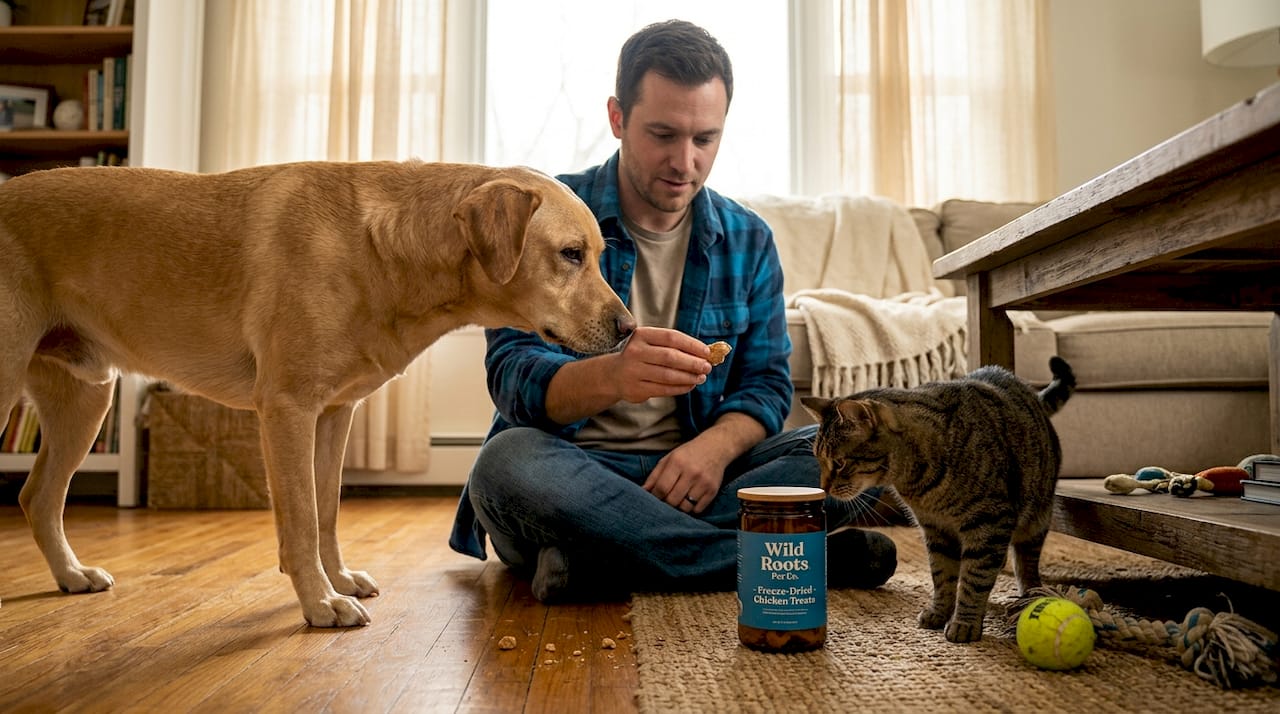
Single-ingredient treats are exactly what they sound like: one protein, nothing added. They’re ideal for pets with food sensitivities, for training where you’re giving many treats in a session, and for owners who want to know precisely what their pet is eating. They also make it easier to identify and eliminate a problematic ingredient if your pet has a reaction.
Natural diets compared: Plant-based, raw, and meat-based options
Understanding the ingredient level is essential, but you also need to see how different diet philosophies stack up against each other. Each approach has genuine strengths and real limitations that aren’t always reflected in marketing materials.
| Diet type | Nutritional strengths | Key risks and gaps |
|---|---|---|
| Meat-based kibble | Consistent, complete, affordable | Highly processed; ingredient quality varies widely |
| Raw meat-based | High protein bioavailability, minimal processing | Pathogen risk, mineral imbalances, rarely complete |
| Plant-based | Environmentally friendly, allergen management | Lower B-vitamins, iodine gaps, amino acid concerns |
| Freeze-dried raw | Minimal processing, long shelf life | Cost, same completeness concerns as fresh raw |
| Mixed/hybrid | Flexibility, variety | Requires careful balancing to avoid gaps |
The plant-based gap
A study analyzing 31 complete dry dog foods found that meat- and plant-based foods were nutritionally similar for many nutrients, but iodine and B-vitamins were consistently lower in plant-based formulations. Some groups also showed deficiencies in essential amino acids. This doesn’t mean plant-based diets are inherently wrong for dogs, but it does mean you need to scrutinize the label far more carefully and ideally consult a veterinary nutritionist before committing.
Cats present an even greater challenge for plant-based diets. As obligate carnivores, they require nutrients like taurine, arachidonic acid, and preformed vitamin A that are found almost exclusively in animal tissues. A plant-based diet for a cat carries significant risk without expert formulation.
The raw diet reality
Raw diets are popular among health-conscious pet owners, and the appeal is understandable. Less processing, recognizable ingredients, and a closer resemblance to ancestral diets all sound compelling. But the research tells a more complicated story. A study of 33 complete preprepared raw dishes found that none were complete for all macro and microelements. Selenium was below minimum recommended levels in every single food tested. Lead levels exceeded permitted limits in two samples.
That’s a sobering finding, especially since selenium deficiency can cause serious muscle and cardiac problems in dogs and cats over time.
Pathogen and contaminant concerns
Beyond nutritional gaps, raw diets carry real pathogen risks. Salmonella, Listeria, and E. coli have all been found in commercial raw pet foods. These pathogens don’t just affect your pet. They can spread to humans in the household, particularly children, elderly individuals, and immunocompromised people.
- Wash hands thoroughly after handling raw pet food
- Clean all surfaces and bowls that contact raw food
- Store raw food separately from human food
- Keep raw food frozen until use and thaw in the refrigerator
Adding a mineral-rich supplement like natural antler powder is one practical way to help address mineral gaps in raw or fresh food diets, providing naturally occurring calcium, phosphorus, and trace minerals in a minimally processed form.
Choosing the right approach for your pet
Knowing the research is one thing. Translating it into daily decisions for your specific pet is another. The right natural diet strategy depends on your pet’s health status, your household’s food safety comfort level, your budget, and your values around things like environmental impact.
A practical checklist for evaluating any natural pet food
- Check who formulated it. Is a board-certified veterinary nutritionist listed? If not, how was nutritional adequacy established?
- Look for AAFCO compliance. Does the label say “complete and balanced” per AAFCO standards? If not, it’s a supplement or treat, not a complete diet.
- Research the brand’s recall history. A single recall handled transparently is less concerning than a pattern of issues or a lack of any published quality data.
- Ask about batch testing. Does the company test finished products for pathogens and contaminants, or only test raw ingredients?
- Evaluate ingredient sourcing. Where do the proteins come from? Are they human-grade? Domestically sourced?
- Consider your pet’s individual health needs. Kidney disease, allergies, obesity, and age all affect which diet type is most appropriate.
“The ‘complete’ label on a raw pet food package may not guarantee full mineral adequacy. Evidence-based risks around minerals and contaminants are real, and asking how a product is tested and controlled is not optional—it’s essential.” Mineral composition of pre-prepared raw pet foods
The role of regular vet review
Even a premium natural diet that looks perfect on paper can fall short for an individual animal. Bloodwork and urinalysis can reveal nutritional deficiencies or excesses before they become clinical problems. Schedule a nutrition-focused vet visit any time you make a significant dietary change, and consider annual or biannual nutrient panels if your pet is on a raw or homemade diet.
FDA recall guidance on Salmonella in raw pet foods makes clear that contamination risk is real and ongoing, affecting both pets and the humans who handle their food. Staying subscribed to FDA recall alerts is a simple, free step every raw-feeding household should take.
Pro Tip: Single-ingredient treats like poultry chip treats are a great way to reward your pet during training without adding nutritional complexity or hidden ingredients to their daily intake.
A holistic take: The uncomfortable truth about ‘natural’ pet diets
Here’s what most pet food content won’t tell you directly: the word “natural” is doing a lot of emotional work in the pet food industry, and it’s not always backed by the science. We’ve seen brands use beautiful photography of whole vegetables and free-range animals to sell products that are nutritionally incomplete or poorly tested. The aesthetic of natural doesn’t equal the reality of it.
The WSAVA framework asks you to look past the packaging and ask hard questions about research-backed formulation and quality control. That’s not cynicism. It’s the kind of critical thinking that protects your pet’s long-term health.
We also think the conversation around raw diets deserves more nuance than it usually gets. Raw feeding communities can be passionate to the point of dismissing legitimate safety concerns. But the research on mineral deficiencies and pathogen risks is real and peer-reviewed. That doesn’t mean raw diets are always wrong. It means they require more diligence, not less.
The healthiest approach we’ve seen combines transparency, evidence, and flexibility. Choose brands that publish their quality data. Use single-ingredient treats like fish chip treats to add variety without complexity. Work with your vet to monitor your pet’s actual health markers rather than assuming a premium price tag guarantees premium nutrition.
Natural pet care at its best is an active, ongoing practice, not a one-time purchase decision.
Explore Wild Roots Pet Co. for trusted, natural pet foods and treats
You’ve done the research. Now it’s time to put it into practice with products you can actually trust.

Wild Roots Pet Co. is built around the same principles you’ve been reading about: ingredient transparency, minimal processing, and single-ingredient simplicity that makes it easy to know exactly what your pet is eating. Whether you’re looking for a poultry chip variety pack for training, a low-fat fish topper to boost omega-3s, or satisfying beef snack pack bundles for on-the-go rewards, every product is sourced with health-conscious pet owners in mind. No mystery ingredients, no marketing fluff. Just clean, purposeful nutrition your dog or cat will love.
Frequently asked questions
Does ‘natural’ on a pet food label mean the diet is safe and complete?
No. Natural claims aren’t regulated for nutritional adequacy, and WSAVA guidance emphasizes evaluating company credibility, formulation expertise, and quality control systems instead of relying on marketing language.
Are plant-based diets healthy for dogs and cats?
Plant-based diets can be adequate for some dogs with careful formulation, but research shows certain nutrients are lower in plant-based foods, particularly iodine and B-vitamins, and cats face much greater risks due to their obligate carnivore biology.
What’s the biggest risk with raw or minimally processed natural diets?
The biggest risks are nutritional gaps and contamination. Research found that none of 33 raw dishes tested were complete for all minerals, and selenium was below minimum recommended levels in every sample.
Can raw pet food spread illness in my home?
Yes. Raw diets can carry Salmonella and other pathogens that affect both pets and people. FDA recall guidance on contaminated raw pet foods underscores the importance of strict hygiene practices when handling these products.
How often should I consult a vet when trying a new natural diet?
Schedule a nutrition-focused vet visit any time you switch to a new diet type, and consider running bloodwork every six to twelve months if your pet is on a raw, homemade, or unconventional natural diet to catch any deficiencies early.
Recommended
- Turkey Chips for Dogs | All-Natural Single-Ingredient Healthy Dog Trea – Wild Roots Pet Co.
- Treat Topper Fish Dog Food Topper | Low-Fat Meal Topper for Pets – Wild Roots Pet Co.
- Beef Crumbles Cat Treats | High Protein Treats for Cats – Wild Roots Pet Co.
- Chicken Chips for Dogs | All-Natural Single-Ingredient Dog Treats – Wild Roots Pet Co.