

You pick up a bag of “all-natural” dog chews at the pet store, feeling good about choosing something wholesome for your dog. Then doubt creeps in: Is this safe? Could it splinter? Is it the right size? You’re not alone. Millions of dog owners want to do right by their pets but find the world of natural chews confusing, full of marketing buzzwords and conflicting advice. This guide cuts through the noise with a clear, step-by-step approach so you can choose, introduce, and use natural chews with real confidence.
Table of Contents
- What makes a dog chew ‘natural’?
- Materials and safety requirements before giving a chew
- Step-by-step process: How to give your dog a natural chew
- How natural chews support dental and overall health
- Troubleshooting and common mistakes to avoid
- What most guides miss: Rethinking ‘natural’ for real safety
- Find safe, healthy chews and treats for your best friend
- Frequently asked questions
Key Takeaways
| Point | Details |
|---|---|
| Natural doesn’t mean safe | Always check chew hardness, size, and materials before giving to your dog. |
| Follow safety steps | Supervise, choose the right size, and limit chew time for maximum benefits and minimal risks. |
| VOHC approval matters | Look for the Veterinary Oral Health Council seal as proof of real dental health results. |
| Chews clean teeth | Safe chewing physically helps remove plaque and stimulates beneficial enzymes in dog saliva. |
| Watch and adjust | Regularly monitor your dog and switch products if you notice signs of harm or excessive wear. |
What makes a dog chew ‘natural’?
The word “natural” gets thrown around constantly in pet product marketing, but it has no strict legal definition in the pet industry. Broadly, a natural chew is one made from animal or plant-based materials with minimal processing and no synthetic additives. Think bully sticks, raw bones, antlers, tendons, and dried fish skins. These are real, recognizable ingredients, not pressed starch shapes dyed to look like bacon.
Here’s where many owners get tripped up: natural does not automatically mean safe. A rock is natural. So is a splintered femur bone. The safe chew selection principle that experts emphasize most is that chew hardness and size can create serious risks, including tooth fractures and gastrointestinal obstruction, regardless of how clean the ingredient list looks.
Common natural chews and their general risk profiles:
- Bully sticks: Highly digestible, low splintering risk, good for most dogs, but calorie-dense
- Antlers: Very hard, long-lasting, but can fracture teeth in aggressive chewers; elk antler chews and deer antler chews are popular choices worth evaluating carefully
- Raw bones: Natural, but cooked bones splinter dangerously; raw marrow bones can be too rich for sensitive stomachs
- Dried tendons and fish skins: Softer, highly digestible, great for puppies and seniors
- Rawhide: Technically natural but heavily processed; swallowing large chunks is a known choking risk
Pro Tip: When evaluating a “natural” chew, flip the bag over and read the ingredient list. One or two recognizable ingredients is the gold standard. If you see a long list of chemicals or preservatives, it’s not as natural as the front label suggests.
The key takeaway here is to look past the marketing and focus on the actual material, how it was processed, and whether it matches your specific dog’s chewing style and size.
Materials and safety requirements before giving a chew
Before you hand your dog anything to chew, run through a quick but thorough safety checklist. Skipping this step is where most chew-related injuries start. The mechanics of chew safety come down to correct size, chew duration, hardness, and supervision. Get those four factors right and you dramatically reduce risk.
“Chew safety is dominated by mechanics: correct size, chew duration, hardness, and supervision largely determine whether the chew functions as enrichment and oral abrasion or becomes a tooth-fracture and GI obstruction hazard.”
The kneecap rule is one of the most practical tests in the chew safety world. Press the chew firmly against your kneecap. If it hurts, it’s too hard for your dog’s teeth. Antlers, large raw bones, and nylon chews can all fail this test for certain dogs, especially those prone to dental issues.
Here’s a comparison of chew types by safety profile:
| Chew type | Hardness level | Best for | Key risk |
|---|---|---|---|
| Bully sticks | Soft to medium | Most adult dogs | Calorie load |
| Split elk antler | Medium | Moderate chewers | Tooth fracture risk |
| Whole elk antler | Hard | Strong, adult chewers | High fracture risk |
| Dried tendons | Soft | Puppies, seniors | Minimal if sized right |
| Raw marrow bones | Medium to hard | Adult dogs | Rich fat, GI upset |
| Nylon chew toys | Varies | Aggressive chewers | Not digestible if swallowed |

For dogs who chew aggressively, an ultra durable nylon dog chew toy can be a safer alternative to hard natural chews that risk fracturing teeth. For puppies and senior dogs with sensitive gums, a soft durability chew toy for gentle chewers made from plant-based ingredients is a gentler option.
Additional safety requirements to check before every chew session:
- Size: The chew should be larger than your dog’s mouth. If they can swallow it whole, it’s a choking hazard.
- Condition: Inspect for cracks, sharp edges, or excessive wear before each use.
- Storage: Keep chews in a cool, dry place. Moisture encourages bacterial growth.
- Your dog’s health: Dogs with dental disease, digestive issues, or allergies need vet-approved chew options.
- Duration: Limit sessions to 15 to 20 minutes, especially for new chews.
Step-by-step process: How to give your dog a natural chew
Following a consistent process turns chew time from a guessing game into a safe, enjoyable routine. Here’s exactly how to do it right.
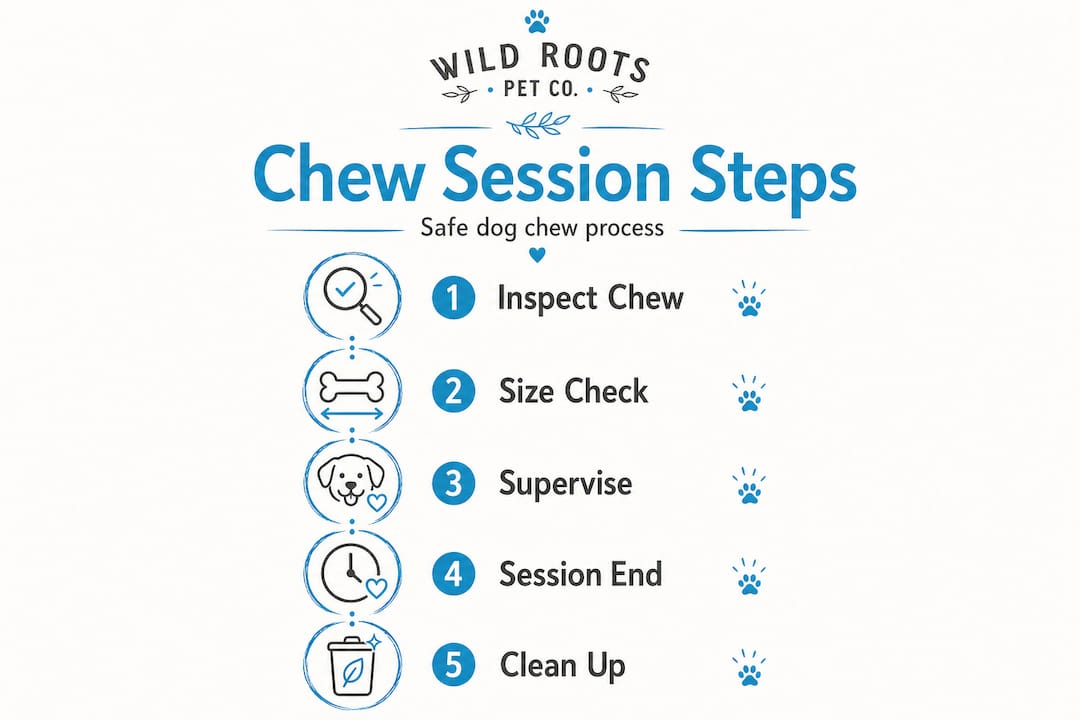
- Inspect the chew before every session. Look for splinters, sharp edges, cracks, or signs of mold. Discard anything that looks compromised, even if it’s mostly intact.
- Match the chew to your dog’s size and chewing style. A chew that works for a 70-pound Labrador is not appropriate for a 15-pound Beagle. When in doubt, size up.
- Introduce new chews in short sessions. Start with 10 minutes for the first few sessions. Watch how your dog handles the chew before extending the time.
- Supervise every session. Never leave your dog alone with a chew, especially a new one. This is the single most important rule.
- Watch for warning signs during chewing. Gagging, pawing at the mouth, excessive drooling, or sudden disinterest can signal a problem.
- Set a timer. Most dogs do well with 15 to 20 minutes of chew time. Longer sessions increase the risk of GI upset from swallowed material.
- Remove the chew when it gets small. Once a chew shrinks to a size your dog could swallow whole, take it away immediately.
- Clean up the area after chewing. Wipe down the floor or mat to remove bacteria and residue. Rinse the chew if you’re saving it for next time.
- Store the chew properly. Wrap it in a paper towel and refrigerate if it’s a moist chew like a bully stick. Dry chews can be stored in a sealed container.
- Log your dog’s reaction. Note any digestive changes, interest level, or wear patterns. This helps you refine your chew choices over time.
If your goal is to improve your dog’s dental health, look for products with the VOHC seal. The Veterinary Oral Health Council evaluates products through clinical trials and awards its seal only to those that demonstrate measurable plaque or tartar reduction. Marketing terms like “cleans teeth naturally” are not the same as VOHC approval.
| Chew session stage | Action | Duration |
|---|---|---|
| Before | Inspect and size-check | 2 minutes |
| Introduction | Supervised, first use | 10 minutes |
| Ongoing sessions | Supervised, timed | 15 to 20 minutes |
| End of session | Remove, inspect for wear | 1 to 2 minutes |
| Post-chew | Clean area, store chew | 3 to 5 minutes |
Pro Tip: For puppies just starting out, a plant-based chew toy for puppies gives them the chewing outlet they need without the hardness risks that come with antlers or bones during teething.
How natural chews support dental and overall health
Chewing does more for your dog than just keep them busy. The mechanics of chewing work through two main pathways: mechanical plaque removal from the abrasive action of the chew against tooth surfaces, and increased saliva production that contains natural enzymes with cleaning properties. Together, these effects reduce the buildup of plaque and tartar that leads to gum disease and tooth loss.
Key dental health benefits of regular, safe chewing:
- Scrapes plaque off tooth surfaces through physical abrasion
- Stimulates saliva flow, which neutralizes bacteria and coats teeth with protective enzymes
- Reduces bad breath by lowering bacterial load in the mouth
- Keeps gum tissue stimulated and healthy through regular pressure
The VOHC sets a clear bar: to earn its seal, a product must reduce plaque or tartar by at least 20% in controlled clinical trials. That’s a meaningful threshold. Not every chew meets it, and many popular “dental” products have never been independently tested. When you see the VOHC seal, you know the claim has been verified by science, not just marketing copy.
Beyond dental health, natural chews deliver significant mental benefits. Dogs are wired to chew. It’s a deeply instinctive behavior tied to foraging, stress relief, and jaw exercise. A dog that gets regular, appropriate chew time is less likely to redirect that drive toward your furniture, shoes, or baseboards. Chewing also releases endorphins, which genuinely calms anxious dogs. Offering natural antler chews as part of a regular enrichment routine supports both physical and behavioral wellness.
Troubleshooting and common mistakes to avoid
Even experienced dog owners make mistakes with chews. Knowing what to watch for keeps small problems from becoming emergencies.
Warning signs to stop a chew session immediately:
- The chew is splintering or breaking into sharp pieces
- Your dog is gagging, coughing, or pawing at their face
- The chew has worn down to a size that could be swallowed whole
- Your dog shows signs of distress or sudden disinterest paired with drooling
- You notice blood on the chew or around your dog’s mouth
“Chew hardness and size can create risks like tooth fractures or GI obstruction.”
Common mistakes owners make:
- Leaving dogs unsupervised with any chew, even familiar ones
- Choosing a chew based on size of the bag rather than size of the dog
- Giving the same chew repeatedly without inspecting for wear
- Using chews as a substitute for interaction rather than a supplement to it
- Not rotating chew types, which can lead to overconsumption of certain nutrients or calories
If your dog swallows a piece of chew, stay calm and assess the size. Small, soft pieces from digestible chews like bully sticks usually pass without issue. A large, hard piece from an antler or bone is a different situation. Watch for vomiting, lethargy, loss of appetite, or straining to defecate. Any of these symptoms after swallowing a piece warrants a call to your vet.
For dogs that are serious power chewers and tend to destroy natural chews too quickly, a wishbone chew toy for aggressive chewers offers a durable, supervised option that satisfies the chewing drive without the splintering risk.
What most guides miss: Rethinking ‘natural’ for real safety
Here’s the uncomfortable truth most chew guides skip over: the word “natural” has become a marketing tool, not a safety standard. We’ve seen owners hand their dogs hard antler pieces the size of a fist because “it’s natural,” then be shocked when a tooth cracks. We’ve also seen dogs thrive on the same antlers for years because the owner took the time to match the chew to the dog, supervise every session, and rotate options thoughtfully.
The real differentiator between safe and unsafe chew use isn’t the ingredient list. It’s the owner’s approach. Smart pet parents treat chew selection the way they treat food selection: they read labels critically, look for third-party verification like the VOHC seal, and pay attention to how their individual dog responds. They don’t assume that because something worked for their neighbor’s dog, it will work for theirs.
There’s also a tendency to over-rely on chews as a dental care solution. Chewing helps, genuinely. But it works best as part of a broader oral care routine that includes regular vet checkups and, ideally, some form of tooth brushing. Treating a chew as a complete dental solution is like treating a multivitamin as a complete diet.
The owners who get the best results from expert advice on natural chews are the ones who stay curious and stay skeptical. They adjust as their dog ages, changes chewing habits, or develops new health considerations. They don’t lock into one product forever. That flexibility, grounded in observation and evidence, is what separates a good chew routine from a risky one.
Find safe, healthy chews and treats for your best friend
Putting this knowledge into practice is much easier when you have access to products that are already vetted for quality and safety.
At Wild Roots Pet, we curate natural chews, treats, and toys with the health-conscious dog owner in mind. From turkey chips for dogs made with a single clean ingredient to durable rubber chew toys built for serious chewers, every product in our store is selected with real safety and nutrition standards in mind. If you want to go deeper on holistic pet wellness, our pet parent holistic health toolkit gives you a complete framework for making confident, informed decisions about your dog’s care from nose to tail.
Frequently asked questions
Are all natural dog chews safe for every breed?
No, breed size and chewing style matter significantly. Some chews are too hard or too small for certain dogs, creating real risks of tooth fractures or choking.
What is the VOHC seal on dog chews and why is it important?
The VOHC seal means the chew has been clinically tested and reduces plaque or tartar by at least 20%, making it a reliable indicator of genuine dental benefit.
How often should I give my dog a natural chew?
Most experts recommend offering a chew 2 to 3 times per week with close supervision and regular inspection for wear between sessions.
What are signs a chew is too hard or dangerous?
If a chew is painful to press against your kneecap, splinters easily, or fits entirely in your dog’s mouth, it’s too risky. Hard items can cause tooth fractures and any chew small enough to swallow whole is a choking hazard.
How do natural chews clean my dog’s teeth?
Chewing removes plaque mechanically through abrasion against tooth surfaces and stimulates saliva that contains natural cleaning enzymes, working together to reduce bacterial buildup.
Recommended
- Healthy pet treats: natural options for dogs and cats – Wild Roots Pet Co.
- Deer Antler Dog Chews | Organic Chews for Dogs – Wild Roots Pet Co.
- Elk Antler Dog Chews | All-Natural Whole and Split Elk Antler Chews fo – Wild Roots Pet Co.
- BetterBone SOFT Durability CHEW TOY: Natural Plant-Based Ingredients, – Wild Roots Pet Co.