

Most dog owners think fetch is just a way to burn off energy. Throw the ball, dog brings it back, repeat until everyone’s tired. But the role of fetch toys in dog behavior goes much deeper than that. Fetch taps into hardwired predatory instincts, builds impulse control, sharpens focus, and can become one of the most powerful reinforcers in your training toolkit. Once you understand what’s actually happening in your dog’s brain during a fetch game, everything about how you play, which toys you choose, and how you structure sessions changes completely.
Table of Contents
- Key Takeaways
- The role of fetch toys in dog behavior and natural predatory drive
- Behavioral benefits: impulse control, focus, and training outcomes
- Choosing the right fetch toys for your dog’s play style
- Safety and management: how much fetch is enough
- Incorporating fetch into training and daily routines
- My perspective on what fetch toys actually change
- Find the right fetch toys at Wildrootspet
- FAQ
Key Takeaways
| Point | Details |
|---|---|
| Fetch mirrors predatory instincts | Fetch toys act as prey substitutes, engaging natural chase and capture drives your dog already has. |
| Toy choice affects engagement | Matching toy features to your dog’s preferred predatory phase determines whether play is satisfying or frustrating. |
| Fetch builds real training skills | Structured fetch improves impulse control, recall, and focus that carry over into everyday obedience. |
| Session length matters | Limiting sessions to 3 to 5 throws followed by 10-minute breaks protects joints and prevents over-arousal. |
| Fetch works as a reward | Play-based reinforcers are reliable and portable, making fetch a practical substitute for food rewards during training. |
The role of fetch toys in dog behavior and natural predatory drive
Your dog isn’t chasing a ball because you taught them to. They’re chasing it because their brain is running a program that evolved over thousands of years. Fetch toys function as prey substitutes, engaging what researchers call the predatory motor sequence: orient, stalk, chase, capture, and possess.
Different dogs get stuck on different phases of that sequence, and that’s where toy choice becomes critical. A Border Collie might go nuts for a toy that moves unpredictably across the ground, because their genetics selected for the stalk and chase phases. A Labrador Retriever might lose interest in a toy the second it stops moving, then light up the moment they get to carry it back. A Malinois might need to shake the toy violently before they feel satisfied.
Here’s what this means practically:
- Chase-oriented dogs need toys with erratic, unpredictable movement. Balls that bounce off-angle or irregular shapes that roll in surprising directions satisfy this phase.
- Capture-oriented dogs respond to toys that give a satisfying “kill” moment. Squeaky toys or toys with give work well here.
- Possession-oriented dogs want to carry and grip. Rope toys, rubber bones, and dumbbells satisfy the possession phase.
“The toy doesn’t create the drive. It directs a drive the dog already has. Your job is figuring out which phase of the predatory sequence lights your dog up, then putting a toy in their hands that delivers exactly that.” — Working Dog Magazine
Pro Tip: Watch your dog during play. If they repeatedly abandon the toy after the chase but before they bring it back, they’re a chase-phase dog. If they grab the toy and refuse to drop it, they’re satisfaction-seeking in the possession phase. Match your toy choice to what you observe.
The impact of toys on dogs is most powerful when the toy matches the dog’s internal motivation. A toy that feels wrong to your dog isn’t a bad toy, it’s just wrong for that dog.
Behavioral benefits: impulse control, focus, and training outcomes
Fetch isn’t just physically tiring. When done with structure, it actively builds the behavioral skills you’re trying to teach in every other training context.
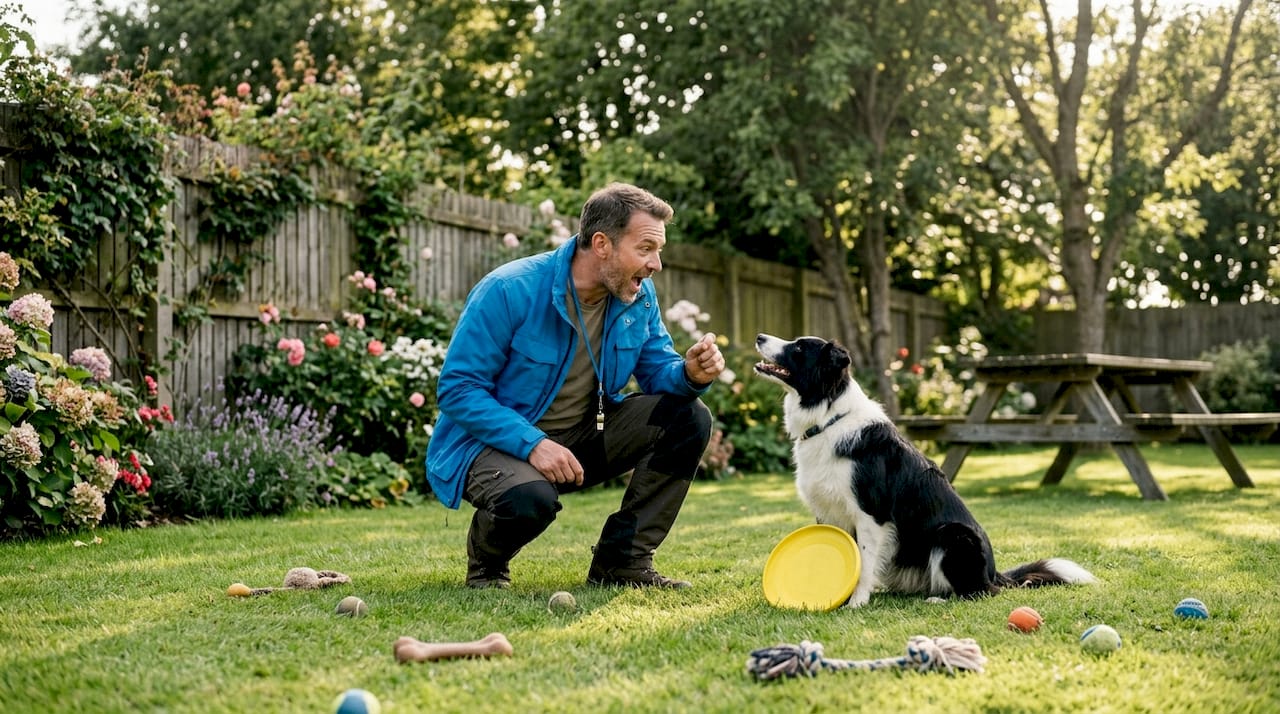
Structured fetch improves impulse control by teaching dogs to wait for permission before chasing. When you ask your dog to sit, hold eye contact, and then release them to retrieve, you’re practicing the exact same neural pathway as “wait at the door” or “leave it” on a walk. The dog is learning to override a powerful urge because you told them to. That skill generalizes.
Here’s a straightforward progression for building those skills through fetch games:
- Start with a sit-wait before every throw. Hold the toy, ask for a sit, pause for 2 to 3 seconds, then release with a consistent cue like “get it.”
- Add duration gradually. Once your dog can hold the sit for 3 seconds, extend it to 5, then 10. You’re building frustration tolerance without a formal training session.
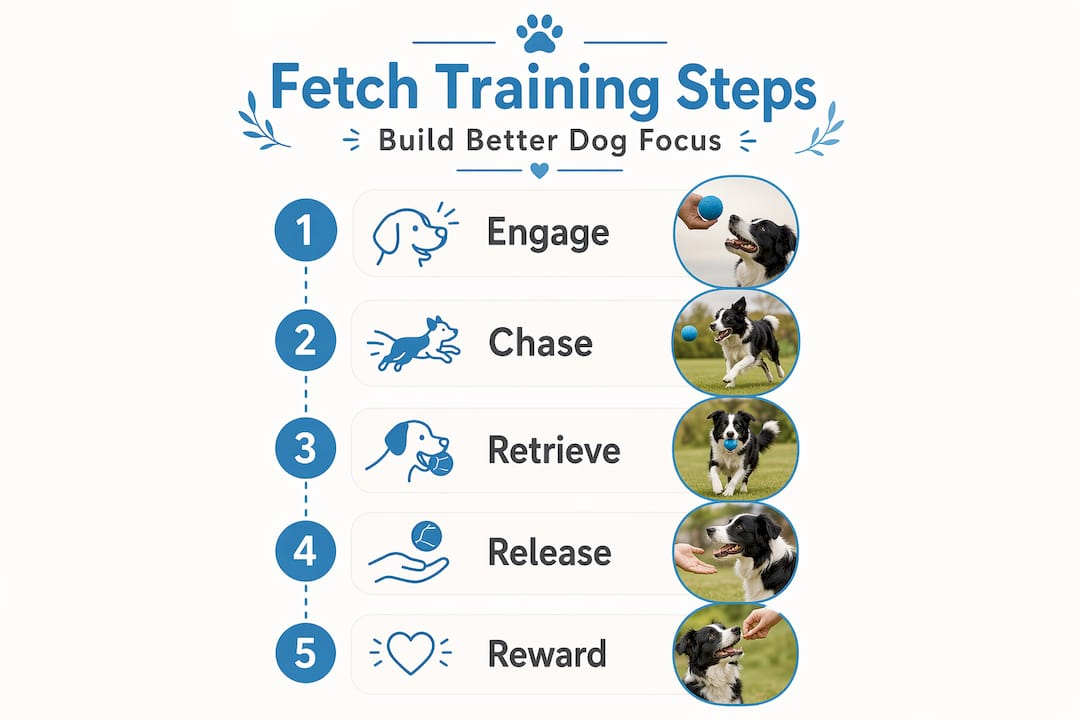
- Require a return to hand. Don’t chase your dog or pry the toy loose. Ask them to bring it to you and give it up voluntarily. This is the foundation of a solid recall.
- Introduce a settle between throws. After retrieval, ask your dog to lie down for 30 seconds before the next throw. This teaches them to regulate their arousal and calm down on cue.
- Use fetch as a reward for obedience. Ask for a sit, down, or heel, then reward with a throw. Play as a reinforcer is highly effective because it can be produced on demand and stays motivating across many repetitions.
Pro Tip: Dogs who are highly toy-motivated often outperform food-motivated dogs in high-distraction environments, because play arousal is more stimulating than a treat. If your dog has a strong fetch drive, use that toy as your primary training reward outdoors.
The fetch toys benefits go beyond the physical. Dogs that get regular structured fetch sessions show better attention to their handlers, faster recall responses, and reduced frustration behaviors during training.
Choosing the right fetch toys for your dog’s play style
Not every dog wants the same thing from a toy, and the wrong toy produces frustration, not fun. Toy features like movement, resistance, texture, and noise need to align with your dog’s preferred predatory phase to produce satisfying play completion.
| Play Style | What They Need | Toy Features to Look For |
|---|---|---|
| Chase-focused | Unpredictable movement | Irregular shape, erratic bounce, lightweight |
| Capture-focused | Satisfying “kill” moment | Squeaker, soft outer shell, some give |
| Possession-focused | Carry and grip satisfaction | Durable rubber, rope, textured grip surface |
| High-drive working dogs | All phases completed | Multi-texture training dummies, tug-to-fetch hybrids |
For chase-focused dogs, the WUNDERball is a strong pick. Its design creates unpredictable bounce patterns that keep high-drive, chase-oriented dogs engaged long after a standard ball would have bored them.
For possession-focused dogs who need resistance and grip, the PUP-X Rubber Bone delivers on texture and durability. Large dogs who like to carry, shake, and grip get the sensory feedback they’re looking for.
A few other factors worth considering:
- Size matters. A toy that’s too small becomes a choking risk. A toy that’s too large stops being fun to carry. Match size to your dog’s jaw comfortably.
- Durability should reflect drive level. High-drive dogs destroy soft toys fast. A toy that falls apart in the first session teaches your dog to disembowel toys, not retrieve them.
- Floating toys open up new play options. Water fetch is lower-impact on joints and enormously satisfying for water-loving breeds.
The importance of fetch in dogs is partly about the activity itself and partly about choosing the toy that makes the activity feel rewarding at a biological level. You can find excellent options in natural toy choices that support both engagement and safety.
Safety and management: how much fetch is enough
Fetch feels harmless, but unchecked it can do real damage. Limiting fetch to 3 to 5 throws per session with 10-minute breaks in between is the recommendation for protecting joints and preventing behavioral burnout. That number surprises most owners, because their dog looks like they want to go forever. That’s precisely the problem.
Dogs don’t self-regulate well during high-arousal activities. They’ll chase a ball through fatigue, dehydration, and early injury signals because the predatory drive overrides the pain signal. Fetch fatigue is also cumulative. The damage from Tuesday’s session compounds with Wednesday’s and Thursday’s if there’s no recovery built in.
There are specific groups that need extra caution:
- Brachycephalic breeds (Bulldogs, Pugs, French Bulldogs) overheat rapidly during fetch. Keep sessions short and cool.
- Puppies under 12 months are at risk of growth plate injury from repetitive high-impact retrieval. Limit distance and surface hardness.
- Senior dogs need softer landing surfaces and shorter throws. Joint stress accumulates differently at 9 years old than at 3.
“Fetch intensity is cumulative. The session that injures a dog rarely looks extreme on its own. It’s the third or fourth session of the day, on top of two weeks of daily overexertion, that finally produces a limp.” — Kinship
Excessive high-arousal fetch play doesn’t just risk physical injury. Dogs who spend too long in a high-stimulation state struggle to settle, become hypersensitive to triggers, and can develop compulsive-like patterns around toys and balls. Managing arousal is as important as managing physical effort. Consulting a healthy pet guide can help you structure sessions that promote wellbeing rather than deplete it.
Incorporating fetch into training and daily routines
The best fetch sessions aren’t just physical exercise. They’re training sessions that happen to feel like play to your dog. Embedding sits and waits into fetch enriches the behavioral payoff and keeps your dog’s brain engaged alongside their body.
Here’s how to build fetch into a full training routine:
- Start each session with 2 minutes of calm leash walking. This shifts your dog’s brain out of ambient arousal before play begins. It also teaches them that calm behavior precedes access to the toy.
- Use the toy as a training reward, not just the activity itself. Ask for heel, down, or recall, then throw the toy as the reward. The training dummy approach used in working dog sports applies this idea directly.
- Alternate fetch with calming enrichment. After a fetch session, offer a chew or sniff activity. This prevents the dog from spiking into over-arousal and helps them learn to come down from high stimulation naturally.
- End on a win. Always finish the fetch session with one clean retrieve and a positive release. Don’t end when the dog finally fails to bring the toy back. You want the last rep to be a success.
Pro Tip: If your dog gets frantic, barky, or unable to settle between throws, your session is too intense. Reduce throws, increase rest periods, and add obedience cues between every single retrieve. Structure is the antidote to over-arousal.
Enhancing dog behavior with toys works best when the toys are part of a system, not an isolated activity. The dog who gets 10 structured fetch throws with obedience embedded is developing better habits than the dog who chases 50 balls in a straight line every afternoon.
My perspective on what fetch toys actually change
I’ve worked with hundreds of owners who come in saying their dog “just doesn’t listen” or “gets too crazy outside.” In a significant number of those cases, the problem isn’t the dog. It’s unstructured, unlimited fetch.
What I’ve learned is that most dogs don’t have a behavior problem. They have an arousal management problem, and fetch, done wrong, makes it worse. When I start asking about the dog’s daily routine, I hear the same story: an hour of ball-chasing every morning, dog still bouncing off the walls by noon, owner exhausted, training sessions going nowhere.
What I’ve found that actually works is starting over with fetch as a structured activity. Three to five throws, obedience embedded, session ends at peak motivation, not at exhaustion. Within two to three weeks, the transformation is real. The dog starts looking to the handler between throws instead of staring at the ball. That attention transfer is everything in training.
The other thing I’d tell any owner or trainer: stop assuming your dog loves every fetch toy equally. I’ve seen dogs completely check out with a standard tennis ball who became a different animal with an unpredictable bounce toy. Understanding individual play motivation is one of the highest-return investments you can make in your training relationship. Spend 20 minutes testing different toys and watching your dog’s response. You’ll learn more in that session than in hours of obedience drilling.
Fetch toys don’t just keep dogs busy. In the right hands, they reshape behavior in ways that most owners never see coming.
— Blayne
Find the right fetch toys at Wildrootspet

At Wildrootspet, the fetch toy selection is built around one idea: the right toy for the right dog, not just the most popular ball on the shelf. Whether your dog is a relentless chaser, a proud carrier, or a power chewer who needs serious durability, you’ll find options designed to match their natural drive.
The WUNDERball fetch toy delivers erratic movement that keeps chase-driven dogs locked in. For dogs who need resistance and grip, the durable rubber options hold up to serious play without falling apart in a session. Pair any fetch routine with the daily wellness formula to support joint health and recovery for active dogs, and consider rewarding clean retrieves with the natural poultry treat pack to reinforce the behaviors you’re building.
FAQ
What is the role of fetch toys in dog behavior?
Fetch toys act as prey substitutes that engage dogs’ natural predatory motor sequence, including chasing, capturing, and possessing. When used with structure, they build impulse control, improve focus, and strengthen the handler-dog relationship.
How many times should I throw the ball in a fetch session?
Research recommends limiting fetch to 3 to 5 throws per session, followed by a 10-minute break, to prevent joint injury and behavioral over-arousal. Cumulative fatigue builds across sessions, so tracking total daily volume matters as much as single-session length.
Can fetch toys really help with dog training?
Yes. Structured fetch sessions teach impulse control, recall, and attention skills that carry over into everyday obedience. Using the toy as a reward rather than just an activity makes fetch one of the most effective play-based reinforcers available.
How do I choose the right fetch toy for my dog?
Observe which phase of the predatory sequence your dog favors. Chase-driven dogs need toys with unpredictable movement. Possession-focused dogs need durable, grippable toys. Matching toy features to your dog’s motivation produces far more engagement than picking by size or price alone.
Is fetch safe for all dogs?
Fetch carries specific risks for brachycephalic breeds, puppies under 12 months, and senior dogs. Short sessions, soft surfaces, appropriate distances, and proper hydration reduce risk significantly. A dog wellness checklist can help you assess whether your dog’s overall routine supports safe, sustainable fetch play.