

Most pet owners spend serious time reading food labels but toss a bright plastic toy into the cart without a second thought. That habit may be costing your pet more than you realize. Research confirms that bisphenol release across polymers used in toys and childcare products is measurable and varies significantly by material. Your dog chews that toy for hours. Your cat bats it around and licks it constantly. What the toy is made of matters every bit as much as what goes in their food bowl. This article walks you through the science, the environmental stakes, and the practical steps to make smarter, greener choices for your pet.
Table of Contents
- Why toy material matters for your pet’s health
- Natural toys vs. synthetic toys: Comparing health and safety
- Eco-friendly toys: Environmental impact of your choices
- Choosing the right natural toys for your pets: Practical tips
- Why ‘natural’ isn’t always simple: Hard-earned lessons for pet owners
- Explore healthier, sustainable pet solutions
- Frequently asked questions
Key Takeaways
| Point | Details |
|---|---|
| Material choice impacts health | The type of toy material directly affects your pet’s exposure to harmful chemicals. |
| Natural toys offer safety | Natural toys generally carry fewer chemical risks and are safer for regular use. |
| Eco-friendly is better | Choosing eco-friendly toys supports both pet wellness and environmental sustainability. |
| Smart choices matter | Not all ‘natural’ toys are equally safe; careful selection is essential for your pet. |
Why toy material matters for your pet’s health
Walk through the toy aisle at any big box store and nearly everything is molded plastic, synthetic rubber, or coated foam. These materials are cheap to produce, easy to color, and hold up reasonably well to moderate chewing. But “holds up well” is not the same as “safe.”
Studies using saliva simulants have found that chemical leaching varies measurably across polymers used in pet toys and childcare products, with bisphenols being among the most concerning compounds detected. Bisphenols like BPA and BPS are endocrine disruptors, meaning they can interfere with hormone regulation at very low concentrations. For a dog or cat that chews the same toy daily for months, cumulative exposure adds up fast.
Why does saliva make this worse? Saliva is warm, slightly acidic, and enzymatically active. Those conditions accelerate the breakdown of polymer chains and speed up the release of chemical additives. A toy that appears intact can still be releasing measurable amounts of chemicals into your pet’s mouth every single session. This is not a theoretical concern. It is why toxicologists use saliva simulants specifically in studies designed to mirror real-world use.
Here is what makes this even trickier for pet owners:
- No federal safety standard specifically governs pet toy materials in the United States or Canada. The standards that limit bisphenols in children’s products do not automatically apply to pet products.
- Color additives used to make toys bright and visually appealing often include synthetic dyes that carry their own chemical exposure risks.
- Fragrance compounds added to “flavored” synthetic toys can mask the presence of chemical residues while adding another layer of exposure.
- Soft plastics like PVC tend to require plasticizers, including phthalates, to achieve their flexible texture. Phthalates are also endocrine disruptors with documented health effects.
Safer material choices include natural rubber, organic cotton, hemp, untreated wood, and naturally derived composites. A moderate durability chew toy built from naturally derived ingredients removes many of those chemical unknowns from the equation. Pair those choices with attention to organic pet food health facts and you are building a genuinely lower-chemical lifestyle for your pet, not just swapping one product.
The real issue is not whether a toy looks sturdy. It is what that toy releases into your pet’s body over hundreds of chewing sessions.
Supporting a wellness formula for pets that avoids common allergens while pairing it with a natural toy gives your pet a more complete, holistic approach to daily health.
Natural toys vs. synthetic toys: Comparing health and safety
Understanding how material affects health, let’s directly compare natural and synthetic options to see which is safer for your pet.
The honest answer is that neither category is perfect in every situation. But when you look at the data side by side, the advantages of natural materials stack up clearly.
| Feature | Natural toys | Synthetic toys |
|---|---|---|
| Chemical exposure risk | Low (minimal additives) | Higher (bisphenols, phthalates possible) |
| Biodegradability | Yes, most decompose naturally | No, most end up in landfill |
| Durability | Moderate to high (varies by material) | High, but degrades into microplastics |
| Certifications available | Organic, non-toxic, GOTS certified | Limited standards for pet products |
| Saliva safety | Generally low leaching | Measurable bisphenol release detected in studies |
| Allergy risk | Lower with unprocessed materials | Higher with dyes and synthetic additives |
| Environmental impact | Minimal, compostable options exist | Significant, microplastic pollution |
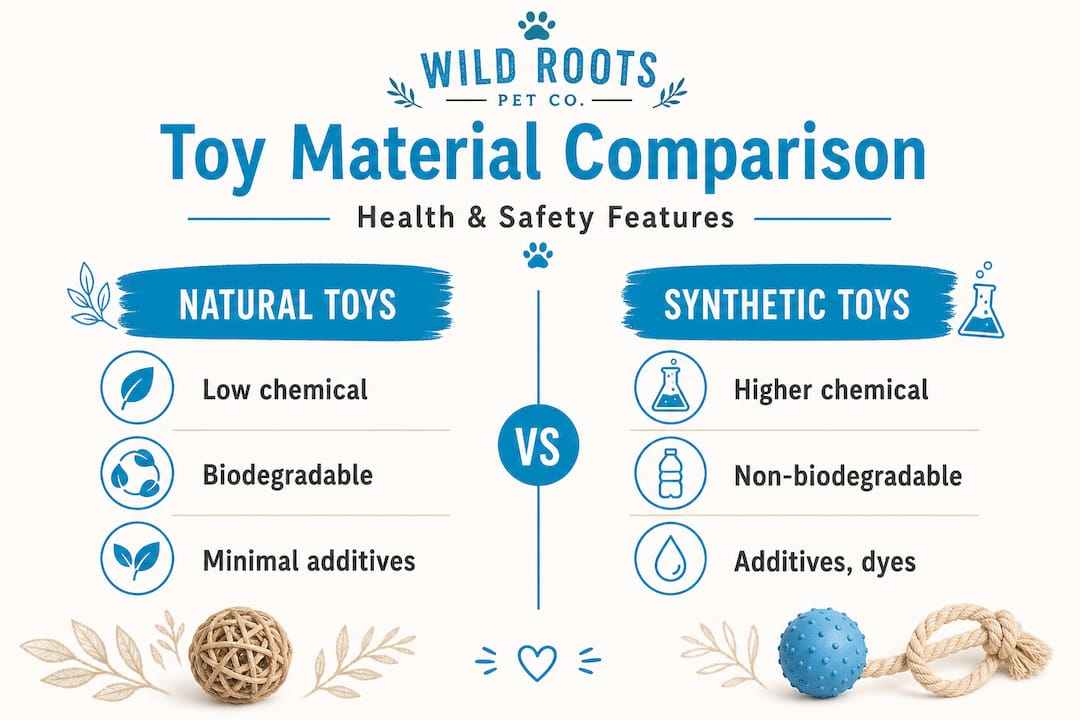
Several things stand out in that comparison. First, durability does not automatically equal safety. Many synthetic toys last a long time but degrade into microplastics over repeated chewing, and those particles are ingested by your pet before you ever notice the toy is breaking down.
Here is a quick framework for evaluating any new toy before you buy it:
- Identify the base material. Is it natural rubber, hemp, cotton, wood, or a synthetic polymer? If the packaging does not name the material, that is a warning sign.
- Check for certifications. Look for GOTS (Global Organic Textile Standard) on fabric toys, ASTM non-toxic certification, or brand transparency about ingredient sourcing.
- Assess color and fragrance additives. Avoid toys with bold artificial dyes or artificial scents unless the brand clearly documents what compounds are used.
- Research the brand’s sourcing practices. Ethical brands that prioritize safety publish their material sourcing openly. Brands that do not often have something to hide.
- Match the toy to your pet’s chewing style. A natural rubber toy rated for moderate chewers will not hold up against an aggressive chewer, and a destroyed toy is a choking hazard regardless of material.
If your dog is a heavy chewer who plays fetch obsessively, the best fetch toy made from safer materials gives you performance without the chemical trade-off. Natural does not have to mean fragile.
When ‘durable’ means ‘durable and non-toxic,’ that is the product worth investing in.
Eco-friendly toys: Environmental impact of your choices
Once you know how toys affect health, it is also important to consider the environment. Natural toys offer real advantages here too, and the differences go well beyond the obvious.
The synthetic toy problem does not end when the toy hits the trash. Plastic and synthetic rubber pet toys are rarely recyclable through standard municipal programs because they are made from composite materials. They go to landfill, where they sit for hundreds of years. During that time, UV light and physical degradation break them into microplastics that leach into soil and water systems. The connection between material safety and environmental safety is direct: some polymers release higher bisphenols, creating a dual burden on both pet health and the surrounding environment.
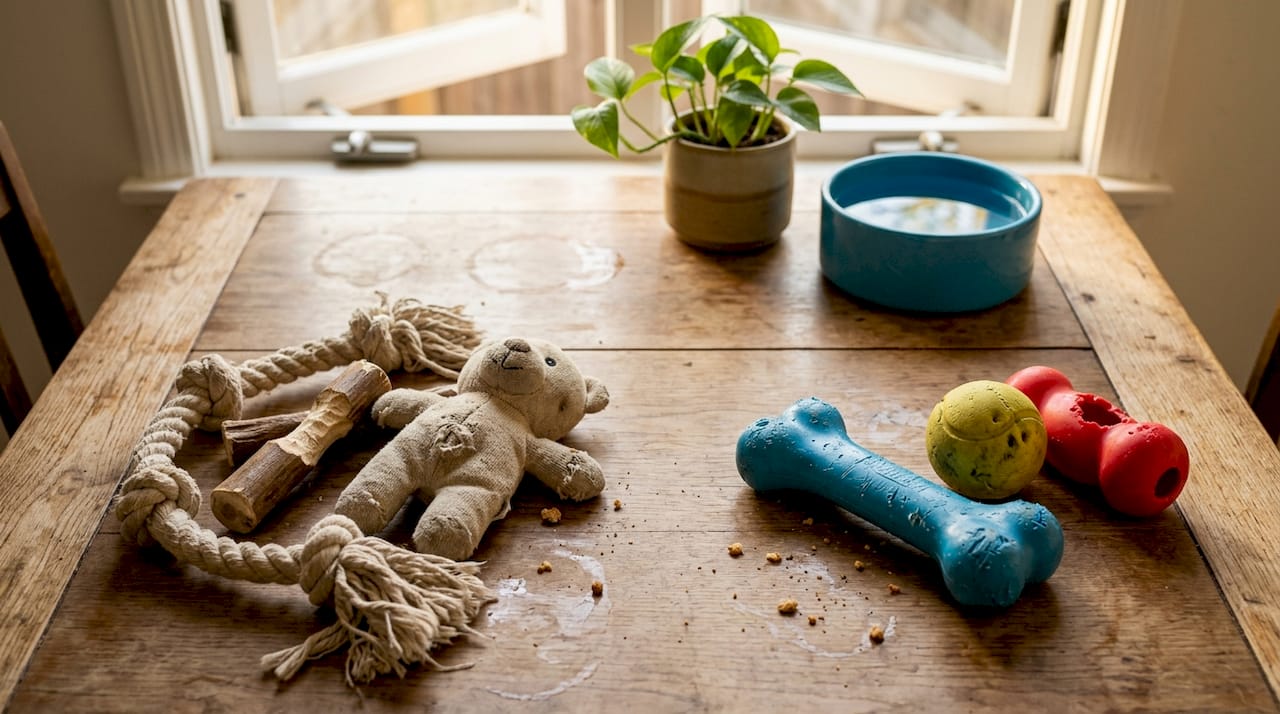
Natural toys made from hemp, organic cotton, untreated wood, or natural latex break down without leaving behind persistent chemical compounds. Some are even compostable at end of life. That is a fundamentally different relationship with the planet, and for pet owners in North America who care about their ecological footprint, it matters.
Here are the key eco-friendly advantages of natural toys:
- Biodegradability: Natural materials return to the soil without releasing harmful compounds.
- Lower carbon manufacturing footprint: Fewer industrial chemicals are needed to produce natural material toys compared to synthetic polymer production.
- Sustainable sourcing options: Hemp and organic cotton can be certified organic, meaning no synthetic pesticides or fertilizers in the supply chain.
- Reduced microplastic contribution: Natural toys do not shed microplastics when chewed, which is especially important for pets who ingest toy fragments during play.
- Support for ethical brands: Buying natural toys often means supporting smaller, mission-driven businesses rather than large-scale chemical manufacturers.
Pro Tip: When you finish with a natural toy, check whether the brand offers composting guidance or a take-back program. A growing number of eco-focused pet brands now provide end-of-life instructions to keep products out of the landfill.
Pairing your toy choices with attention to natural diet choices for pets creates a consistent, toxin-reduced lifestyle across every touchpoint of your pet’s day. And when you walk your dog, swapping plastic bags for eco-friendly pet bags extends that same philosophy to waste management. Small swaps compound into meaningful change over a pet’s lifetime.
Choosing the right natural toys for your pets: Practical tips
Now that you know why natural toys make sense, here is how to pick the best ones for your pet’s unique needs.
Getting this right is not complicated, but it does require a bit of intentionality. Here is a step-by-step approach that works across both dogs and cats:
-
Start with your pet’s chew profile. Light chewers and heavy chewers need different products. A toy designed for moderate use will shred quickly under the jaws of a determined power chewer, and shredded pieces pose ingestion risks. Choose toys rated for your pet’s actual behavior, not the behavior you wish they had.
-
Prioritize material transparency. Brands that openly name every ingredient or material component are the ones worth trusting. Vague terms like “natural rubber” can mean anything. Ask whether it is vulcanized, what curing agents were used, and whether it has been independently tested.
-
Look for certifications that mean something. For fabric toys, GOTS certification is the gold standard. For wood toys, FSC (Forest Stewardship Council) certification ensures responsible sourcing. For latex or rubber toys, look for brands that publish third-party lab results.
-
Avoid unnecessary additives. Synthetic dyes, artificial flavors, and added fragrances serve marketing, not pet health. Natural alternatives tend to reduce exposure to harmful chemicals, so keeping the ingredient list short is always a win.
-
Match size to your pet. A toy that is too small is a choking hazard. A toy that is too large may frustrate a smaller dog or cat. Always follow the weight and breed guidelines provided by the manufacturer.
Pro Tip: Rotate toys every few days. Rotation keeps your pet mentally stimulated, extends the life of each toy, and gives you a chance to inspect for wear and damage before a piece becomes a hazard.
For heavy-duty chewers, a hard durable chew toy built with naturally derived ingredients gives you the toughness your dog demands without synthetic chemicals. And if your dog also loves chewing for oral health benefits, organic antler chews provide a completely natural, long-lasting option sourced without any manufacturing chemicals at all.
Key signs a toy is worth buying:
- Clear material labeling with specific material names
- No synthetic dyes or artificial scents listed or visible
- Third-party safety testing referenced on the packaging or website
- Appropriate size guidance matched to pet weight and breed
- Eco credentials like biodegradability, recycled content, or compostable packaging
Why ‘natural’ isn’t always simple: Hard-earned lessons for pet owners
Here is something the natural pet product industry does not say loudly enough: a “natural” label on its own means almost nothing. The word is not regulated for pet products in the same way it is (imperfectly) regulated in food. Any brand can print “natural” on a toy made with only the most superficial connection to a genuine material.
We have seen this pattern repeatedly. A toy is marketed as natural rubber when it is primarily synthetic polymer with a small rubber component. An “organic cotton” toy ships with bright neon dye that completely undermines any organic claim. A “wood” chew toy uses treated, chemically preserved wood that no one would want their pet gnawing for hours.
The deeper lesson is this: your job as a pet owner is not to find toys with the right label. It is to ask the right questions. Where does the rubber come from? Is it plantation-grown natural latex or synthetic? What curing agents were used in processing? Is the dye food-safe? Does the brand publish third-party test results?
We believe in natural because the science supports it. Genuine natural materials consistently reduce chemical exposure compared to synthetic alternatives. But that belief only holds when the product actually delivers what it claims. Consulting resources on pet diet wisdom reveals the same pattern: the ingredients that genuinely nourish your pet require scrutiny to identify, not just good packaging.
The most health-conscious pet owners we have seen make choices based on verified material sourcing, brand transparency, and third-party certifications. They treat toy shopping like food shopping: critically, with attention to detail, and with a healthy skepticism toward any claim that sounds too simple. That approach is the real competitive advantage for your pet’s long-term health and your own peace of mind.
Balance also matters. A toy made from the most pristine organic cotton that your pet completely ignores is not a win for anybody. The goal is to find toys that are safe, engaging, durable, and genuinely enjoyed. All four of those factors matter. Eco and health goals should enhance your pet’s life, not complicate it.
Explore healthier, sustainable pet solutions
If the research here has you rethinking your toy drawer, you are in the right place to act on it.

At Wild Roots Pet, every toy and chew we carry is selected with the same rigor you just read about: material transparency, safety testing, natural sourcing, and genuine durability. Whether your dog needs a tough daily chewer or your cat needs an engaging, chemical-free play option, our curated catalog makes it easy to find products you can trust. Explore our full range of natural toys, chews, and treats, and pick up the pet wellness toolkit to go even deeper on holistic pet care. Real health starts with real choices, and we have made it simple to shop with confidence.
Frequently asked questions
What chemicals are commonly found in synthetic pet toys?
Synthetic pet toys can contain chemicals like bisphenols (BPA, BPS) and phthalates, which may leach during use particularly when exposed to warm, enzyme-rich pet saliva over repeated play sessions.
Are natural toys always safer than synthetic toys?
Natural toys tend to reduce exposure to harmful chemicals, but they still need to be vetted for material quality and sourcing since the “natural” label alone is not regulated for pet products.
How can I tell if a pet toy is environmentally friendly?
Look for biodegradable or compostable materials, transparent sourcing information, and recognized certifications like GOTS or FSC. Avoid toys made from composite synthetic materials that cannot be recycled through standard programs.
Will switching to natural toys improve my pet’s health?
Natural toys can meaningfully reduce your pet’s daily chemical exposure. Research shows measurable bisphenol release from synthetic polymers, so switching to verified natural materials reduces that cumulative risk over your pet’s lifetime.
Recommended
- Natural ingredients for pet diets: healthier choices – Wild Roots Pet Co.
- BetterBone SOFT Durability CHEW TOY: Natural Plant-Based Ingredients, – Wild Roots Pet Co.
- BetterBone MODERATE Durability CHEW TOY: Perfect Chew for Everyday Che – Wild Roots Pet Co.
- BetterBone HARD DURABLE CHEW TOY: Naturally Derived Ingredients, eco-f – Wild Roots Pet Co.