

If you’ve been researching healthy dog food options and keep landing on air dried dog food, you’re not alone. This category has grown from a niche specialty item into one of the fastest-moving segments in pet nutrition, and for good reason. Many pet owners assume it’s just a fancier version of kibble. It isn’t. Understanding why choose air dried dog food over conventional options comes down to how it’s made, what it preserves, and what that actually does for your dog’s body from the inside out.
Table of Contents
- Key takeaways
- Why choose air dried dog food: the process behind it
- Real health benefits dogs get from air-dried food
- Safety considerations every owner should know
- Air dried dog food versus kibble, raw, and freeze-dried
- Practical tips for choosing and feeding air-dried food
- My take on where air-dried food fits in real life
- Ready to try natural air-dried nutrition from Wildrootspet
- FAQ
Key takeaways
| Point | Details |
|---|---|
| Nutrient preservation is the core advantage | Air drying at low temperatures keeps vitamins, enzymes, and proteins intact in ways high-heat kibble processing cannot. |
| It’s safer than raw but closer to raw in nutrition | Air-dried food reduces pathogen risk while delivering a nutrient profile much closer to a fresh or raw diet. |
| Caloric density means you feed less | Air-dried food is more concentrated than kibble, so smaller portions go further and cost comparisons need to factor this in. |
| Label quality determines product quality | Whole meat ingredients and minimal additives are the clearest markers of a genuinely good air-dried product. |
| Transition slowly for best results | Moving your dog from kibble to air-dried food too quickly can cause digestive upset even when the new food is better quality. |
Why choose air dried dog food: the process behind it
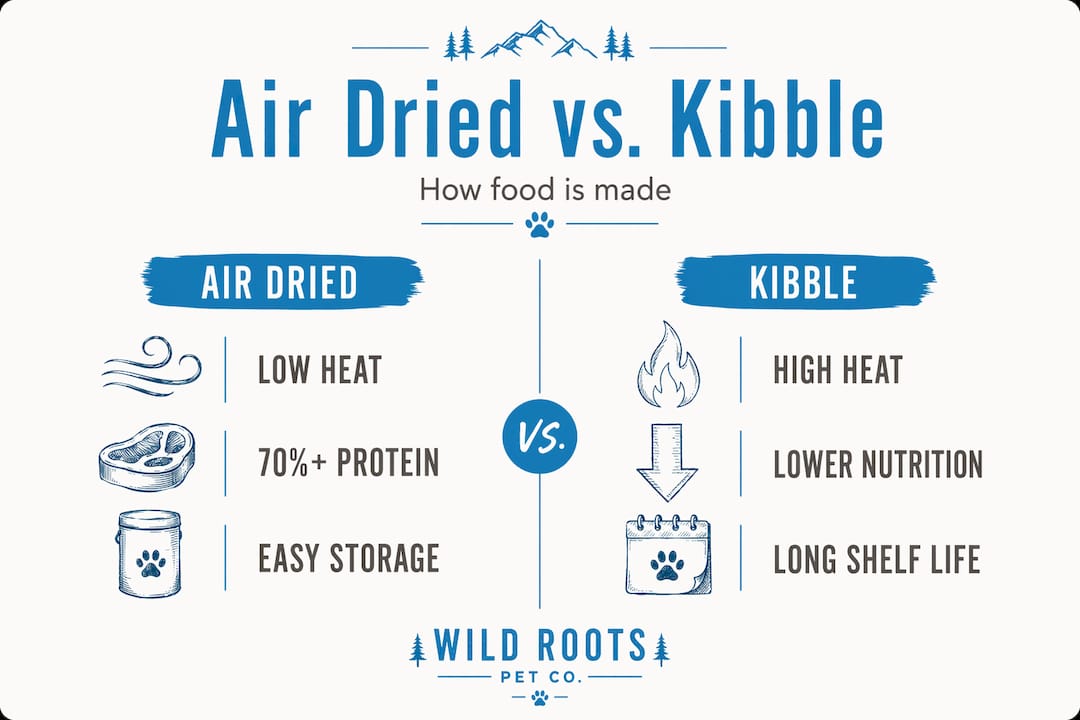
Before you can appreciate the benefits, you need to understand what air dried pet food actually is and how it differs from what most people are already feeding their dogs. Air drying removes moisture from raw ingredients using slow, low-temperature airflow. Temperatures typically stay between 130°F and 170°F throughout the process. That range is low enough to eliminate pathogens while being gentle enough to keep sensitive nutrients intact.
Compare that to kibble. Kibble is made through a process called extrusion, where raw ingredients are pushed through a machine at temperatures that can exceed 300°F under high pressure. That kind of heat destroys a significant portion of naturally occurring vitamins, enzymes, and amino acids. Manufacturers often add synthetic nutrients back in afterward to compensate, which is why you see long ingredient lists with vitamin premixes on most kibble bags. Low-temp air drying maintains structure and flavor in ways high-heat extrusion simply cannot.
Freeze-drying sits at the other end of the spectrum. It preserves nutrients excellently but requires freezing and special storage conditions. Air drying sits in a practical middle ground: stable at room temperature, shelf-stable without refrigeration, and still delivering a nutrient profile far above conventional kibble. Air-dried formats retain higher nutrient levels than extrusion-processed kibble, making the method significant rather than just a marketing angle.
Pro Tip: When reading an air-dried dog food label, look for whole protein sources listed first, such as “beef” or “chicken” rather than “chicken meal” or “poultry by-product.” The closer the ingredient looks to actual food, the less it has been processed.
How air drying compares to other processing methods
| Processing method | Temperature | Nutrient retention | Storage needs | Pathogen risk |
|---|---|---|---|---|
| Extrusion (kibble) | 250°F to 300°F | Low | Room temperature | Low |
| Air drying | 130°F to 170°F | High | Room temperature | Low |
| Freeze-drying | Below freezing | Very high | Room temperature (sealed) | Low |
| Raw | None | Very high | Refrigeration or freezing | Moderate to high |
Real health benefits dogs get from air-dried food
This is where air dried dog food explained stops being abstract and starts mattering to your dog’s day-to-day health. The advantages of air dried pet food show up in digestion, coat quality, energy, and even stool consistency. Pet owners who switch often notice these changes within two to four weeks.
The protein story is the most significant one. Air-dried recipes provide over 70% protein with better digestibility and preserved natural enzymes that support gut health. Kibble proteins are often denatured by high heat, meaning your dog’s body has to work harder to break them down and absorbs less of the actual nutritional value. Air-dried proteins retain their structure and are recognized by the digestive system more efficiently.
Natural enzymes are the underrated piece of this puzzle. Enzymes are proteins that help the body break down food. Heat destroys them. A dog eating air-dried food with intact enzymes is getting built-in digestive support with every meal rather than relying solely on its own pancreatic output. For dogs with sensitive stomachs, this matters a great deal. Balanced dog nutrition requires the right combination of protein quality, digestibility, and micronutrient presence, which air-dried food delivers more consistently than standard kibble.
Key physical benefits regularly reported and supported by nutritional research include:
- Firmer, smaller stools due to higher digestibility and less filler
- Improved coat shine from better fatty acid and protein absorption
- Increased energy and leaner muscle mass
- Reduced bloating and gas compared to grain-heavy kibble
- Better palatability, which helps picky eaters stay on a consistent diet
- Support for gut microbiome diversity through natural ingredients in food
Safety considerations every owner should know
One of the most common questions about is air dried dog food better centers on safety. The honest answer is that air-dried food is generally safer than raw feeding while delivering comparable nutritional density. That’s a meaningful distinction for owners who want the benefits of a raw-adjacent diet without the bacterial exposure risks that come with handling and serving uncooked meat daily.
Air-dried food avoids the need for freezing and reduces foodborne illness risks prevalent in raw feeding. The controlled drying process lowers water activity in the food to a level where most pathogens cannot survive or multiply. That’s the science behind why shelf-stable air-dried food can sit in your pantry safely while raw meat cannot.
That said, storage matters more than many people realize. Moisture reabsorption during poor storage increases spoilage risk significantly. Once a bag is opened, exposure to humidity can allow bacterial growth even in a food that was perfectly safe when sealed. This is not a reason to avoid air-dried food. It’s a reason to store it correctly.
Follow these steps to keep your dog’s air-dried food safe:
- Seal the bag tightly after every use, or transfer the food to an airtight container.
- Store in a cool, dry location away from direct sunlight and heat sources.
- Do not leave food in the bowl for more than two hours in warm weather.
- Wash your hands and your dog’s bowl after each feeding.
- Check the expiration date before purchase and note the “best by” date after opening.
- When transitioning from raw or freeze-dried food, consult your veterinarian if your dog has a compromised immune system.
Pro Tip: If you notice your air-dried food has changed in smell or texture after opening, trust your instincts. A stale or off smell is a signal that moisture has gotten in, and the safest choice is to replace the bag.
Air dried dog food versus kibble, raw, and freeze-dried
Understanding the full picture of air dried dog food versus kibble and other formats helps you make a decision that fits your dog’s specific needs, your lifestyle, and your budget. No single food type is perfect for every dog or every household.
Air-dried raw market segments are growing 18 to 25% annually and account for roughly 35 to 42% of category dollar sales as of 2025. That growth reflects a real shift in how pet owners think about nutrition, not just a trend. The convenience of shelf stability combined with near-raw nutritional quality is a combination that neither pure raw nor kibble can offer.
| Diet type | Nutritional quality | Convenience | Cost per day | Safety |
|---|---|---|---|---|
| Kibble | Moderate | Very high | Low | High |
| Air-dried | High | High | Moderate | High |
| Freeze-dried | Very high | Moderate | High | High |
| Raw | Very high | Low | Moderate to high | Moderate |
Deciding factors that point toward air-dried as the right choice for your dog:
- Your dog has a sensitive stomach or recurring digestive issues
- You want better nutrition than kibble but aren’t ready for raw food prep
- You travel frequently or need shelf-stable food without refrigeration
- Your dog is a picky eater who rejects standard kibble formulas
- You’re concerned about joint health and want better nutrient absorption supporting connective tissue
Cost is the most common hesitation, and it’s fair. Air-dried food costs more per pound than kibble. But air-dried food is calorie-dense, meaning you feed significantly less volume per meal. A 25-pound bag of kibble and a 5-pound bag of air-dried food can cover similar feeding durations when you account for the portion difference. Run the math before assuming it’s out of reach.
Practical tips for choosing and feeding air-dried food
Switching your dog to air-dried food is straightforward when you do it deliberately. The biggest mistake owners make is moving too fast. Start by replacing 25% of your dog’s current food with air-dried, then increase gradually over 10 to 14 days. This gives the digestive system time to adjust and lets you monitor for any reactions.
When selecting a product, prioritize these markers:
- Whole named proteins in the first one or two ingredients (beef, salmon, turkey, lamb)
- Short, recognizable ingredient lists without synthetic binders or excessive fillers
- Clear sourcing information from the manufacturer
- Products made with whole ingredients that reflect minimal processing practices
Portion sizing deserves extra attention. Because air-dried food is so nutrient-dense, overfeeding is easy and common when switching from kibble. Follow the feeding guide on the package as a starting point, but adjust based on your dog’s weight trends over the first month.
Pro Tip: Air-dried food works well as a meal topper if full transition isn’t in your plan right now. Adding a small amount over your dog’s existing diet introduces better nutrition gradually while improving palatability for picky dogs.
My take on where air-dried food fits in real life
I’ll be honest. When I first started looking closely at pet nutrition, I thought the air-dried category was mostly premium packaging on a slightly better kibble. I was wrong about that. What changed my thinking was looking at the actual digestibility data and talking to owners who had switched their dogs. The difference wasn’t subtle for a lot of them.
What I’ve learned is that the conventional framing of dry food versus raw creates a false binary. Air-dried food doesn’t fit neatly into either camp, and that’s actually its strength. It gives you the convenience of shelf-stable dry food with a nutritional profile that doesn’t require you to compromise the way kibble asks you to.
The part that gets glossed over in most discussions is transparency. Not every air-dried product on the market is made the same way. Some brands use the label to charge premium prices for ingredients that aren’t genuinely higher quality. Reading labels matters more in this category than almost anywhere else in pet food. I’d rather see an owner buy a smaller amount of a genuinely well-sourced air-dried food than a large bag of a product that’s just marketing.
The benefits of air dried dog food are real. But they depend entirely on the quality of what’s inside the bag.
— Blayne
Ready to try natural air-dried nutrition from Wildrootspet
If this article has you thinking seriously about upgrading your dog’s diet, Wildrootspet carries a curated selection of natural, minimally processed foods designed for exactly this kind of health-conscious feeding. The focus is on whole ingredients, honest sourcing, and formulas that don’t rely on synthetic fillers to hit their nutritional numbers.

Whether you’re looking for a complete air-dried meal or a high-quality raw meal blend to complement your current feeding routine, the options at Wildrootspet are built around real nutrition. The Raw PMR Beef Meal Blend and the Raw PMR Pork Meal Blend are strong starting points for dogs whose owners want the nutritional density of a natural diet without the prep complexity of full raw feeding. If your dog has specific allergies, the daily wellness formula for pork and beef sensitivities is worth a look too.
FAQ
What is air dried dog food exactly?
Air dried dog food is made by slowly removing moisture from raw ingredients using low-temperature airflow, typically between 130°F and 170°F. This preserves nutrients, enzymes, and flavor while making the food shelf-stable without refrigeration.
Is air dried dog food better than kibble?
For most dogs, yes. Air-dried formats retain more vitamins and natural enzymes than high-heat kibble extrusion, and the protein digestibility is significantly higher. The main trade-off is cost per pound, though caloric density means you feed smaller portions.
How much air dried food should I feed my dog?
Because air-dried food is calorie-dense, you feed less than you would kibble. Always start with the manufacturer’s feeding guide adjusted for your dog’s weight, then monitor body condition over the first month and adjust as needed.
Can I mix air dried food with kibble?
Yes. Many owners use air-dried food as a topper over existing kibble to improve nutrition and palatability without a full dietary switch. It’s a practical way to introduce better quality nutrition gradually.
Is air dried dog food safe for puppies and senior dogs?
Generally yes, but the right formula matters. Look for products with life-stage labeling. Senior dogs and puppies have different protein and calcium needs, and a veterinarian can help you choose the right nutritional profile for your dog’s age and health status.
Recommended
- Turkey Chips for Dogs | All-Natural Single-Ingredient Healthy Dog Trea – Wild Roots Pet Co.
- Freeze-Dried Beef Lung for Dogs – Wild Roots Pet Co.
- Natural ingredients for pet diets: healthier choices – Wild Roots Pet Co.
- Chicken Chips for Dogs | All-Natural Single-Ingredient Dog Treats – Wild Roots Pet Co.