

The best dog toys for mental stimulation are those that match your dog’s cognitive skill level and engage natural instincts through puzzle-solving, treat-dispensing, and scent-based challenges. Cognitive enrichment, the recognized term for this category of play, keeps dogs mentally active, prevents destructive boredom behaviors, and supports calmer behavior at home. Certified trainer Erin Marion confirms that mental work tires dogs more effectively than physical exercise alone. Brands like Kong, Nina Ottosson, and Outward Hound have built entire product lines around this principle, and the right toy for your dog depends entirely on where they fall on the difficulty spectrum.
What are the best dog toys for mental stimulation?
The strongest category of mentally stimulating toys includes puzzle toys, treat dispensers, lick mats, snuffle mats, and chew toys. Each type targets a different set of cognitive and sensory skills, so the best approach is to use several in rotation rather than relying on one format.
- Puzzle toys like Nina Ottosson’s Dog Brick or Dog Tornado require dogs to slide, lift, and spin compartments to uncover hidden treats. They directly challenge problem-solving skills and are available in difficulty levels from beginner to advanced.
- Treat-dispensing toys like the Kong Classic reward dogs for manipulating a rubber or plastic object until food falls out. They encourage persistence and fine motor control with the mouth and paws.
- Lick mats extend feeding time and calm dogs through repetitive licking, which triggers a soothing neurological response. The Wildrootspet Jigsaw Puzzle eMat combines lick mat texture with a puzzle format for higher-challenge sessions.
- Snuffle mats hide kibble or treats in fabric folds, activating a dog’s scent-detection instincts. Nose work is cognitively demanding and tires dogs quickly.
- Chew toys like the Wildrootspet Turtle Nylon Chew Toy activate calming brain responses and satisfy natural instincts while redirecting destructive chewing away from furniture.
Each category serves a distinct purpose. A well-rounded enrichment plan uses at least two or three types across the week.
How to choose the right toy for your dog’s skill level
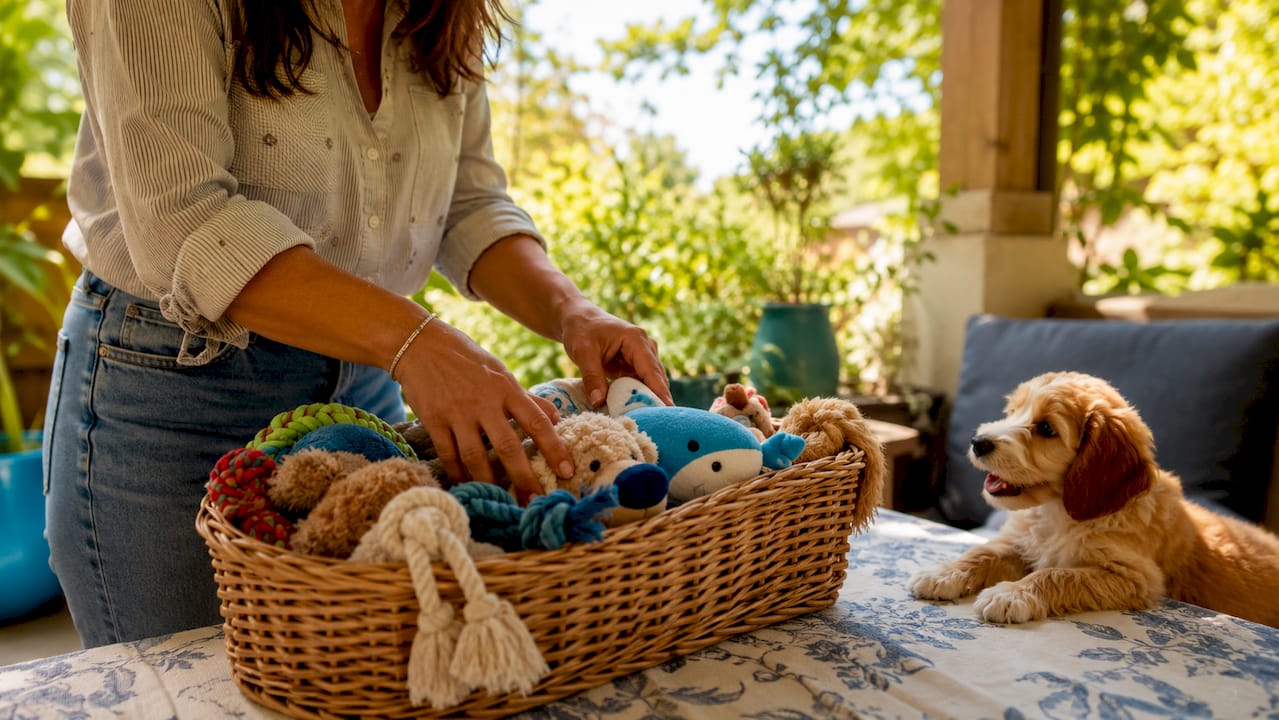
Matching toy complexity to your dog’s ability is the single most important factor in effective enrichment. A toy that is too easy causes boredom; one that is too difficult causes frustration. The goal is a flow state where your dog stays engaged, motivated, and rewarded.
Level 1: Beginner toys
Beginner toys work best for puppies, senior dogs, or any dog new to puzzle play. Examples include simple treat balls that dispense food when rolled, basic rubber Kongs stuffed with kibble, and single-layer snuffle mats. The dog does not need to perform multiple steps to get the reward. Success comes quickly, which builds confidence and interest in future play.
Level 2: Intermediate toys
Intermediate toys introduce two or three steps before the reward is released. The Nina Ottosson Dog Brick falls here. Dogs must slide covers, flip compartments, and sometimes remove pegs in sequence. The Outward Hound Hide N Slide is another strong option at this level. These toys suit dogs who have already mastered basic dispensers and show frustration or disinterest with simpler formats.
Level 3: Advanced toys
Advanced toys are built for high-drive, intelligent breeds like Border Collies, Australian Shepherds, and Belgian Malinois. Multi-step Nina Ottosson puzzles at Level 3 require dogs to complete several distinct actions in sequence. The West Paw Qwizl, which holds treats inside a twisted rubber form, also challenges persistent problem-solvers. Level 3 puzzles are appropriate only after a dog has demonstrated consistent success at Level 2.
Pro Tip: Start one level below where you think your dog belongs. A quick win on the first session builds enthusiasm. You can always increase difficulty in the next session.
Safety and supervision best practices
No interactive dog toy is truly indestructible, and supervision is critical for both safety and toy longevity. This applies to every toy category, including nylon chews marketed as heavy-duty options.
- Inspect toys before every session. Look for cracks, missing pieces, or sharp edges. Discard any toy that shows structural damage.
- Remove toys after play. Storing toys between sessions maintains novelty and prevents unsupervised chewing that could become a hazard. Toys left out permanently lose their enrichment value within days.
- Match toy size to dog size. A toy sized for a small breed becomes a choking risk for a large dog. Always check manufacturer size guidelines.
- Supervise the first few sessions with any new toy. Watch how your dog interacts with it before leaving them alone with it.
- Know your dog’s chew style. Power chewers need toys rated for aggressive chewing, like the Wildrootspet MOD Wishbone Nylon Chew Toy. Gentler chewers can use softer rubber formats safely.
For a complete safety checklist, the Wildrootspet pet toy safety guide covers inspection, storage, and rotation in detail. If you want help identifying which toys are built to last, the Wildrootspet quality identification guide breaks down materials and construction standards.
Pro Tip: Keep a small bin with 3–4 toys in rotation. Swap the entire set every three days. Dogs treat returning toys like new ones.
Comparison of top dog toys for mental enrichment
The table below compares six of the most recommended options across key factors to help you choose the right fit.
| Toy | Difficulty level | Best for | Material | Treat compatible |
|---|---|---|---|---|
| Kong Classic | Level 1–2 | All breeds, beginners | Natural rubber | Yes |
| Nina Ottosson Dog Brick | Level 2 | Intermediate learners | BPA-free plastic | Yes |
| Nina Ottosson Dog Tornado | Level 3 | Smart, high-drive breeds | BPA-free plastic | Yes |
| Outward Hound Hide N Slide | Level 2 | Medium to large breeds | BPA-free plastic | Yes |
| West Paw Qwizl | Level 2–3 | Persistent chewers | Zogoflex rubber | Yes |
| Snuffle mat | Level 1–2 | Scent-driven dogs | Fabric fleece | Yes |
The Kong Classic and Nina Ottosson puzzles rank consistently among trainer-recommended options because they are durable, widely available, and backed by years of real-world use. That track record matters when you are investing in toys meant to last.
Tips for maximizing your dog’s enrichment sessions
Getting the most from stimulating toys for dogs comes down to how you structure sessions, not just which toys you buy.
- Rotate toys every 2–3 days. Offering 3–4 toys and swapping regularly keeps each one feeling fresh and cognitively engaging.
- Combine toy types in one session. Pair a snuffle mat with a treat dispenser to hit both scent and manipulation skills in a single 15-minute block.
- Use enrichment toys during alone time. A stuffed Kong or lick mat given before you leave the house reduces separation anxiety and gives your dog a productive focus.
- Incorporate toys into training routines. Puzzle toys can reinforce patience and impulse control when introduced as part of a structured session.
- Increase difficulty gradually. Once your dog solves a puzzle in under two minutes consistently, move up one level. Staying at the same level too long removes the cognitive benefit.
- End sessions on a win. If your dog gets stuck, simplify the task so they finish with a success. This keeps motivation high for the next session.
Mental enrichment works best as a daily habit rather than an occasional activity. Even 10–15 minutes of focused puzzle play can noticeably reduce hyperactivity and destructive behavior throughout the day.
Key takeaways
The most effective approach to dog mental enrichment is matching toy difficulty to your dog’s current skill level and rotating formats regularly to sustain cognitive engagement.
| Point | Details |
|---|---|
| Match difficulty to skill level | Use Level 1 toys for beginners and Level 3 puzzles for high-drive breeds like Border Collies. |
| Rotate toys every 2–3 days | Swapping a set of 3–4 toys regularly prevents boredom and revives interest in familiar items. |
| Supervise all interactive play | No toy is indestructible; inspect before every session and remove toys after play ends. |
| Combine toy types | Pairing snuffle mats, treat dispensers, and chew toys targets multiple cognitive and sensory skills. |
| Use high-value treats as incentives | Natural treats like liver or fish toppers increase motivation and make puzzle sessions more rewarding. |
Why mental work changed how I think about exercise
I used to believe a tired dog was a happy dog, and I measured that tiredness in miles walked and balls thrown. Then I watched a Border Collie I was caring for spend an hour on a Nina Ottosson Level 3 puzzle and settle into the deepest, most contented sleep I had ever seen from her. No zoomies afterward. No restless pacing. Just done.
That experience shifted my thinking completely. Physical exercise burns energy, but mental fatigue from problem-solving, scent work, and treat-dispensing challenges reaches a different part of a dog’s brain. It satisfies something that running simply cannot.
My go-to recommendation for most dogs is to start with a Kong Classic stuffed with something genuinely motivating, like a fish or liver treat, and observe how long the dog stays engaged. If they lose interest in under three minutes, the stuffing is not compelling enough or the toy is too easy. If they give up in frustration, the stuffing is packed too tightly. That feedback loop tells you more about your dog’s enrichment needs than any product description ever will.
The safety piece is non-negotiable for me. I have seen owners leave dogs unsupervised with toys that were clearly showing wear, and the results were not good. Check every toy before every session. It takes 10 seconds and it matters.
— Blayne
Upgrade your dog’s enrichment sessions with Wildrootspet
The right toy is only half the equation. The treat you use inside it determines how motivated your dog stays throughout the session.
Wildrootspet carries natural, single-ingredient treats designed to work perfectly with interactive and puzzle toys. The Treat Topper Fish is a low-fat, high-aroma option that stuffs easily into Kongs and lick mats, making it a strong motivator for dogs who need a little extra incentive. For high-value rewards during advanced puzzle sessions, Dog Star Liver Treats deliver the kind of scent intensity that keeps even distracted dogs locked in. Both are made without fillers or artificial ingredients, which aligns with the natural, holistic approach Wildrootspet brings to every product in its catalog.
FAQ
What toy type gives dogs the most mental stimulation?
Puzzle toys like Nina Ottosson’s Dog Tornado provide the highest cognitive demand because they require multi-step problem-solving before a reward is released. Combining puzzle toys with snuffle mats covers both reasoning and scent-based enrichment.
How long should a dog’s enrichment session last?
Most dogs benefit from 10–15 minutes of focused puzzle or scent play per session. Mental fatigue sets in faster than physical tiredness, so shorter, more frequent sessions are more effective than one long block.
Can mental stimulation toys reduce destructive behavior?
Yes. Dogs that chew furniture or bark excessively are often under-stimulated cognitively. Chew toys and puzzle toys redirect that energy into productive, satisfying behaviors that reduce anxiety and boredom-driven destruction.
How often should I rotate my dog’s toys?
Swap your dog’s toy set every 2–3 days. Rotating 3–4 toys on a regular schedule keeps each one feeling novel and maintains your dog’s interest in enrichment play over time.
Are puzzle toys safe for puppies?
Level 1 puzzle toys are appropriate for puppies once they are past the initial chewing-everything phase, typically around 4–6 months. Choose toys sized correctly for the breed and supervise all sessions until you understand how the puppy interacts with the toy.
Recommended
- Pet Toy Safety Tips: Your 2026 Checklist – Wild Roots Pet Co.
- How to Identify Quality Pet Toys for Dogs and Cats – Wild Roots Pet Co.
- Jigsaw Puzzle eMat - Enrichment Lick Mat for Dogs and Cats | eMat Enri – Wild Roots Pet Co.
- Strobe Ball Light-Up Dog Toy - Durable Floating Chew Ball | Made in US – Wild Roots Pet Co.