

A quality pet toy is defined by four non-negotiable factors: non-toxic materials, appropriate size, durable construction, and suitability for your pet’s specific play style. Knowing how to identify quality pet toys before you buy protects your dog or cat from choking hazards, chemical exposure, and GI obstructions that send thousands of pets to emergency clinics every year. The difference between a safe toy and a dangerous one is rarely obvious from the packaging. This guide gives you the exact criteria veterinarians and pet safety experts use, applied to real toy categories for both dogs and cats.
How to identify quality pet toys: the core criteria
The foundation of any best pet toys guide starts with three measurable standards: size appropriateness, material safety, and construction integrity. A toy that fails any one of these is a liability, regardless of how appealing it looks on a shelf.
Size is the first filter. The American Humane Society’s mouth-fit test states that a toy should never fit entirely inside your pet’s mouth. If it does, it becomes a choking hazard. For dogs, this means matching toy size to breed and body weight. A toy sized for a Chihuahua is a swallowing risk for a Labrador Retriever.
Durability determines how long a toy stays safe. A toy that holds up on day one but shreds by day three creates loose parts, exposed stuffing, and detached squeakers. All of those become ingestion risks. Choosing toys built from reinforced nylon, natural rubber, or tightly woven rope significantly extends the safe-use window.
Construction integrity means the toy stays in one piece under real play conditions. Seams should be double-stitched on plush toys. Rubber toys should have no thin walls that crack under pressure. Hard plastic toys should have no sharp edges that emerge after chewing.
- Toy size must exceed the pet’s full mouth width
- Materials must be labeled non-toxic and free of BPA, lead, and phthalates
- Seams, joints, and attachments must withstand sustained chewing or batting
- No loose small parts, buttons, or decorative elements that detach easily
Pro Tip: Squeeze rubber toys firmly before buying. If the walls collapse completely under hand pressure, they will crack under a dog’s bite force and create sharp fragments.
What size and durability considerations matter most
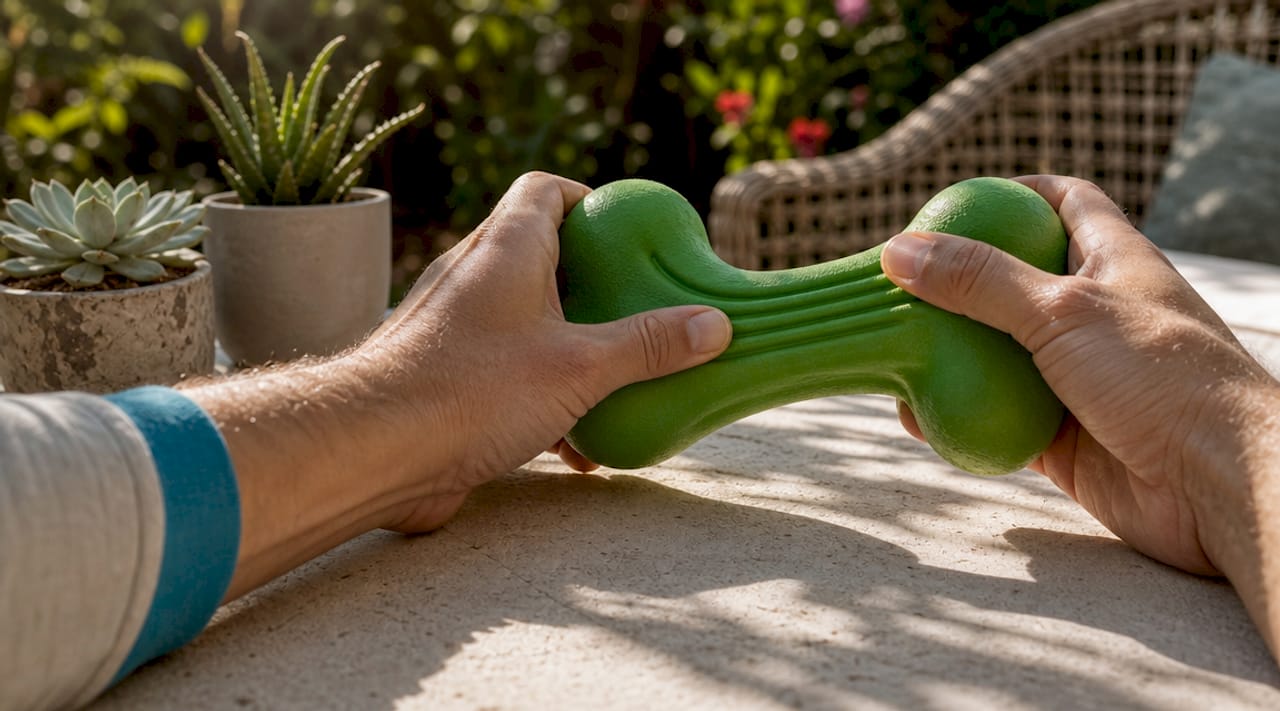
Size and durability are the two factors most directly linked to emergency vet visits. Getting them right is not complicated, but it requires you to assess your specific pet rather than rely on generic “small,” “medium,” or “large” labels printed on packaging.
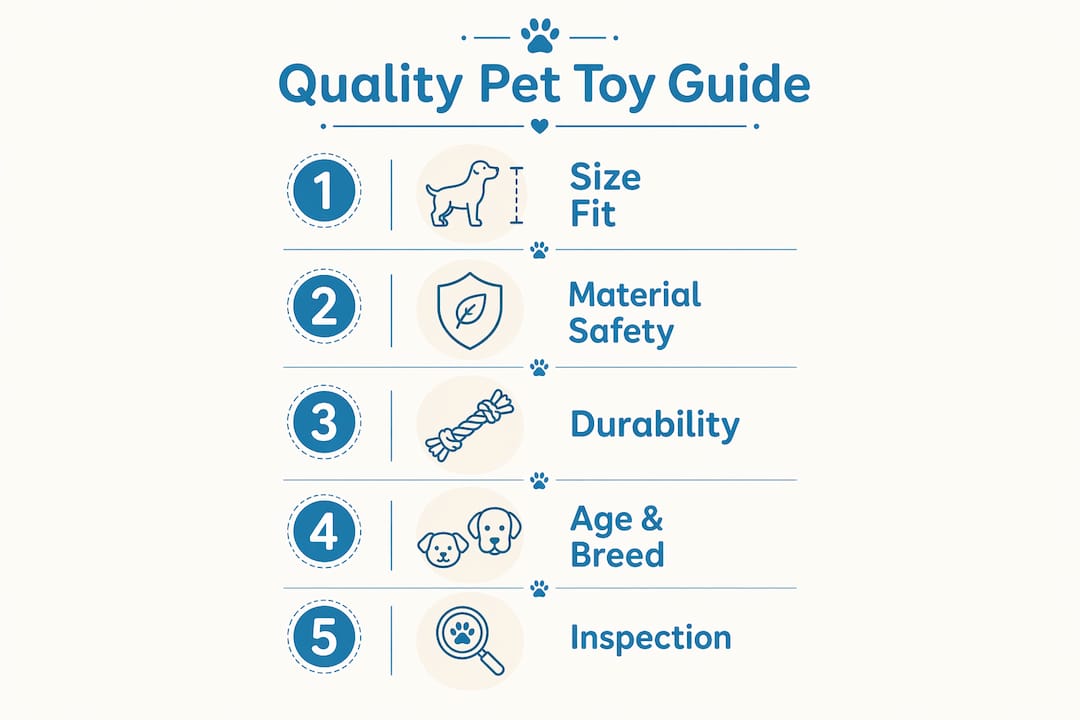
The mouth-fit rule from the American Humane Society is the clearest guideline available. A toy that fits entirely in the mouth is a choking hazard, full stop. For multi-pet households, this means buying to the largest dog’s size standard, not the smallest.
Durability varies by material. Here is how common toy materials compare:
- Natural rubber: High durability, flexible, non-toxic when sourced from reputable brands. Ideal for moderate to aggressive chewers.
- Reinforced nylon: Extremely durable for power chewers. Products like the Turtle Nylon Chew Toy from Wildrootspet are engineered specifically for dogs that destroy standard toys within hours.
- Rope toys: Moderate durability. Safe when fibers stay intact, but dangerous once the rope begins to unravel and individual strands can be swallowed.
- Cheap vinyl or PVC: Low durability and potentially toxic. Cheap vinyl toys may contain lead or phthalates that cause serious health issues with repeated chewing.
- Plush fabric: Low durability for chewers. Safe only for gentle players who carry rather than destroy.
Inspect every toy weekly. Look for cracks, tears, loose threads, and missing pieces. A toy that passes the purchase-day test can become unsafe within days of heavy use.
Pro Tip: Run your thumbnail across any painted or coated surface on a toy. If color transfers, the coating is not cured properly and should not be in your pet’s mouth.
How to evaluate materials and construction for safety
Material safety is the most technically complex part of choosing safe pet toys, and it is the area where marketing language most often misleads buyers. “Natural” on a label does not automatically mean non-toxic. “Durable” does not mean chemically safe.
The specific chemicals to avoid are lead, phthalates, BPA, and formaldehyde-based coatings. These appear most often in toys manufactured without third-party safety testing. Non-toxic, durable materials from trusted brands significantly reduce your pet’s exposure to these compounds. The practical test is simple: buy from brands that publish their material sourcing and testing standards, not just brands that use the word “safe” in their marketing copy.
| Material | Safety rating | Durability | Best for |
|---|---|---|---|
| Natural rubber | High | High | Moderate to aggressive chewers |
| Reinforced nylon | High | Very high | Power chewers, large breeds |
| Organic cotton rope | High | Medium | Gentle chewers, fetch play |
| Cheap vinyl / PVC | Low | Low | Not recommended |
| Polyester plush | Medium | Low | Gentle players only |
| Hard plastic | Medium | Medium | Supervised play only |
Construction quality signals are visible before you buy. Double-stitched seams on plush toys indicate the manufacturer anticipated stress points. Solid-pour rubber toys without hollow centers hold up far longer than thin-walled alternatives. Brands like SodaPup, whose toys are available through Wildrootspet, manufacture in the USA and publish material safety data. That transparency is a direct indicator of construction standards.
Reading labels matters too. Look for “ASTM F963 compliant” or “EN71 certified” markings, which indicate the toy passed independent toy safety standards. These certifications are not required for pet toys in the U.S., so their presence signals a manufacturer that voluntarily holds itself to a higher standard.
Pro Tip: Natural and organic materials are not just a wellness preference. As explained in Wildrootspet’s guide on natural toy benefits, they reduce chemical load and are often more biodegradable when the toy eventually wears out.
How to select toys based on age, breed, and play style
Matching a toy to your pet’s specific profile is what separates a good purchase from a great one. A toy that is perfect for a two-year-old Border Collie is potentially harmful for a twelve-year-old Beagle with dental disease.
The most common mistake is assuming plush toys are universally safe. Plush toys with stuffing or squeakers pose a high risk of intestinal blockage for strong chewers, often requiring surgery. Texas A&M’s College of Veterinary Medicine identifies this as one of the most frequent toy-related emergencies. If your dog shreds rather than carries, plush is not the right category regardless of how cute the toy looks.
Here is a practical framework for matching toys to your pet:
- Assess chewing strength. Watch your dog with a new toy for the first ten minutes. If they have it partially destroyed within that window, they are a power chewer and need reinforced nylon or thick natural rubber options like the PUP-X Rubber Bone.
- Account for age and dental health. Soft rubber toys are the preferred choice for senior pets or those with dental issues, since hard toys can fracture already-weakened teeth.
- Match play style for cats. Cats need toys that trigger prey instincts: wand toys, crinkle balls, and puzzle feeders. Avoid leaving string or ribbon toys accessible unsupervised, since these act as linear foreign bodies if swallowed.
- Prioritize mental stimulation. Enrichment toys that dispense treats or require problem-solving reduce anxiety and boredom. Daily interactive playtime of 20 to 30 minutes reduces destructive behaviors by approximately 60%, according to behavioral research. That is a measurable return on choosing the right toy category.
- Rotate a small set. Keep only two or three toys accessible at a time. Rotating a small set maintains novelty and, more practically, allows you to inspect each toy thoroughly for wear before returning it to rotation.
The fetch category deserves specific attention for dogs. Well-designed fetch toys support both physical exercise and the human-animal bond. Wildrootspet’s resource on fetch toy benefits covers how the right fetch toy also reinforces recall training, making it a dual-purpose investment.
Recognizing and avoiding common toy hazards
The most dangerous pet toys are not always the cheapest ones. Some hazards hide inside otherwise well-made products, and knowing what to look for is the practical core of any pet toy safety checklist.
- Squeakers: The squeaker mechanism inside plush and rubber toys is a swallowing risk the moment it becomes accessible. Once a dog chews through to the squeaker, the toy must be discarded immediately.
- Stuffing and synthetic pellets: Polyester fiberfill and foam beads cause GI obstructions that require surgical removal. Any plush toy with exposed stuffing is no longer safe.
- String, ribbon, and feather attachments: These are the highest-risk category for cats. String and ribbon attachments can cause intestinal perforation if ingested, classified as a surgical emergency. Use wand toys only during supervised play, then store them out of reach.
- Rawhide: Rawhide chews soften with moisture and can break into large chunks that lodge in the throat or digestive tract. Veterinary consensus has shifted away from rawhide toward safer alternatives like natural rubber or nylon chews.
- Hard nylon or antler chews that are too rigid: If you cannot make a dent in the toy with your thumbnail, it is too hard and risks slab fractures of the carnassial teeth.
Discard any toy that shows cracking, tearing, missing pieces, or exposed internal components. A damaged toy is not a toy anymore. It is a hazard.
Providing too many toys at once reduces your ability to inspect for damage, increasing the risk of unnoticed hazards. This is why the rotation strategy from Section 4 is a safety practice, not just a novelty trick. Fewer toys in circulation means more thorough monitoring.
Veterinarians recommend supervising pets with any new toy during the first several play sessions. This is when fit problems, unexpected chewing behavior, and material reactions are most likely to surface. Supervision is not overprotective. It is how you gather the data you need to make the toy permanent or remove it.
Key takeaways
Identifying quality pet toys requires evaluating size fit, material safety, construction integrity, and match to your pet’s age and chewing strength before any toy enters your home.
| Point | Details |
|---|---|
| Apply the mouth-fit test | A toy that fits entirely in your pet’s mouth is a choking hazard regardless of its label. |
| Avoid cheap vinyl and PVC | These materials may contain lead or phthalates and should be replaced with natural rubber or reinforced nylon. |
| Match toy to chewing strength | Power chewers need reinforced nylon or thick rubber; plush toys are only safe for gentle players. |
| Rotate two to three toys | A small rotation allows thorough weekly inspection and keeps novelty without hiding damage. |
| Supervise all new toys | The first few play sessions reveal fit problems and unexpected chewing behavior before accidents occur. |
Why I stopped buying “cute” and started buying tested
I used to pick toys based on how they looked. A plush hedgehog, a squeaky taco, a rope shaped like a pretzel. They photographed well and my dogs seemed excited. Then one of my dogs swallowed a squeaker from a toy I thought was durable, and the emergency vet visit that followed changed how I think about every single toy purchase.
What I learned is that the toy industry for pets has almost no mandatory safety standards. A manufacturer can call anything “safe” without third-party verification. That puts the entire burden of evaluation on you, the buyer. And most of us are not equipped to spot the difference between a toy that is genuinely tested and one that just has good packaging design.
The shift I made was simple: I stopped buying toys without published material sourcing, and I started rotating fewer toys so I could actually inspect them. Two or three toys in circulation means I notice a crack or a loose seam within a day or two. Twenty toys in a basket means damage hides for weeks.
I also stopped treating toy purchases as low-stakes decisions. A $4 toy that causes a $3,000 surgery is not a bargain. Quality toys from brands that test their materials and design for actual chewing behavior are worth every extra dollar. The fetch toy research Wildrootspet has published reinforced something I already suspected: the right toy does more than entertain. It shapes behavior, reduces anxiety, and strengthens the relationship between you and your pet. That is not a small thing.
— Blayne
Toys built for safety, not just shelf appeal
Wildrootspet carries toys engineered to meet the standards this article describes, not just toys that look good in product photos. The PUP-X Rubber Bone is made from non-toxic natural rubber, sized for large breeds, and built to withstand sustained chewing without cracking or shedding fragments. For power chewers that destroy standard toys within hours, the Peanut Nylon Chew Toy offers reinforced nylon construction with no toxic coatings.

Every toy in the Wildrootspet catalog is selected with material safety and durability as the primary criteria. If you are rebuilding your pet’s toy rotation with safety as the standard, this is the right place to start.
FAQ
What is the mouth-fit test for pet toys?
The mouth-fit test means a toy should never fit entirely inside your pet’s mouth. Any toy small enough to be fully enclosed by the jaws is a choking hazard and should be replaced with a larger size.
Which toy materials are safest for dogs?
Natural rubber and reinforced nylon are the safest and most durable materials for dogs. Avoid cheap vinyl or PVC toys, which may contain lead or phthalates that cause health problems with repeated chewing.
Are plush toys safe for all dogs?
Plush toys are only safe for gentle players. Dogs that shred or chew aggressively can access the stuffing and squeaker inside, both of which cause intestinal blockages that often require surgery.
How often should I inspect and replace pet toys?
Inspect toys weekly for cracks, tears, missing pieces, or exposed internal components. Discard any toy showing damage immediately. Rotating two to three toys at a time makes thorough inspection practical.
Are string and ribbon cat toys dangerous?
String, ribbon, and feather attachments on cat toys are safe only during supervised play. If ingested, they act as linear foreign bodies that can perforate the intestine, which is a surgical emergency. Store these toys out of reach when you are not present.
Recommended
- Why natural toys are healthier and greener for your pet – Wild Roots Pet Co.
- USA-K9 Stars and Stripes Rubber Dog Toy | K9 Handler Reward Toy | Red – Wild Roots Pet Co.
- USA-K9 Stars and Stripes Rubber Dog Toy | K9 Handler Reward Toy | Red – Wild Roots Pet Co.
- Turtle Nylon Chew Toy - Ultra-Durable Enrichment Toy for Power Chewers – Wild Roots Pet Co.