

Pet toy safety means selecting appropriately sized, durable, and non-toxic toys matched to your pet’s play style to prevent choking, toxicity, and injury during play. The American Humane Society defines a safe pet toy as one that is the right size for the animal, made of non-toxic materials, and free of small parts that can splinter or be swallowed. Veterinarian Dr. Erin Ray adds that both ends of the size spectrum are dangerous: a toy small enough to swallow whole is a choking hazard, and one too large to grip comfortably can trigger aggressive, destructive chewing. Getting this right is not optional. It is the foundation of every safe play session.
1. Match toy size to your pet’s mouth and chewing strength
The two-sided sizing rule is the single most practical tool in any dog toy safety checklist: the toy must not fit whole into the pet’s mouth, and it must be small enough to allow a comfortable chewing grip. A toy that passes the first test but fails the second will frustrate your dog into chewing harder, which accelerates wear and increases the chance of breaking off large pieces.
Breed and age matter as much as physical size. A Labrador Retriever puppy and a senior Chihuahua may weigh the same, but their jaw strength, chewing style, and dental health are completely different. Dr. Erin Ray specifically recommends softer rubber toys for dogs with arthritis or dental problems, since hard toys can cause tooth fractures and pain in already-compromised mouths. Senior pets need the same enrichment as younger ones, just with materials calibrated to their physical condition.
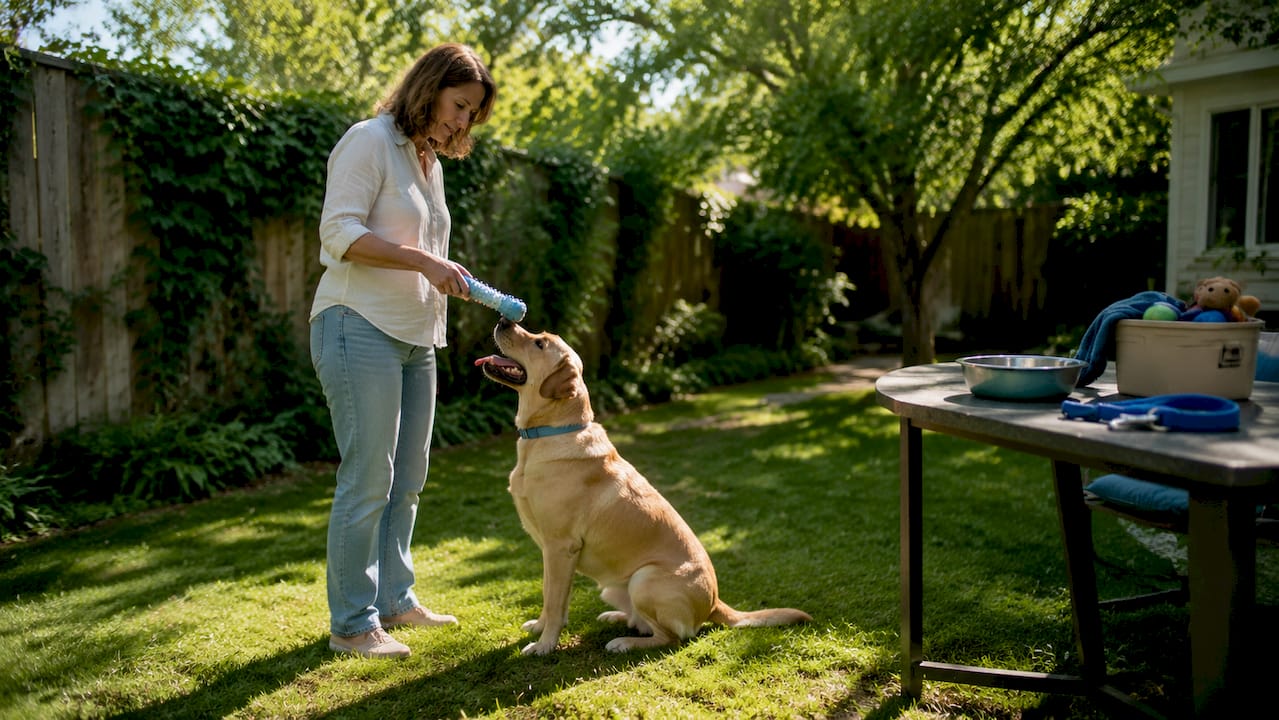
For cats, the sizing logic shifts toward linear and interactive toys. A toy mouse or feather wand keeps cats engaged without the ingestion risk of a small rubber ball. The goal is matching the toy’s design to how your specific pet actually plays, not just how the packaging says they should.
2. Prioritize non-toxic, food-grade materials
Cheap vinyl and PVC toys can contain lead, phthalates, and other chemicals that disrupt hormones and damage organs over time. This risk is highest in low-cost toys from unverified manufacturers, where safety labeling is absent or misleading. Dr. Erin Ray warns that the price point of a toy is often a direct signal of its material quality.
Non-toxic, food-grade rubber is the gold standard for chew toys. Brands like KONG and West Paw use materials that are tested for safety and durable enough to withstand aggressive chewing. When reading labels, look for “BPA-free,” “phthalate-free,” and “food-grade” designations. If a toy has no material information on the label, that absence is itself a red flag.
Natural materials are another strong option. Wildrootspet covers why natural toy materials are safer and more environmentally sound than synthetic alternatives. For pet owners who already prioritize natural food and treats, extending that standard to toys is a logical and meaningful step.
3. Avoid small detachable parts and linear hazards
Plush toys with button eyes, sewn-on bells, or decorative ribbons are among the most common sources of toy-related injuries. Once a seam tears, the synthetic stuffing inside becomes an ingestion hazard that can cause gastrointestinal blockage. Plush toys tear easily, and the squeakers inside are small enough to lodge in a dog’s airway.
For cats, the danger category is linear foreign bodies: strings, ribbons, tinsel, and yarn. Linear objects can anchor under the tongue or at the pylorus and cause the intestine to bunch and perforate as the cat’s gut tries to move the obstruction. This is a surgical emergency, not a wait-and-see situation.
Here is a practical checklist of features to avoid when selecting toys:
- Button eyes, plastic noses, or glued-on decorations on plush toys
- Squeakers that are accessible once the outer layer tears
- Toys with attached strings, ribbons, or elastic cords
- Thin vinyl or PVC toys with no safety labeling
- Toys with sharp molded edges from low-quality manufacturing
Pro Tip: Remove any decorative attachments from plush toys before giving them to your pet. A plain stuffed toy without buttons or sewn-on parts is significantly safer than the same toy with decorations intact.
4. Build a toy inspection routine
Toy safety is a lifecycle, not a one-time purchase decision. Hazards develop over time as toys wear, crack, or lose structural integrity. The Montecito Animal Clinic describes this lifecycle in four stages: purchase, supervised initial play, ongoing inspection, and retirement when wear appears.
Here is how to build that routine into your weekly schedule:
- Inspect every toy once a week. Look for cracks, missing chunks, frayed edges, or exposed stuffing. Run your fingers along seams and squeaker pockets.
- Replace immediately when damage appears. A cracked rubber toy has sharp edges. A torn plush toy has loose stuffing. Neither is safe to continue using.
- Rotate toys every few days. Toy variety reduces boredom and limits the wear any single toy accumulates. A toy that sits in a bin for a week gets less chewing time than one that is always available.
- Supervise the first session with any new toy. Watch how your pet interacts with it. If they immediately try to tear it apart rather than chew or fetch, the toy is not the right type for their play style.
- Retire toys proactively. Do not wait for a toy to fully disintegrate. Once it shows visible wear, it has already passed the point of safe use.
Pro Tip: Keep a small bin labeled “to retire” near your pet’s toy storage. When a toy fails inspection, it goes directly into that bin rather than back into rotation. This removes the temptation to give it “one more use.”
5. Recognize the signs of toy-related ingestion or injury
Foreign object ingestion symptoms can start subtly and worsen within hours. Knowing what to watch for after a play session with a new or damaged toy can be the difference between a quick vet visit and emergency surgery.
Watch for these warning signs after play:
- Vomiting, especially repeated or unproductive retching
- Lethargy or sudden disinterest in food and water
- Pawing at the mouth or excessive drooling
- Abdominal bloating or visible discomfort when touched
- Behavioral changes such as hiding, whimpering, or restlessness
Never pull a string or ribbon out of your pet’s mouth or rear end. Pulling visible string can cause the intestine to bunch further and perforate. Get to a veterinarian immediately and let them handle removal with imaging guidance.
If you suspect ingestion, do not wait for symptoms to escalate. Veterinary imaging is the only reliable way to determine whether a foreign object is passing safely or requires intervention. Early assessment is almost always less invasive and less expensive than treating a perforation or blockage.
6. Compare popular toy types by safety and suitability
Not all toy categories carry the same risk profile. This comparison covers the five most common types to help you build a safer toy rotation.
| Toy type | Safety level | Main risk | Best suited for |
|---|---|---|---|
| Rubber chew toys (e.g., KONG, West Paw) | High | Cracking under extreme chewing | Power chewers, all ages |
| Plush/stuffed toys | Medium | Stuffing and squeaker ingestion | Gentle chewers, supervised play only |
| Rope toys | Medium | Fiber ingestion when frayed | Fetch and tug play, not solo chewing |
| Edible chews (natural) | High when sized correctly | Choking if too small or softened | Dogs with appropriate chew intensity |
| Interactive puzzle toys | High | Small removable parts | Mental enrichment, supervised sessions |
Rope toys deserve a specific note. They are popular and durable during fetch and tug games, but once the fibers begin to fray, individual strands become linear foreign body hazards. The same logic that applies to ribbons and strings applies to a rope toy that has started to unravel. Retire it before it reaches that stage.
For a deeper look at how to choose between natural chew options, Wildrootspet’s guide to safe natural chews covers sizing, material, and supervision in practical detail.
Key takeaways
Safe pet toys require matching size, material, and play style to your individual pet, then inspecting and retiring toys on a consistent schedule to prevent choking, toxicity, and injury.
| Point | Details |
|---|---|
| Size both ways | A toy must not fit whole in the mouth and must allow a comfortable chewing grip. |
| Material matters | Choose food-grade, non-toxic rubber or natural materials; avoid cheap PVC and unlabeled toys. |
| Remove detachable parts | Buttons, bells, ribbons, and squeakers become hazards once the toy’s outer layer is compromised. |
| Inspect weekly, retire promptly | Cracked, torn, or frayed toys should be removed from rotation immediately, not used until fully destroyed. |
| Act fast on ingestion signs | Vomiting, lethargy, or behavioral changes after play require same-day veterinary evaluation. |
What I’ve learned from watching pet owners get toy safety wrong
Most pet owners I talk to think toy safety is about buying the “right brand.” It is not. The brand matters less than the match between the toy and the specific animal using it. I have seen premium rubber toys become choking hazards because they were sized for a medium dog and given to a large-breed power chewer who broke off a chunk in the first session. The toy was not defective. It was mismatched.
The other mistake I see constantly is treating toy inspection as optional. Pet owners buy a toy, the pet loves it, and it stays in the rotation until it is visibly destroyed. By that point, the toy has already shed pieces, frayed edges, or cracked in ways that created real ingestion risk weeks earlier. A five-minute weekly check prevents the kind of emergency vet visit that costs hundreds of dollars and causes genuine suffering.
The insight that changed how I think about this: toy safety is not a purchase decision. It is an ongoing practice. The American Humane Society’s lifecycle framework, from purchase through retirement, reflects how hazards actually develop. They do not appear at the moment of purchase. They accumulate over time. Build the inspection habit before you need it, not after something goes wrong.
— Blayne
Safe toys pair with smart nutrition at Wildrootspet
Keeping your pet safe goes beyond the toy bin. At Wildrootspet, the same philosophy that drives toy selection, natural, high-quality, and matched to your pet’s needs, runs through every product on the site.
If your dog earns a treat after a good play session, make it count. The Treat Topper Fish Dog Food Topper is a low-fat, natural option that complements an active, health-focused routine without the fillers and additives found in conventional treats. Pair safe toys with clean nutrition and you are covering both sides of your pet’s daily wellbeing. Browse the full range at Wildrootspet to find products that match your standards.
FAQ
What makes a pet toy safe?
A safe pet toy is the right size for the pet, made of durable non-toxic materials, and free of small detachable parts that can be swallowed. The American Humane Society recommends inspecting toys regularly and replacing damaged ones immediately.
How do I know if a toy is the right size for my dog?
The toy should not fit whole into your dog’s mouth, and it must be small enough to allow a comfortable chewing grip. Dr. Erin Ray’s two-sided sizing rule covers both choking and aggressive chewing risks in a single check.
Are plush toys safe for dogs?
Plush toys are safe for gentle chewers under supervision, but they carry real risks once seams tear and expose stuffing or squeakers. Dogs that chew aggressively should not have unsupervised access to plush toys.
What should I do if my cat swallows a string?
Go to a veterinarian immediately and do not attempt to pull the string out. Linear foreign bodies like strings and ribbons can anchor in the gut and cause bowel perforation if pulled, making professional imaging and removal the only safe option.
How often should I replace pet toys?
Replace toys as soon as they show visible wear, cracking, fraying, or missing pieces. A weekly inspection routine, as recommended by Montecito Animal Clinic, catches hazards before they cause injury.
Recommended
- Why natural toys are healthier and greener for your pet – Wild Roots Pet Co.
- Why Avoid Artificial Pet Treats: A 2026 Health Guide – Wild Roots Pet Co.
- Safe Human Foods for Pets: What You Should Feed – Wild Roots Pet Co.
- Types of dog chews: Choosing safe, healthy options for every pup – Wild Roots Pet Co.