

Artificial pet treats are products containing synthetic preservatives, colors, flavors, and sweeteners that can negatively impact your pet’s health over time. The term “artificial pet food additives” covers a broad category of chemicals added to treats for cosmetic appeal and shelf stability rather than nutritional value. Research published in 2026 by Inserm links food colorants and preservatives to increased risks of cancer and cardiovascular disease in humans, raising serious parallel concerns for pets. This guide breaks down exactly why you should avoid artificial pet treats, which ingredients to watch for, and what safer options look like in practice.
Why avoid artificial pet treats: the additives behind the risk
The most common artificial additives in pet treats fall into four categories: synthetic preservatives, artificial colors, artificial flavors, and chemical sweeteners. Each one serves a manufacturing purpose, but none of them contributes to your pet’s nutritional needs.
The synthetic preservatives you will encounter most often include:
- BHA (butylated hydroxyanisole) and BHT (butylated hydroxytoluene): Used to prevent fat oxidation; both face scrutiny for carcinogenicity and organ injury despite being within regulatory limits.
- Ethoxyquin: A potent antioxidant preservative that has been banned in the EU since 2020 for animal feed but remains approved in the United States. It has been linked to allergic reactions and possible organ toxicity in dogs.
- Propyl gallate: Another synthetic antioxidant often paired with BHA or BHT.
- Artificial colors (Red 40, Yellow 5, Blue 2): Added purely for visual appeal to the owner, not the pet. Dogs and cats have limited color vision and gain nothing from these dyes.
- Artificial flavors: Broad chemical compounds designed to mimic meat or other appealing tastes.
- Xylitol: An artificial sweetener occasionally found in pet products that is highly toxic to pets, causing severe hypoglycemia and liver failure even in small amounts.
These additives exist because they make treats cheaper to produce, longer-lasting on shelves, and more visually attractive to buyers. They serve the manufacturer’s interests, not your pet’s biology. Understanding natural ingredients for pet diets is the first step toward making better choices.
Pro Tip: When reading a treat label, scan the last third of the ingredient list. Additives are listed by weight, so synthetic preservatives and colors often appear near the end. If you cannot pronounce three or more consecutive ingredients, put the bag back.
What health risks do artificial pet treat ingredients cause?
The dangers of artificial pet treats range from immediate reactions to long-term chronic conditions. Acute effects include allergic skin reactions, digestive upset, vomiting, and hyperactivity. Long-term exposure is where the evidence becomes more alarming.
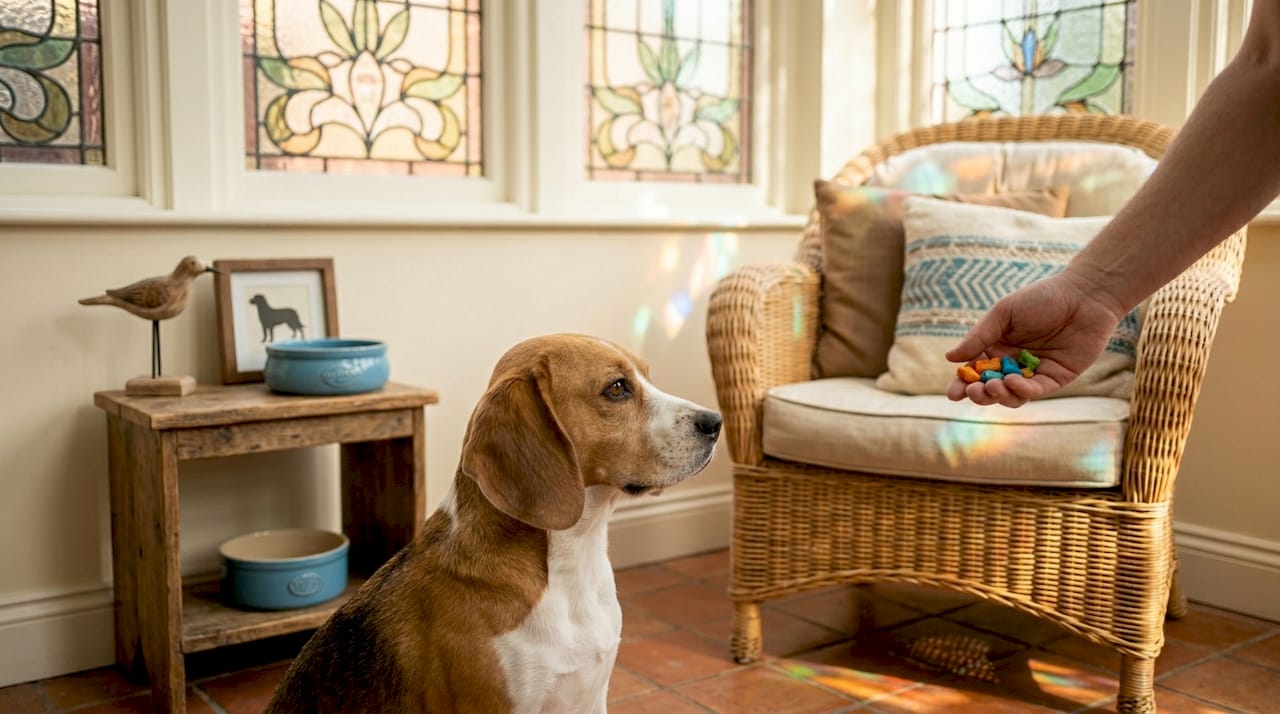
The 2026 Inserm studies found that high consumers of food colorants and preservatives faced a 29% increased hypertension risk compared to low consumers. While this data comes from human studies, veterinary researchers apply the same precautionary logic to pets, who consume these additives in concentrated treat form daily. A small dog eating several artificially preserved treats per day faces a proportionally significant additive load relative to body weight.
Behavioral effects are another underreported concern. Strong evidence connects artificial food colors to hyperactivity and mood disruption in children. Veterinary behaviorists have begun drawing the same parallel for pets, particularly dogs showing unexplained anxiety or restlessness. The mechanism, disruption of neurotransmitter pathways by synthetic dye metabolites, is not species-specific.
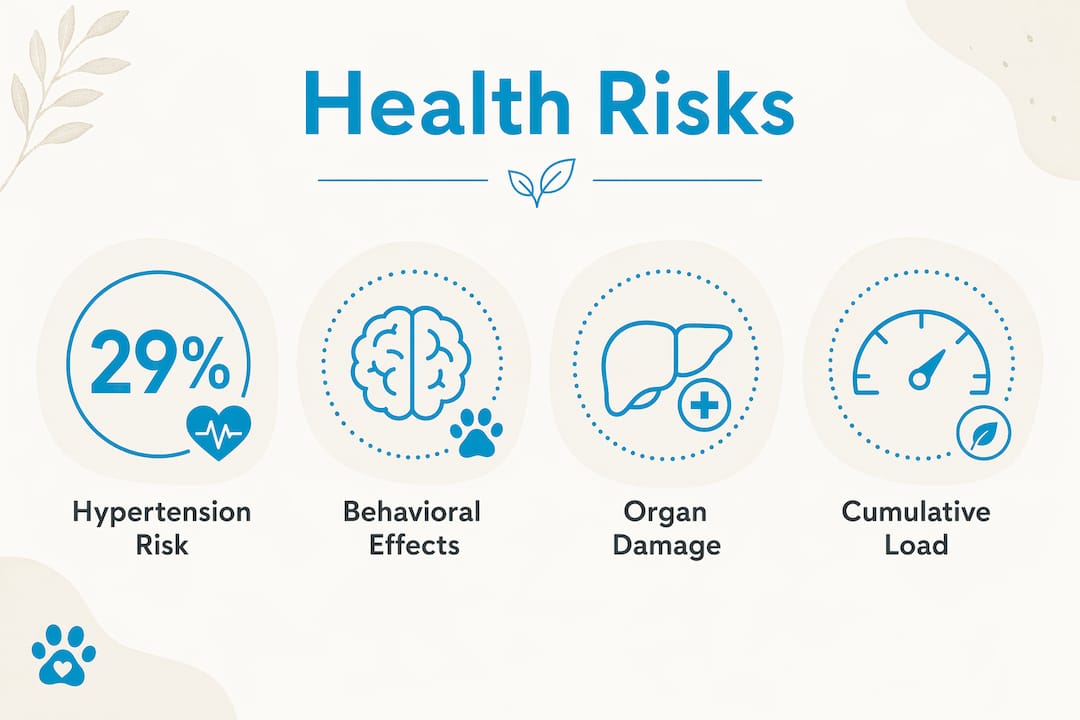
Organ damage is the most serious long-term risk. Propylene glycol, once widely used as a humectant in moist treats, was removed from the GRAS list for cats after it was linked to Heinz body anemia, a condition that destroys red blood cells. Some gums used as texture agents have been connected to digestive inflammation. BHA and BHT remain on the market despite persistent concerns about liver and kidney toxicity at sustained exposure levels.
The cumulative additive load concept matters here. No single treat ingredient is likely to cause immediate harm at labeled serving sizes. The problem is daily, repeated exposure across multiple products, where synthetic preservatives in treats stack on top of those in kibble, wet food, and chews.
How to identify and avoid artificial additives when choosing pet treats
Reading a pet treat label requires more skepticism than reading a human food label. Marketing claims on the front of the package are not regulated the same way ingredient lists are.
The FDA allows a “no artificial colors” claim only when petroleum-based colors are absent, but naturally derived color additives can still be present and are still added colors. A treat labeled “no artificial colors” may still contain annatto, beet juice concentrate, or turmeric used purely for pigment. The claim tells you less than you think.
The comparison below shows common artificial additives alongside their natural counterparts:
| Artificial additive | Natural alternative | What it does |
|---|---|---|
| BHA / BHT | Mixed tocopherols (Vitamin E) | Prevents fat from going rancid |
| Artificial Red 40 | Beet juice, paprika extract | Adds color |
| Propylene glycol | Vegetable glycerin | Retains moisture |
| Ethoxyquin | Rosemary extract | Antioxidant preservation |
| Artificial meat flavor | Named meat meal or broth | Enhances palatability |
Trustworthy treats share three qualities: a short ingredient list, a named protein (chicken, salmon, beef) as the first ingredient, and no grain fillers like corn syrup or wheat gluten. Treats with short whole-food ingredient lists signal higher quality and lower additive exposure. Avoid any treat where “animal meat” appears without a species name. That vague term typically indicates low-grade by-products.
Pro Tip: Single-ingredient treats, such as freeze-dried chicken breast or dehydrated sweet potato, eliminate the label-reading problem entirely. What you see is what your pet gets. Wildrootspet’s guide on single-ingredient treats explains why this format is the gold standard for reducing additive exposure.
How does treat type and processing affect additive content?
The format of a treat determines how many additives it requires. This is not a minor detail. It is the structural reason why some treats carry far higher chemical loads than others.
Dry treats (moisture below 10%) are shelf-stable without heavy preservatives because low water activity prevents microbial growth. Semi-moist and moist treats, which contain 25 to 50% moisture, create the opposite problem. That moisture level is ideal for bacterial and mold growth, so manufacturers must add humectants to bind water and antimicrobial preservatives to prevent spoilage. The result is a treat that feels soft and appealing but carries a significantly higher additive burden.
Treat formats with the highest additive loads typically include:
- Semi-moist training treats: Soft texture requires humectants like propylene glycol or sorbitol plus antimicrobial preservatives.
- Jerky-style treats with added moisture: Often contain sodium nitrite or other curing agents alongside artificial flavors.
- Colorful biscuits and shaped treats: Artificial dyes serve no function beyond visual marketing to the owner.
- Flavored dental chews: Frequently contain artificial flavors, sweeteners, and binding agents to hold shape and taste.
High-heat processing introduces a separate concern. Advanced glycation end products, known as AGEs, form when proteins and sugars are cooked at high temperatures. AGEs accumulate in tissue over time and are associated with inflammation and accelerated aging in both humans and animals. Minimally processed or raw treats avoid this issue entirely.
The concept of “hyper-palatable” additives is worth understanding. Flavor enhancers are specifically engineered to override a pet’s natural satiety signals, making treats irresistible in a way that whole-food ingredients simply are not. This is not a coincidence. It is a design feature that drives repeat purchases while increasing your pet’s exposure to synthetic chemicals.
What are the healthiest natural alternatives for pet treats?
Natural and minimally processed treats avoid synthetic additives by relying on whole-food ingredients that are stable, nutritious, and recognizable. The benefits of natural pet treats extend beyond avoiding harm. They actively contribute protein, healthy fats, and micronutrients that support coat health, joint function, and immune response.
The most reliable natural treat options include:
- Freeze-dried single-ingredient treats: Chicken liver, salmon, beef heart. Freeze-drying preserves nutrients without heat damage or chemical preservatives.
- Dehydrated whole-food treats: Sweet potato slices, apple pieces, or green tripe. Low moisture achieved through slow drying rather than chemical intervention.
- Raw treats and chews: Bully sticks, raw meaty bones (species-appropriate), and raw organ treats provide natural enzymes and nutrients.
- Natural chews: Antlers, yak milk chews, and dried tendons offer long-lasting enrichment without synthetic additives.
When selecting treats, look for certifications like USDA Organic, human-grade labeling, or AAFCO-compliant ingredient sourcing. Human-grade standards require that every ingredient be fit for human consumption, which automatically excludes many of the lower-quality by-products and chemical preservatives common in feed-grade products.
Moderation matters even with natural treats. Treats should make up no more than 10% of your pet’s daily caloric intake. Exceeding that threshold displaces the balanced nutrition your pet gets from their primary diet, regardless of how clean the treat ingredients are. Also watch for common allergens in natural treats: chicken is the most frequent protein allergen in dogs, followed by beef and dairy.
Key takeaways
Avoiding artificial pet treats is the single most practical step pet owners can take to reduce their pets’ cumulative exposure to synthetic preservatives, colors, and flavors that carry documented health risks.
| Point | Details |
|---|---|
| Additives serve manufacturers, not pets | BHA, BHT, artificial colors, and flavors add shelf life and visual appeal, not nutrition. |
| Cumulative load is the real danger | Daily exposure across treats, kibble, and chews stacks synthetic chemicals beyond any single safe threshold. |
| Label claims can mislead | “No artificial colors” does not mean additive-free; always read the full ingredient list. |
| Treat format drives additive content | Semi-moist treats require the most preservatives; dry and freeze-dried formats need the fewest. |
| Single-ingredient treats are the safest choice | One named protein or whole food eliminates the need for preservatives, colors, or flavor enhancers entirely. |
The additive problem no one talks about enough
I have spent years looking at pet treat ingredient lists, and the pattern that bothers me most is not the obvious offenders like Red 40 or xylitol. It is the cumulative displacement effect. When a pet eats three or four artificially preserved treats per day, those treats are not just adding synthetic chemicals. They are replacing calories that could have come from whole proteins, healthy fats, and real food. The treat becomes a double loss: chemical exposure plus nutritional displacement.
The regulatory gap makes this worse. The fact that ethoxyquin is banned across the EU but still legal in American pet food tells you that current U.S. standards are not built around precaution. They are built around what manufacturers can demonstrate is not immediately harmful at labeled doses. That is a very different standard from what most health-conscious pet owners actually want for their animals.
What I find encouraging is that the market is shifting. More pet owners are reading labels, asking questions, and choosing minimally processed natural chews over brightly colored biscuits. The demand signal is real, and it is pushing better products into mainstream availability. You do not need to overhaul everything at once. Start by replacing the treat your pet gets most often with a single-ingredient alternative. That one swap reduces additive exposure more than any other change you can make without touching the rest of the diet.
Ask your vet to review your pet’s full treat rotation, not just their primary food. Most veterinary nutrition conversations focus on kibble or wet food and skip treats entirely, even though treats can represent a significant portion of daily intake for small dogs and cats.
— Blayne
Additive-free treats your pet will actually love
Wildrootspet carries a curated selection of treats built around the principles in this article: named proteins, short ingredient lists, and zero synthetic preservatives or artificial colors. The Beef Chips Snack Pack Bundles are a practical starting point for dog owners who need a training treat without the additive load of conventional options. For cats, the Chicken Cat Treats deliver a single-protein option with minimal ingredients. Pets with sensitivities to common proteins can benefit from the Daily Wellness Formula, formulated specifically for animals with pork or beef allergies. Every product is selected with ingredient transparency as the baseline requirement.
FAQ
What artificial additives are most dangerous in pet treats?
Xylitol is the most acutely dangerous, causing life-threatening hypoglycemia and liver failure in dogs even in small amounts. BHA, BHT, and ethoxyquin carry longer-term concerns around carcinogenicity and organ toxicity with sustained daily exposure.
Are “natural flavor” and “no artificial colors” labels trustworthy?
Not entirely. “Natural flavor” is a broad regulatory term that can include highly processed chemical compounds derived from natural sources. “No artificial colors” means only that petroleum-based dyes are absent; naturally derived color additives may still be present.
Which treat format has the fewest artificial additives?
Freeze-dried and dehydrated single-ingredient treats consistently carry the lowest additive loads because their low moisture content eliminates the need for humectants and antimicrobial preservatives. Dry biscuits are the next safest category when made without artificial colors or flavors.
How much of my pet’s diet should treats make up?
Treats should not exceed 10% of your pet’s total daily caloric intake. Exceeding this threshold displaces balanced nutrition from their primary diet and increases cumulative additive exposure, particularly if the treats contain synthetic preservatives.
Can artificial pet treat additives affect my pet’s behavior?
Evidence from pediatric research connects artificial food colors to hyperactivity and mood disruption, and veterinary researchers apply the same concern to pets. Dogs showing unexplained anxiety or restlessness may benefit from switching to additive-free treat options as a first step.