

The grain-free trend swept through pet food aisles fast, convincing many well-meaning pet owners that grains were the enemy. But here’s what the marketing rarely tells you: most dogs and cats thrive on grain-inclusive diets that contain nutritious whole grains like brown rice, oats, barley, millet, sorghum, and ancient grains as reliable sources of carbohydrates, fiber, vitamins, and minerals. This article breaks down what grain-inclusive pet food actually is, how it compares to grain-free options, and how you can confidently choose the right food for your dog or cat without falling for label-driven hype.
Table of Contents
- What is grain-inclusive pet food?
- Grain-inclusive vs. grain-free: key differences explained
- Health benefits of grain-inclusive nutrition for dogs and cats
- How to evaluate and choose a quality grain-inclusive pet food
- Why quality—not labels—matters most: our fresh take on pet nutrition
- Discover healthier choices with Wild Roots Pet Co.
- Frequently asked questions
Key Takeaways
| Point | Details |
|---|---|
| Grain-inclusive defined | Pet food featuring whole grains delivers carbs, fiber, and nutrients for energy and gut health. |
| Affordable nutrition | Grain-inclusive foods typically cost less than grain-free while meeting your pet’s dietary needs. |
| Veterinary support | Experts favor well-formulated grain-inclusive diets unless your pet has a proven allergy. |
| Label reading matters | Always check pet food labels and consult your vet to find the right grains for your pet. |
| Quality over trends | Focus on ingredient quality over marketing labels like ‘grain-free’ for optimal pet health. |
What is grain-inclusive pet food?
Grain-inclusive pet food is exactly what the name suggests: food formulated with whole or processed grains as part of the ingredient base. These are not low-quality fillers sneaked into the bag. When chosen thoughtfully, grains found in pet foods serve as functional nutrition sources that complement quality proteins, healthy fats, and other whole food ingredients.
The most commonly used grains in quality pet food include:
- Brown rice: Easily digestible, mild on sensitive stomachs, and rich in B vitamins and manganese
- Oats: High in soluble fiber, which supports healthy digestion and steady blood sugar
- Barley: Provides beta-glucan fiber, which feeds beneficial gut bacteria
- Millet: A gluten-free grain loaded with magnesium and antioxidants
- Sorghum: Great for pets with wheat sensitivities; high in protein relative to other grains
- Ancient grains (like quinoa, amaranth, spelt): Trendy for good reason because they deliver dense micronutrient profiles
Each of these grains contributes something specific. It is not just about adding bulk to the bag. The goal is balanced nutrition, and grains play a real role in achieving that.
| Grain | Key Nutrient | Primary Benefit for Pets |
|---|---|---|
| Brown rice | B vitamins, manganese | Easy digestion, energy support |
| Oats | Soluble fiber | Digestive health, blood sugar stability |
| Barley | Beta-glucan | Gut microbiome support |
| Millet | Magnesium, antioxidants | Anti-inflammatory support |
| Sorghum | Protein, polyphenols | Digestive ease, antioxidant protection |
| Ancient grains | Dense micronutrients | Overall nutritional completeness |
Understanding natural ingredients for pet diets is the foundation of making smart feeding decisions. When grains are whole, minimally processed, and paired with high-quality protein, they become a nutritional asset rather than a liability.
“Grain-inclusive pet food contains grains such as brown rice, oats, barley, millet, sorghum, or ancient grains as sources of carbohydrates, fiber, vitamins, and minerals.” — HowDogCare.com
Grains also help regulate energy release. Unlike simple sugars that spike and crash, complex carbohydrates from whole grains give pets a steady fuel supply throughout the day. That matters especially for active dogs and cats who need consistent energy for movement and muscle maintenance.
Grain-inclusive vs. grain-free: key differences explained
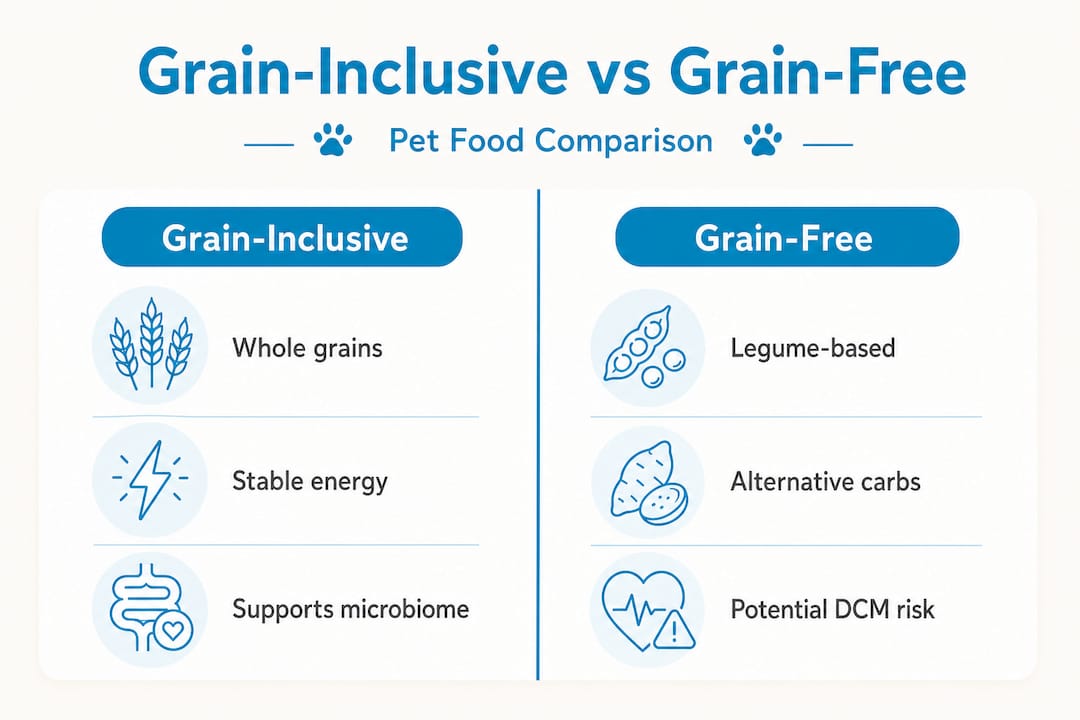
Understanding what grain-inclusive means makes it easier to compare it to the increasingly popular grain-free options. And the comparison is more nuanced than most pet food marketing would have you believe.
Grain-free diets swap out grains for alternative carbohydrate sources, usually legumes like lentils, peas, or chickpeas, as well as potatoes or tapioca. These alternatives are not inherently bad, but they come with trade-offs that are worth understanding before you commit to one or the other.
Key differences at a glance:
| Feature | Grain-inclusive | Grain-free |
|---|---|---|
| Carbohydrate source | Whole grains (rice, oats, barley) | Legumes, potatoes, tapioca |
| Typical cost | $2 to $4 per pound | $3.50 to $6.50 per pound |
| Fiber type | Mixed soluble and insoluble | Often legume-based, less varied |
| Best suited for | Most healthy dogs and cats | Pets with confirmed grain allergies |
| Potential concerns | Minimal for most pets | High-legume diets under FDA review |
| Gut health impact | Supports diverse microbiome | Variable, depends on legume content |
Here’s a fact that surprises many pet owners: grain-inclusive foods are typically $2 to $4 per pound compared to grain-free options that can run $3.50 to $6.50 per pound. That difference adds up fast over months and years of feeding, especially if you have a large breed dog or multiple pets.
On the health side, grain-free diets carry potential risks with legumes, and the gut microbiome support provided by diverse whole grains is difficult to replicate with pea or lentil-heavy formulas. Grain-inclusive diets also tend to deliver more stable energy compared to high-legume alternatives, which can cause digestive inconsistencies in some pets.
Comparing grain-free formulas compared side by side with grain-inclusive options shows that the ingredient lists tell very different stories. Grain-free is not automatically premium. The quality of proteins, fats, and sourcing matter far more than whether the bag says “grain-free” on the front.
Pro Tip: If you are considering grain-free food, ask your vet for a confirmed allergy test first. Many pet owners spend significantly more on grain-free formulas when their pets have zero sensitivity to grains at all. The cost of different pet diets is a real factor in long-term pet care planning.
The bottom line is this: grain-free diets make sense for a specific subset of pets with documented grain intolerances. For the majority of dogs and cats, grain-inclusive food is the nutritionally sound, economically smarter, and veterinarian-supported choice.
Health benefits of grain-inclusive nutrition for dogs and cats
After comparing the basics, it’s crucial to look at what science and veterinarians say about grains in your pet’s daily diet. The research here is more reassuring than you might expect.
One of the most significant pieces of evidence involves dilated cardiomyopathy (DCM), a serious heart condition that was temporarily linked to grain-free diets around 2018. However, studies show no DCM increase linked to grain-free food sales, and the veterinary consensus has shifted toward emphasizing overall diet quality rather than making blanket grain exclusions. This matters because the scare around DCM was often used to push pet owners back to any grain-inclusive food, regardless of quality. The real lesson is that ingredient quality and nutritional balance drive pet health outcomes, not a single ingredient category.
That said, high-quality grain-inclusive diets do offer real, documented benefits. Grain-inclusive pet foods support gut microbiome health and provide stable energy that benefits pets across different life stages.
Top five health benefits of quality grain-inclusive pet food:
- Digestive regularity: The soluble and insoluble fiber blend in whole grains keeps things moving, reducing constipation and loose stools
- Gut microbiome diversity: Prebiotic fibers from barley, oats, and ancient grains feed beneficial bacteria in your pet’s intestinal tract, which directly impacts immunity
- Stable blood sugar and energy: Complex carbohydrates digest slowly, preventing the energy spikes and crashes associated with simple carbohydrate sources
- Essential vitamins and minerals: B vitamins, iron, magnesium, and zinc found in whole grains support everything from nerve function to coat health
- Affordable long-term nutrition: Maintaining healthier diet choices does not have to mean stretching your budget thin every month
One more point that often gets overlooked: grain-inclusive diets tend to be more palatable for dogs and cats that are used to varied food textures. Oats and rice add a soft, consistent texture to both dry and wet foods that many pets find appealing.
Pro Tip: Use a grain-inclusive meal topper over existing dry food to introduce grain-based nutrition gradually. This approach works especially well for picky eaters or pets transitioning from grain-free formulas. A light fish-based topper with balanced grains can make the shift feel effortless.
Common myths worth busting: Grains do not cause obesity on their own. Overfeeding causes obesity, regardless of the carbohydrate source. Grains are not hard for pets to digest. Modern feed milling and cooking methods pre-gelatinize starches, making grains highly digestible for both dogs and cats. And grains are not just cheap fillers. When whole grains are listed early in the ingredient panel and accompanied by named proteins, they are contributing meaningful nutrition to every meal.
How to evaluate and choose a quality grain-inclusive pet food
With an understanding of the health benefits, the next step is making confident, informed choices at the store or online. Knowing what to look for separates genuinely good food from cleverly marketed mediocre products.
What to look for on the ingredient label:
- A named animal protein (chicken, salmon, beef, turkey) should appear first on the ingredient list
- Whole grains like brown rice, oats, or barley should appear within the first five ingredients
- Avoid vague terms like “poultry by-product meal” without a named species
- Look for added omega-3 fatty acids from fish oil for coat and joint support
- Check for named vitamins and chelated minerals rather than synthetic-only supplementation
- Avoid artificial preservatives like BHA, BHT, and ethoxyquin
Beyond the label, consider the life stage your pet is in. Puppies and kittens need higher protein and calorie density. Senior pets benefit from increased fiber and joint-supporting nutrients. Adult dogs and cats in good health do well across a wide range of balanced grain-inclusive formulas.
Questions to ask your vet:
- Does my pet show any signs of grain intolerance such as chronic itching, GI upset, or ear infections?
- Is my pet’s current weight and energy level appropriate for their age and breed?
- Would adding a food topper or rotating proteins improve their nutritional variety?
Grain-inclusive pet foods are affordable and nutritionally beneficial for the vast majority of pets without a confirmed grain allergy, and that is a point worth carrying into every conversation with your vet.
Rotating proteins while keeping grains consistent is a smart strategy. Try salmon-based food one month and chicken the next, while keeping brown rice or oats as the constant grain base. This rotation prevents food boredom, reduces the risk of developing intolerances to a single protein, and keeps your pet’s gut bacteria exposed to varied nutrients.
Understanding pet food quality indicators will make label reading faster and more reliable over time. Once you know what a genuinely quality food looks like, you can spot the difference in about 30 seconds at the shelf.
Pro Tip: When transitioning to a new grain-inclusive food, do it over 7 to 10 days. Start with 25% new food and 75% current food, then gradually shift the ratio. Rushing this process is the number one cause of GI upset during food transitions, and it unfairly gets blamed on the new food.
Why quality—not labels—matters most: our fresh take on pet nutrition
Here is what we have noticed after working with health-conscious pet owners across North America: the obsession with labels often blinds people to what is actually in the bowl.
“Grain-free” became a status symbol in pet food. It signaled that you were a serious, attentive pet parent who would not settle for anything less than the best. But the reality is that a grain-free food with low-quality legume fillers and unnamed protein meals is not better than a grain-inclusive food with whole oats, brown rice, and fresh salmon at the top of the ingredient list. The label tells one story. The ingredient panel tells the truth.
The mistake we see most often is reactive feeding. A pet has an episode of loose stools or itchy skin, and the owner immediately eliminates grains, then protein, then everything that sounds unfamiliar, until the pet is on an extremely limited diet that may actually be creating nutritional gaps. The better approach is to slow down, test with your vet, and make one change at a time with a clear purpose.
Another common mistake is treating pet nutrition like human diet trends. Keto, low-carb, grain-free. These frameworks come from human metabolic research and do not map cleanly onto canine or feline biology. Dogs are omnivores who have co-evolved with humans for thousands of years and have developed the ability to process grains effectively. Cats are obligate carnivores, but that does not mean they cannot benefit from the fiber and micronutrients that grains provide alongside high protein content.
Our core belief is this: a holistic pet nutrition toolkit starts with understanding your individual pet’s needs, not following industry trends. Invest in knowing your pet’s health baseline. Ask for food sensitivity testing if you suspect an issue. Read ingredient lists instead of front-of-bag claims. And do not assume expensive automatically means nutritionally superior.
The best food for your pet is the one that has quality named proteins, whole food ingredients, appropriate grains for their biology, and a track record of positive feeding trials. That formula is far more reliable than any marketing trend.
Discover healthier choices with Wild Roots Pet Co.
Ready to put these insights into action? Take the next step toward healthier pet nutrition support.
At Wild Roots Pet Co., we believe every pet deserves food and supplements built on real, traceable ingredients rather than clever packaging. Our range of grain-inclusive options is designed for pet parents who want balanced nutrition without overpaying for marketing buzzwords.

Explore our popular fish dog food topper, a low-fat, nutrient-rich option that works perfectly over grain-inclusive kibble to add omega-3 support and palatability. For pets with specific protein sensitivities, our daily wellness formula is formulated without pork or beef, making it a gentle and nourishing choice for sensitive dogs and cats. Browse our full collection and find the nutrition-forward solution your pet deserves.
Frequently asked questions
What does grain-inclusive mean in pet food?
Grain-inclusive means the food contains whole grains such as rice, oats, barley, and others that provide carbohydrates, fiber, vitamins, and minerals as part of a balanced diet. These grains serve functional nutritional roles, not just as fillers.
Is grain-inclusive pet food better for my pet than grain-free?
For most pets without a confirmed grain allergy, grain-inclusive diets are more affordable, nutritionally well-rounded, and broadly supported by veterinarians compared to grain-free alternatives.
Are grains harmful to dogs or cats?
No. Studies show no health decline in pets fed high-quality grain-inclusive diets through feeding trials, and the veterinary consensus favors overall diet quality over grain exclusion.
How do I know if my pet needs a grain-free diet?
Only pets with a veterinarian-confirmed grain intolerance or allergy genuinely benefit from grain-free food. A proper elimination diet trial or allergy test is the right first step before switching.
Which grains are healthiest for pets?
Whole grains like brown rice, oats, and barley are among the most digestible and nutrient-dense options for dogs and cats, offering fiber, B vitamins, and gut health support in every meal.