

A safe dog food transition is a gradual process of replacing your dog’s current food with a new formula over 7 to 14 days, mixing increasing ratios of new food into the old to protect digestive health. Skipping this process causes vomiting, diarrhea, gas, and appetite loss because your dog’s gut microbiome needs time to adjust to new proteins, fibers, and ingredients. Knowing how to switch dog food safely is one of the most practical skills you can have as a dog owner, and the difference between a smooth switch and a miserable week for your pet comes down to pace and observation.
How to switch dog food safely: what you need to know first
Before you open the new bag, preparation determines whether the transition goes smoothly or sideways. The single most common mistake owners make is starting the switch without enough of the old food on hand. You need enough of both foods to overlap for the full transition period, which means at least 7 days of the old formula and a full supply of the new one.
Here is what to have in place before day one:
- Sufficient overlap supply. Buy enough of both the old and new food to cover the entire transition window without running out mid-process.
- Consistent feeding routine. Keep meal times, feeding location, and bowl type identical throughout the switch. Changing multiple variables simultaneously makes it impossible to identify what caused any digestive reaction.
- No new treats or toppers. Hold off on introducing new chews, treats, or food toppers during the transition. New treats add new ingredients that can confuse the picture if your dog reacts.
- Calorie-based portioning. Measure portions by calories rather than volume, especially when moving between different food types like kibble and freeze-dried raw, since caloric density varies significantly.
- Vet clearance for sensitive dogs. If your dog has a history of food allergies, inflammatory bowel disease, or chronic digestive issues, get your vet’s input before starting. This is not optional for dogs on prescription diets.
Puppies and senior dogs require extra caution. Transitions for puppies or elderly dogs should move more slowly and be monitored closely because their digestive systems are more vulnerable to rapid dietary change.
What does a gradual dog food transition schedule look like?
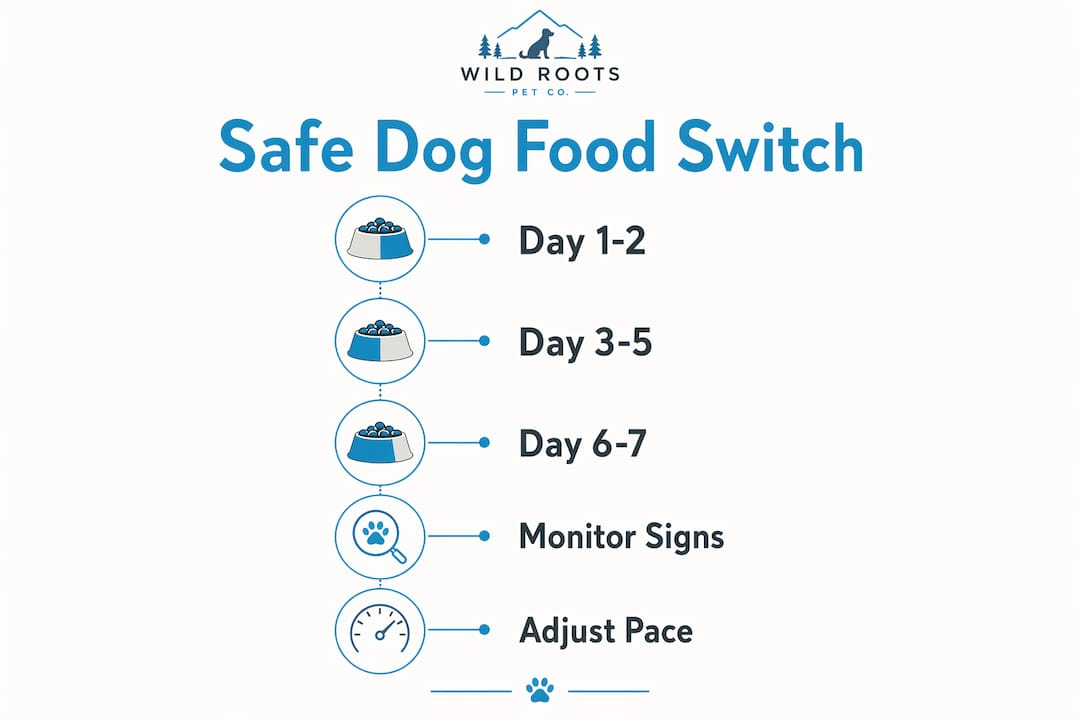
The standard approach, backed by veterinary guidance, is a 7-day schedule that progressively increases the ratio of new food while decreasing the old. For dogs with sensitive stomachs or those switching to fresh or raw diets, a 10 to 14 day schedule with smaller daily increments is the better choice.
Standard 7-day schedule for healthy dogs
| Day | Old food | New food | Notes |
|---|---|---|---|
| Days 1-2 | 75% | 25% | Watch for soft stools or gas |
| Days 3-4 | 50% | 50% | Monitor appetite and stool firmness |
| Days 5-6 | 25% | 75% | Most dogs tolerate this well by now |
| Day 7+ | 0% | 100% | Full transition complete |
This 7 to 10 day schedule is the most widely recommended method for healthy adult dogs switching between similar food types, such as one kibble brand to another.
Extended 10-14 day schedule for sensitive or fresh food transitions
Dogs switching to fresh, frozen, or freeze-dried raw diets need a longer runway. Fresh food transitions benefit from 10 to 14 days because richer, more bioavailable ingredients place greater demand on the digestive system. Use 10% increments every two days rather than the larger jumps in the standard schedule.
| Day | Old food | New food | Notes |
|---|---|---|---|
| Days 1-2 | 90% | 10% | Introduce new food gently |
| Days 3-4 | 80% | 20% | Watch stool consistency closely |
| Days 5-6 | 70% | 30% | Hold if any soft stools appear |
| Days 7-8 | 50% | 50% | Midpoint check |
| Days 9-10 | 25% | 75% | Near-complete transition |
| Days 11-14 | 0% | 100% | Full switch achieved |
If you are moving your dog to a raw diet specifically, Wildrootspet has a detailed resource on transitioning to raw feeding that covers the unique considerations involved.
Pro Tip: If mild digestive symptoms appear at any stage, hold the current ratio for 48 to 72 hours before advancing. Holding the current mix until symptoms resolve prevents repeated cycles of digestive upset and gives the gut time to stabilize.
What are the warning signs during a food transition?
Mild digestive changes are normal during any food switch. The ability to tell the difference between normal adjustment and a genuine problem is what separates a confident owner from a panicked one.
Mild signs that call for slowing down, not stopping:
- Soft or slightly loose stools
- Increased gas or flatulence
- Mild, occasional vomiting (once or twice, not repeated)
- Reduced appetite for a meal or two
When these appear, revert to the last tolerated ratio and hold it for two to three days. PetMD recommends reverting to previously tolerated ratios and slowing the transition rather than pushing through when vomiting or diarrhea arise.
Severe signs that require immediate veterinary contact:
- Persistent vomiting (more than two to three times in a day)
- Blood in the stool or vomit
- Severe or watery diarrhea lasting more than 24 hours
- Signs of dehydration such as dry gums, sunken eyes, or lethargy
- Complete refusal to eat for more than one full day
If your dog shows any of these severe symptoms, contact your vet immediately. Prolonged or severe reactions may signal food intolerance, an underlying health condition, or something unrelated to the food switch entirely.
Track your dog’s stool quality, appetite, and energy level daily throughout the transition. A simple notes app on your phone works well for this. That record becomes genuinely useful if you need to describe symptoms to your vet.
Practical tips for the most common food switch challenges
Even with a solid plan, real-world transitions throw curveballs. Here are the most frequent problems and how to handle them.
-
You ran out of old food unexpectedly. Do not abruptly switch to 100% new food. Instead, use plain boiled chicken and white rice as a temporary bridge. Bland diets like boiled chicken and rice reduce GI upset risk when old food is unavailable and can be mixed with the new food while you restock.
-
Your dog refuses the new food. Warm wet food slightly to increase aroma, or add a small amount of a safe food topper your dog already enjoys. Wildrootspet’s Pro Plan wet food works well as a palatability booster mixed into the new formula during early transition days.
-
Diarrhea appears mid-transition. Pull back to the previous ratio immediately. Do not advance again until stools are firm for at least two consecutive days. If diarrhea persists beyond 48 hours even at the lower ratio, call your vet.
-
Your dog has a sensitive stomach. Consider adding a vet-approved probiotic to support gut adjustment. Probiotics like FortiFlora help stabilize digestion during dietary changes, particularly for dogs prone to GI sensitivity. Wildrootspet carries Sym-Biota K9, a canine-specific probiotic worth discussing with your vet before the transition starts.
-
Your dog eats too fast and shows signs of bloating or discomfort. A slow feeder bowl can reduce the speed of consumption and lower the risk of gulping air with food, which compounds digestive upset during transitions.
Pro Tip: Keep the feeding environment calm and consistent throughout the switch. Stress affects digestion directly. A dog that is anxious at mealtime is more likely to refuse food or experience GI upset, independent of what is in the bowl.
Key takeaways
A safe dog food transition requires a gradual ratio shift over 7 to 14 days, consistent monitoring of stool and appetite, and the willingness to slow down or pause when your dog’s gut signals distress.
| Point | Details |
|---|---|
| Use a 7-14 day schedule | Healthy dogs need 7 days; sensitive stomachs and raw food switches need 10-14 days. |
| Start at 25% new food | Begin with 75% old and 25% new, then increase every two days if stools stay firm. |
| Hold the ratio when symptoms appear | Pause at the last tolerated mix for 48-72 hours before advancing again. |
| Change only one variable at a time | Keep treats, bowls, and feeding times identical to isolate any digestive reaction. |
| Know when to call the vet | Blood in stool, persistent vomiting, or lethargy require immediate professional attention. |
What I have learned from watching hundreds of food transitions
I have seen owners do everything right on paper and still end up with a dog that refuses the new food by day four. The reason is almost always one of two things: they rushed the ratio increases, or they changed something else at the same time without realizing it. A new treat, a different bowl, even a shift in feeding location can be enough to make a dog associate the new food with discomfort or anxiety.
The other pattern I see constantly is owners interpreting mild soft stools as failure and abandoning the switch entirely. Soft stools on days two or three of a transition are almost always normal gut adjustment, not a sign that the food is wrong for your dog. The gut microbiome is genuinely disrupted by new ingredients, and it takes time to rebalance. Pulling back to the previous ratio and holding it for two days is almost always enough to get things back on track.
What I find most underrated in all the standard advice is the value of keeping a simple daily log. Owners who track stool quality, appetite, and energy level each day make better decisions because they are working from actual data rather than memory and anxiety. They also have something concrete to share with their vet if things do not resolve.
My honest recommendation: give the process more time than you think it needs. A 10-day transition for a healthy dog is not excessive. It is just respectful of how digestion actually works.
— Blayne
Explore Wildrootspet’s natural food options for your dog’s next transition
When you are ready to make the switch to a cleaner, more nutrient-dense diet, the food you choose matters as much as how you transition to it. Wildrootspet carries options built for exactly this kind of intentional upgrade.

The Raw PMR Pork Meal Blend and Raw PMR Beef Meal Blend from Raw Instincts are high-quality prey model raw options that work well as the “new food” in a gradual transition plan. For dogs with pork or beef sensitivities, the Pet’s Daily Wellness Formula offers a specialized alternative. Pair any transition with single-ingredient freeze-dried treats to keep palatability high without adding confounding ingredients. Browse the full selection at Wildrootspet and find the right fit for your dog’s health goals.
FAQ
How long does it take to switch dog food safely?
Most healthy adult dogs complete a safe food transition in 7 to 10 days using a gradual ratio schedule. Dogs with sensitive stomachs or those switching to fresh or raw diets need 10 to 14 days with smaller daily increments.
What happens if you switch dog food too fast?
An abrupt food switch can cause vomiting, diarrhea, gas, and appetite loss because the gut microbiome cannot adjust quickly enough to new ingredients. Gradual transitions protect gut bacteria balance and reduce the risk of digestive upset.
When should I call a vet during a food transition?
Contact your vet if your dog shows persistent vomiting, blood in the stool, severe diarrhea lasting more than 24 hours, signs of dehydration, or complete food refusal for more than one day. Mild soft stools and gas are normal and do not require a vet visit.
Can I use probiotics when switching my dog’s food?
Yes, vet-approved probiotics like FortiFlora can help stabilize digestion during a food switch, particularly for dogs prone to GI sensitivity. Always confirm with your vet before adding any supplement to your dog’s routine.
What if I run out of my dog’s old food mid-transition?
Use plain boiled chicken and white rice as a temporary substitute for the old food while you restock. Mix it with the new food at the same ratio you were using, and resume the normal transition schedule once the old food is available again.