

More dog owners are rethinking the kibble bowl. If you’ve landed here, you’re probably curious whether a raw dog food diet could do more for your dog than what’s in that brown bag. This guide to raw feeding dogs covers everything you need to make a confident, informed decision: what goes into a balanced raw meal, how to transition safely, how to portion correctly, and what health changes to actually expect. No hype. No shortcuts. Just the practical framework you need to get started the right way.
Table of Contents
- Key takeaways
- What actually goes into a balanced raw dog diet
- Getting your dog and your home ready to switch
- How to build and run a raw feeding routine
- What to watch for after you make the switch
- Handling the real safety risks honestly
- My honest take on raw feeding after seeing it from every angle
- How Wildrootspet can support your raw feeding journey
- FAQ
Key takeaways
| Point | Details |
|---|---|
| Balance is non-negotiable | A raw diet must include muscle meat, organ, and bone in correct ratios to avoid nutritional deficiencies. |
| Transition slowly | A 7 to 10 day gradual switch reduces digestive upset significantly for most dogs. |
| Safety starts in your kitchen | Handle raw dog food exactly as you handle raw meat for humans, with the same hygiene standards. |
| Monitor your dog closely | Track stool quality, appetite, and energy during the first few weeks to catch problems early. |
| Vet input makes it work | A veterinary nutritionist can confirm your diet is complete, especially for homemade raw meals. |
What actually goes into a balanced raw dog diet
A raw diet is not just throwing a chicken leg in a bowl. The core of any solid raw dog food diet is getting the ratios right, and that starts with understanding the two main frameworks most raw feeders use.
BARF (Biologically Appropriate Raw Food) includes muscle meat, raw meaty bones, organ meat, vegetables, fruit, and sometimes eggs or dairy. A common starting ratio is roughly 70% muscle meat, 10% raw edible bone, 10% organ (with half being liver), and 10% plant matter.
PMR (Prey Model Raw) skips the plant material entirely and mimics whole prey: 80% muscle meat, 10% bone, and 10% organ. Advocates argue dogs are carnivores and don’t need vegetables. Advocates of BARF counter that fiber and phytonutrients support digestion and immunity.
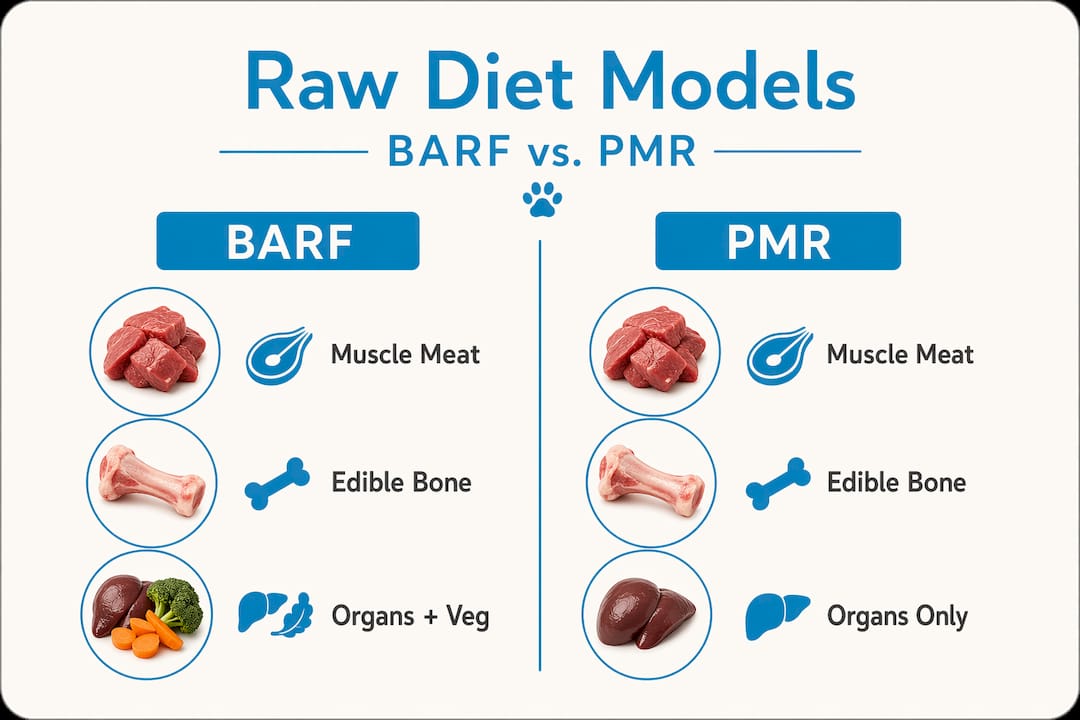
| Component | BARF Ratio | PMR Ratio |
|---|---|---|
| Muscle meat | ~70% | ~80% |
| Raw edible bone | ~10% | ~10% |
| Organ meat (incl. liver) | ~10% | ~10% |
| Vegetables/fruit/other | ~10% | 0% |
Both models can work, but the critical issue is nutritional completeness. Homemade raw diets may lack key nutrients without careful planning, and deficiencies in calcium, phosphorus, zinc, or vitamin D build up silently over months. If you’re building meals from scratch, a veterinary nutritionist is not optional. It’s the only way to verify your dog’s diet covers everything it needs long term.
For raw feeding tips for beginners, the easier path is starting with an AAFCO-approved commercial raw blend that’s formulated to be nutritionally complete. This gives you the benefits of raw without the guesswork of building ratios from scratch.
Pro Tip: If you’re buying commercial raw, look for the phrase “complete and balanced” and verify it meets AAFCO or NRC nutritional guidelines. A label that says “for supplemental feeding only” means it cannot be your dog’s sole food source.
Getting your dog and your home ready to switch
Before the first raw meal hits the bowl, your kitchen and your dog both need preparation. Skipping this step is the number one reason transitions fail.
The most common mistake is switching cold turkey. Your dog’s gut microbiome has adapted to its current diet, and a sudden shift overwhelms digestive enzymes and bacteria. A gradual 7 to 10 day schedule solves this. Start with 75% old food and 25% raw for the first few days, then shift to 50/50, then 25% old food and 75% raw, then fully raw. For dogs with sensitive stomachs, this timeline can stretch to three or four weeks with no harm done.
Preparation steps to complete before day one:
- Designate separate cutting boards, bowls, and utensils exclusively for raw dog food
- Stock up on food-safe storage containers and freezer bags for portioned meals
- Identify where you’ll source your ingredients: local butchers, farm suppliers, or quality commercial brands
- Consult your vet before starting, especially if your dog has existing health conditions
- Print or bookmark a transition schedule so you don’t guess day to day
During the transition, watch your dog closely. Monitoring appetite, stool, and behavior is how you catch problems before they escalate. Firm, smaller stools are normal on raw. Loose stools for a day or two can happen. Persistent diarrhea, vomiting, or complete refusal to eat past the first few days is a signal to slow down or call your vet.
Pro Tip: Introduce a single protein first, ideally something bland like chicken or turkey, before rotating proteins. This makes it much easier to identify what causes a reaction if your dog has a food sensitivity.
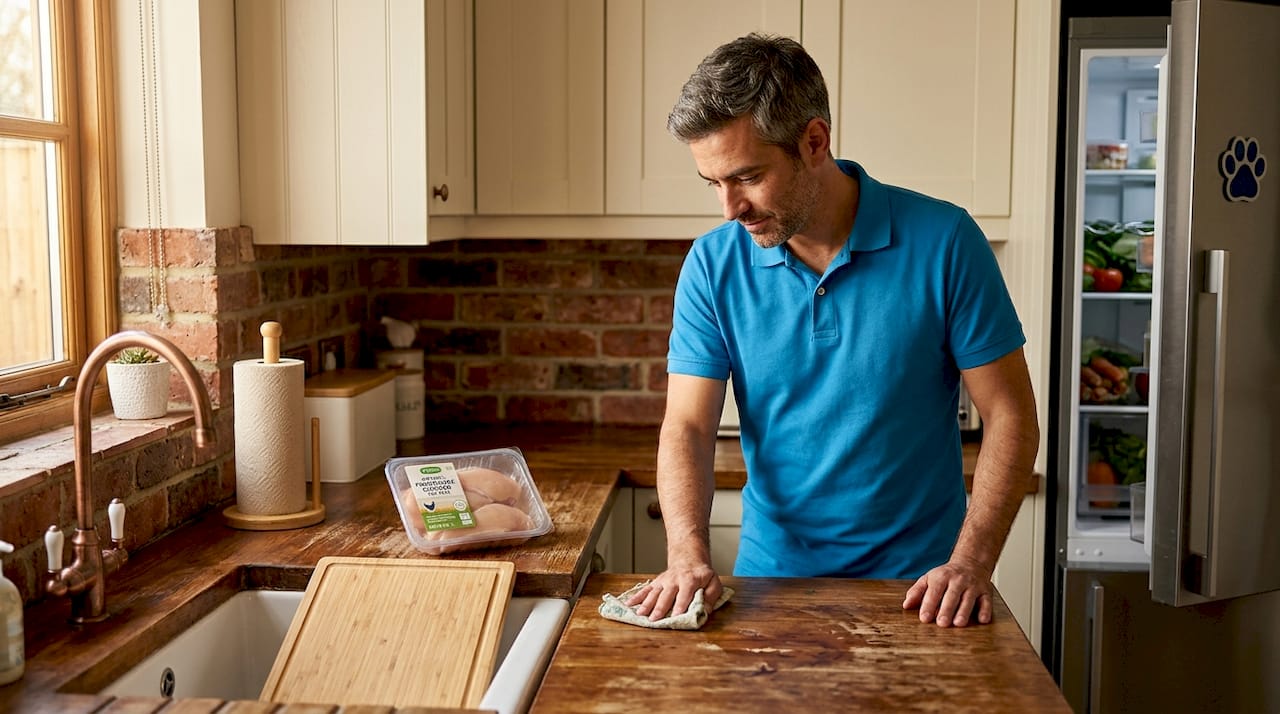
Raw food also changes your home hygiene game. Thaw meals in the refrigerator, not on the counter. Never leave raw food in the bowl for more than 20 to 30 minutes at room temperature. Keep raw food preparation away from areas where you prep your own food, and wash your hands thoroughly before and after every feeding.
How to build and run a raw feeding routine
Once your dog has transitioned, the daily routine becomes straightforward. Getting portioning right is where most new raw feeders need the most help.
The standard baseline for adult dogs is 2 to 3 percent of body weight per day in raw food. A 50-pound dog eats roughly 1 to 1.5 pounds of food daily. Active dogs or those with higher metabolisms may need closer to 3 percent, while older or less active dogs do better at 2 percent or slightly below. Adjust based on body condition, not just the formula.
Life stage matters significantly:
- Puppies need around 2 to 3 percent of their expected adult weight, fed more frequently. Raw feeding for puppies requires extra attention to calcium and phosphorus balance, since improper ratios during growth can affect bone development.
- Adults typically do well on two meals per day at 2 to 3 percent body weight.
- Seniors may need reduced portions and lower fat content if they’re less active, with added omega-3 support for joint health.
Here’s how to run a daily raw feeding routine:
- Thaw your dog’s portion in the fridge the night before
- Remove from fridge 10 to 15 minutes before serving to take the chill off
- Weigh the portion using a kitchen scale rather than estimating by eye
- Serve in a stainless steel or ceramic bowl that’s easy to sanitize
- Remove the bowl within 20 to 30 minutes and clean immediately
For bone safety, always supervise. Raw bones are far safer than cooked ones, which can splinter, but bone size still matters. Read more on safe bone feeding practices before adding them to the rotation. As a rule, bones should be larger than your dog’s mouth to prevent gulping.
Pro Tip: Batch prep and portion a week’s worth of meals on the weekend. Pre-portioning into individual bags saves time and reduces how often you’re handling raw food, which also lowers contamination risk.
What to watch for after you make the switch
Most dogs adapt to raw feeding within two to four weeks. Knowing what’s normal and what’s a warning sign saves a lot of unnecessary worry and prevents overlooking real problems.
Normal changes on a raw diet include smaller, firmer, less odorous stools. You may also notice improved coat shine, more consistent energy, and reduced skin irritation. These are common reports from raw feeders, though individual results vary based on the quality and composition of the diet.
| Sign | What it likely means | What to do |
|---|---|---|
| Firm, smaller stools | Normal adaptation to raw | Continue, monitor |
| Loose stools (1 to 2 days) | Digestive adjustment | Slow transition, add bone content |
| Persistent diarrhea (3+ days) | Intolerance or pathogen issue | Call your vet |
| Vomiting after meals | Too much fat or protein shift | Reduce portion size, simplify protein |
| Lethargy or appetite loss | Possible illness or stress | Vet visit recommended |
| Coat improvement, high energy | Good adaptation | Continue current diet |
Signs like diarrhea or lethargy that persist beyond a few days need veterinary input, not more patience. Your vet can run bloodwork to check that organ function and nutrient levels are staying within range. Scheduling a checkup at the 60 to 90 day mark after switching is a smart habit.
Handling the real safety risks honestly
This is where some raw feeding communities get defensive, and that doesn’t serve you well. The safety risks are real. They’re also manageable if you take them seriously.
Raw meat raises Salmonella risk in dogs, including dogs that show zero symptoms. Asymptomatic dogs shed Salmonella in their feces and saliva, which means exposure risk to humans in your home is real, especially through licking. A 2025 genomic study linked dogs on raw meat diets to Salmonella infections in vulnerable human populations, including infants. This is not a fringe concern.
One misconception worth addressing directly: freeze-dried raw is not the same as cooked. Freeze-drying preserves bacteria long term, which means the same hygiene standards that apply to fresh raw food apply to freeze-dried products. The 2025 FSA assessment also confirmed that infection risk in raw pet food is substantially reduced by consistent home hygiene practices.
“Treat raw dog food prep exactly as you would handle raw chicken for your family’s dinner. Wash surfaces, wash your hands, and keep it away from the spaces where you prepare your own food.”
If your household includes young children, elderly adults, or anyone who is immunocompromised, extra caution is not optional. Feed in a contained area, clean bowls and surfaces with hot soapy water followed by a food-safe disinfectant, and consider whether dog-safe cleaning products are part of your regular kitchen routine. Know the quality standards behind any commercial raw brand you choose before committing to it.
Key hygiene rules that non-negotiably protect your household:
- Always wash hands for at least 20 seconds after handling raw food or touching the feeding bowl
- Disinfect prep surfaces after every meal preparation session
- Store raw food separately from human food in the freezer and fridge
- Do not let children handle raw dog food or pet a dog immediately after feeding
- Dispose of uneaten raw food promptly, never leave it sitting out
My honest take on raw feeding after seeing it from every angle
I’ve seen raw feeding done brilliantly and I’ve seen it done in ways that genuinely worried me. The honest truth is that most problems don’t come from the diet itself. They come from owners who underestimate the research involved and overestimate how naturally balanced a homemade raw meal is.
The “my dog is thriving” anecdote is powerful. I get it. But thriving in the short term does not rule out a calcium deficiency that shows up at year three. I’ve learned that the owners who have the best outcomes are the ones who treat this like a real commitment: working with a vet, verifying nutrient completeness, and maintaining kitchen hygiene without cutting corners.
I also think the all-or-nothing framing holds a lot of people back. If a fully raw diet is not practical for your household right now, a hybrid approach, where raw meals replace one or two kibble meals per week, still delivers meaningful benefits without the full logistical load. Progress beats perfection in pet nutrition too. What I’d encourage you to prioritize above everything else: get your transition plan in place before day one and treat vet collaboration as part of the process, not an afterthought.
— Blayne
How Wildrootspet can support your raw feeding journey

At Wildrootspet, supporting natural, nutrition-first pet care is the whole point. If you’re starting out on raw feeding, the team has put together resources and products specifically designed for where you are right now. The Whole Pet Wellness Academy toolkit is a practical resource for pet parents who want to build a holistic, evidence-backed approach to their dog’s health, including diet. For dogs managing allergies or sensitivities alongside a raw diet, the daily wellness formula is designed with sensitive dogs in mind. Raw feeding works best when every element of the diet is thoughtfully sourced.
FAQ
What is the best raw food model for beginners?
For most beginners, a commercially prepared AAFCO-approved raw blend is the safest starting point because it removes the guesswork of building nutritionally complete homemade raw dog meals from scratch.
How do I transition my dog to raw food without stomach upset?
Use a gradual 7 to 10 day transition schedule, starting with 75% current food and 25% raw, then slowly shifting the ratio until fully raw. Dogs with sensitive digestion may need three to four weeks.
Is raw feeding safe for puppies?
Raw feeding for puppies is possible but requires stricter attention to calcium and phosphorus ratios, since imbalances during growth can affect bone development. Consulting a vet or veterinary nutritionist before starting is strongly recommended.
Do freeze-dried raw treats carry the same bacteria risks as fresh raw?
Yes. Freeze-drying preserves bacteria long term, so freeze-dried raw products carry similar pathogen risks to fresh raw food and should be handled with the same hygiene standards.
How much raw food should I feed my dog daily?
Most adult dogs do well on 2 to 3 percent of their body weight in raw food per day, split across two meals. A 50-pound dog needs roughly 1 to 1.5 pounds of food daily, adjusted based on activity level and body condition.
Recommended
- How to safely transition your dog to a raw diet – Wild Roots Pet Co.
- Raw bones for dogs: benefits, risks, and safe use – Wild Roots Pet Co.
- Puppy nutrition workflow: Feed your pup naturally and safely – Wild Roots Pet Co.
- Raw PMR Beef Meal Blend for Cats & Dogs — Prey Model Raw | Raw Instinc – Wild Roots Pet Co.