

If your dog won’t stop scratching or your cat keeps having digestive issues, you’ve probably started wondering about their food. Understanding what is allergy-friendly pet food means going beyond the buzzwords on a bag and actually learning what your pet’s immune system can and cannot handle. The label “hypoallergenic” gets tossed around freely in pet food marketing, but it carries no regulatory weight whatsoever. Before you spend money on a specialty diet, you need to know exactly what you’re buying and why. This guide breaks down the science, the diet types, and the practical steps for making smarter food choices for a pet with sensitivities.
Table of Contents
- Key Takeaways
- What allergy-friendly pet food actually means
- Types of allergy-friendly diets
- How elimination diet trials actually work
- Practical tips for choosing allergy-friendly pet food
- My take on the allergy diagnosis process
- Natural allergy-friendly options from Wildrootspet
- FAQ
Key Takeaways
| Point | Details |
|---|---|
| “Hypoallergenic” is unregulated | The term is a marketing label with no medical or legal definition for pet food. |
| Elimination trials are the gold standard | Only an 8 to 12 week strict diet trial can confirm a true food allergy diagnosis. |
| Proteins trigger most allergies | Beef, chicken, dairy, and wheat cause the majority of food allergies, not grains. |
| Blood tests are unreliable | Saliva and blood allergy tests for pets lack scientific validation; skip them. |
| Long-term management requires consistency | Treats, supplements, and medications must all align with the elimination diet. |
What allergy-friendly pet food actually means
Allergy-friendly pet food refers to formulas designed to minimize the likelihood of triggering an immune response in pets with known or suspected food allergies. But here is where most pet owners get tripped up: not every sensitive stomach problem is a food allergy. There is a meaningful biological difference between a food allergy and a food intolerance.
A food allergy involves your pet’s immune system. The body identifies a specific protein as a threat and launches an IgE antibody response every time that protein is eaten. A food intolerance, on the other hand, is a digestive issue. No immune response involved. The symptoms can look similar but the causes and treatments differ significantly.
Common signs of a food allergy in dogs and cats include:
- Chronic itching, especially around the face, paws, ears, and belly
- Recurrent ear infections
- Gastrointestinal symptoms like vomiting and diarrhea
- Red, inflamed skin or hot spots
- Hair loss from excessive scratching
Here is something worth knowing before you panic: food allergies are rare compared to environmental allergens and flea allergies. Your itchy dog is statistically more likely reacting to pollen or dust mites than to their kibble. That said, when food is the cause, the right diet makes a dramatic difference.
Pro Tip: Before switching foods, talk to your vet to rule out environmental and flea allergies. Treating the wrong cause wastes time and money, and leaves your pet uncomfortable longer.
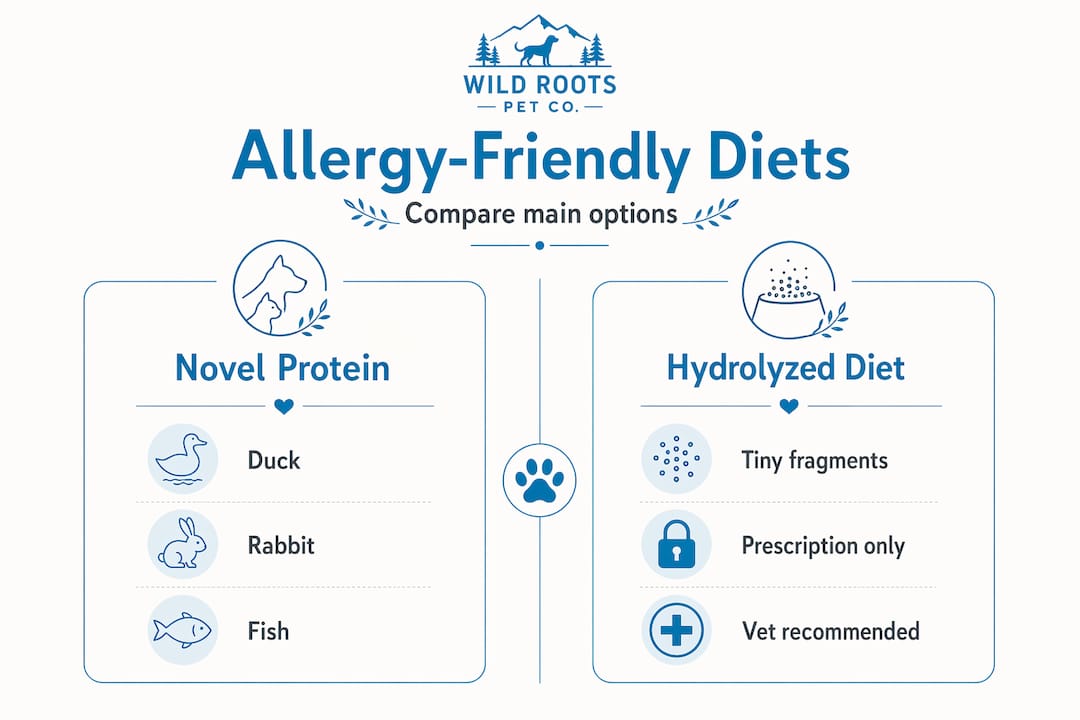
Types of allergy-friendly diets
There are three main categories of allergy-friendly pet food, and they are not interchangeable. Knowing how each one works helps you match the right diet to your pet’s situation.
Novel protein diets
A novel protein is simply a protein source your pet has never eaten before. The logic is straightforward: your pet cannot be allergic to something it has never been exposed to. Common novel proteins include venison, rabbit, duck, kangaroo, and bison. If your dog has eaten chicken its whole life, a venison formula is considered novel.

The challenge with novel protein diets is consistency. If the food is manufactured on shared equipment with common allergens, trace contamination can occur. Cross-contamination during manufacturing makes many limited ingredient over-the-counter diets unreliable for managing true food allergies. This is why veterinary therapeutic diets manufactured under strict controls are often recommended during diagnostic trials.
Hydrolyzed protein diets
Hydrolyzed diets take a different approach entirely. Instead of switching proteins, they break existing proteins into fragments so small that the immune system cannot recognize them as threats. Proteins broken to under 5 kilodaltons do not cross-link IgE antibodies, which means the allergic reaction simply does not start.
This is the most scientifically reliable option for diagnosing food allergies, and veterinary dermatologists frequently recommend hydrolyzed diets during elimination trials. The downside? They tend to be expensive and some pets find the taste less appealing.
Limited ingredient diets
Limited ingredient diets (LIDs) contain fewer total ingredients than a standard formula, usually one protein source and one carbohydrate. The idea is to reduce the number of potential triggers. However, fewer ingredients do not automatically mean hypoallergenic. Many commercial LIDs still contain hidden allergens through shared processing lines.
Here is a comparison to help you see how these options stack up:
| Diet Type | How it works | Best use case | Reliability for diagnosis |
|---|---|---|---|
| Novel protein | Uses a protein the pet hasn’t eaten | Long-term management after diagnosis | Moderate |
| Hydrolyzed protein | Breaks proteins below immune detection | Diagnostic elimination trials | High |
| Limited ingredient | Fewer total ingredients | Mild sensitivities, early investigation | Low to moderate |
Pro Tip: If your goal is diagnosis rather than management, work with your vet to get a prescription hydrolyzed diet. Over-the-counter limited ingredient foods often contain trace proteins that can invalidate a trial.
The most common food allergens in pets are beef, chicken, dairy, wheat, corn, and soy. Most pet food allergies are triggered by protein molecules, not grains. This is why grain-free diets are not the same as allergy-friendly diets. They address the wrong problem for most allergic pets.
How elimination diet trials actually work
An elimination diet trial is the only scientifically validated method for diagnosing a food allergy in pets. Blood or saliva allergy tests for food allergies lack scientific validity and should not guide treatment decisions. Here is how a proper trial works:
- Choose the right food. Your vet selects either a novel protein your pet has never eaten or a hydrolyzed protein diet. This is the only food your pet eats for the entire trial.
- Commit to 8 to 12 weeks of strict feeding. Approximately 95% of dogs with food allergies show significant improvement within 8 weeks when the trial is done correctly. Cats may need the full 12.
- Eliminate every exception. No treats, no flavored medications, no table scraps, no flavored toothpaste. Even a single bite of a prohibited food can invalidate the entire trial.
- Watch for improvement. Track your pet’s symptoms weekly. Reduction in itching, ear infections, and digestive issues are all positive signs.
- Conduct a re-challenge phase. Reintroduce the original food to confirm that symptoms return. Without this step, misdiagnosis is common. A re-challenge confirmation is what separates a true diagnosis from an assumption.
“The elimination diet trial is not just the best diagnostic tool we have for food allergies in pets. It is currently the only reliable one.” — Veterinary Medicine at Illinois
The compliance piece cannot be overstated. Kids giving the dog table scraps, flavored pill pockets, even treats from a neighbor, all of these can produce false results. Every person in the household needs to understand and commit to the trial protocol.
Practical tips for choosing allergy-friendly pet food
Once you understand the types and the diagnostic process, the next step is knowing how to shop and manage your pet’s diet long term. Here is what to actually pay attention to:
- Read past the marketing claims. AAFCO sets nutritional standards for pet food but does not certify or guarantee any food as hypoallergenic. A label saying “limited ingredient” or “hypoallergenic” means nothing medically. Look at the actual ingredient list.
- Verify the protein source. For a novel protein diet to work, it needs to contain a single protein your pet has genuinely never eaten. Many “salmon and sweet potato” formulas contain chicken fat or chicken meal buried further down the ingredient list.
- Ask about manufacturing practices. Call the brand or check their website. If a food is made on shared equipment with common allergens, it is not suitable for a diagnostic trial.
- Consider palatability alongside safety. Some pets refuse hydrolyzed diets because the hydrolysis process changes the flavor profile. If your pet won’t eat it, the trial fails for a different reason. Ask your vet if there are palatable prescription options to try.
- Plan for treats and supplements. Healthy allergy-aware treats need to match your pet’s approved protein list. Even a small chew that contains an allergen can cause a flare.
Pro Tip: Look for single-ingredient treats during and after an elimination trial. If the only ingredient is one approved protein, you know exactly what your pet is eating.
For pets with confirmed food allergies, long-term management means staying consistent. That includes rechecking supplement ingredient labels regularly since formulas change, rotating flavored medications with your vet’s guidance, and re-evaluating your pet’s diet annually as their health needs evolve. Reviewing natural ingredient options regularly helps you stay informed as new products come to market.
My take on the allergy diagnosis process
What I’ve seen over and over again is that pet owners come in convinced their pet has a food allergy because they’ve already done a blood test and gotten a result. I understand the appeal. It’s fast, it’s concrete, and it feels like science. But those tests routinely flag proteins the pet has eaten without problems for years, and completely miss the actual trigger.
In my experience, the real challenge with food allergy management is not finding the right food. It’s getting every person in the household to take the elimination trial seriously. I’ve watched a meticulous 10-week trial get invalidated because a well-meaning family member gave the dog a single piece of cheese. One bite. Ten weeks of work, gone.
What I’ve also found is that many pets labeled as food-allergic actually have environmental allergies as their primary driver. The food switch helps somewhat because stress and inflammation compound each other, but the underlying issue never fully resolves. A proper vet diagnosis separates these cases.
My honest advice: set realistic expectations. A food allergy diagnosis takes time, costs money in quality food, and requires discipline. But when it works, the improvement in your pet’s comfort and quality of life is worth every bit of effort. Work closely with a veterinary dermatologist if your regular vet isn’t seeing results. Specialist knowledge genuinely matters here.
— Blayne
Natural allergy-friendly options from Wildrootspet

If your pet has been diagnosed with a sensitivity or you’re in the maintenance phase after a successful elimination trial, Wildrootspet offers several products built around clean, single-source ingredients that align with what allergy-conscious pet owners actually need.
The Treat Topper Fish Dog Food Topper is a strong pick for pets avoiding common protein allergens like beef and chicken. Fish is a legitimate novel protein for many dogs and cats, and a low-fat topper format lets you boost palatability without throwing off a carefully managed diet. For pets with a known pork or beef sensitivity, the Daily Wellness Formula is specifically formulated with that restriction in mind. Wildrootspet focuses on sourcing natural, high-quality ingredients that health-conscious pet owners can trust, which matters a great deal when every ingredient in your pet’s bowl needs to be deliberate.
FAQ
Can pets have food allergies?
Yes, pets can develop food allergies, though they are less common than environmental allergies. Dogs and cats can become allergic to proteins like beef, chicken, or dairy after repeated exposure over time.
What is the best pet food for allergies?
The best option depends on whether you’re diagnosing or managing. For diagnosis, hydrolyzed protein prescription diets are most reliable. For long-term management, a confirmed novel protein diet works well for most pets.
How do I choose allergy-friendly pet food?
Start with a vet consultation to confirm a food allergy is the actual cause of symptoms. Then select a diet with a single, verified protein source your pet has never eaten, and confirm it’s manufactured without cross-contamination from common allergens.
Are grain-free diets hypoallergenic pet food options?
No. Grain-free does not mean hypoallergenic. Most food allergies in pets are triggered by animal proteins, not grains. Removing grain from the formula does not address the actual allergen for most affected pets.
How long does a pet food allergy trial take?
A strict elimination trial requires 8 to 12 weeks with zero dietary exceptions. Most dogs with true food allergies show clear improvement by the 8-week mark when the trial is conducted correctly.
Recommended
- Pet’s Daily Wellness Formula - For Pets With Pork/Beef Allergy – Wild Roots Pet Co.
- Natural ingredients for pet diets: healthier choices – Wild Roots Pet Co.
- Why Organic Pet Food? Health, Facts, and What Matters Most – Wild Roots Pet Co.
- Treat Topper Antler Powder Dog Food Topper | Nutritional Supplement fo – Wild Roots Pet Co.