

Natural pet supplements are specialized products derived from plant, animal, or mined sources, designed to address specific nutritional gaps and physiological needs that standard diets alone may not cover. Pet owners are choosing these products in growing numbers, and the reasons go well beyond marketing. Clinical research now supports targeted benefits from ingredients like fish oil, probiotics, and palmitoylethanolamide (PEA) for conditions ranging from joint pain to digestive imbalance. Understanding why adopt natural supplements for pets starts with knowing what they actually are, what the science says, and how to use them without doing harm.
What are natural supplements for pets and how do they differ from synthetic ones?
Natural pet supplements are defined by the Association of American Feed Control Officials (AAFCO) as products made exclusively from plant, animal, or mined sources without synthetic processing. That definition matters because it sets a legal standard for labeling. AAFCO requires that any product containing synthetic vitamins must disclose them clearly, with full labeling compliance required by january 2030.
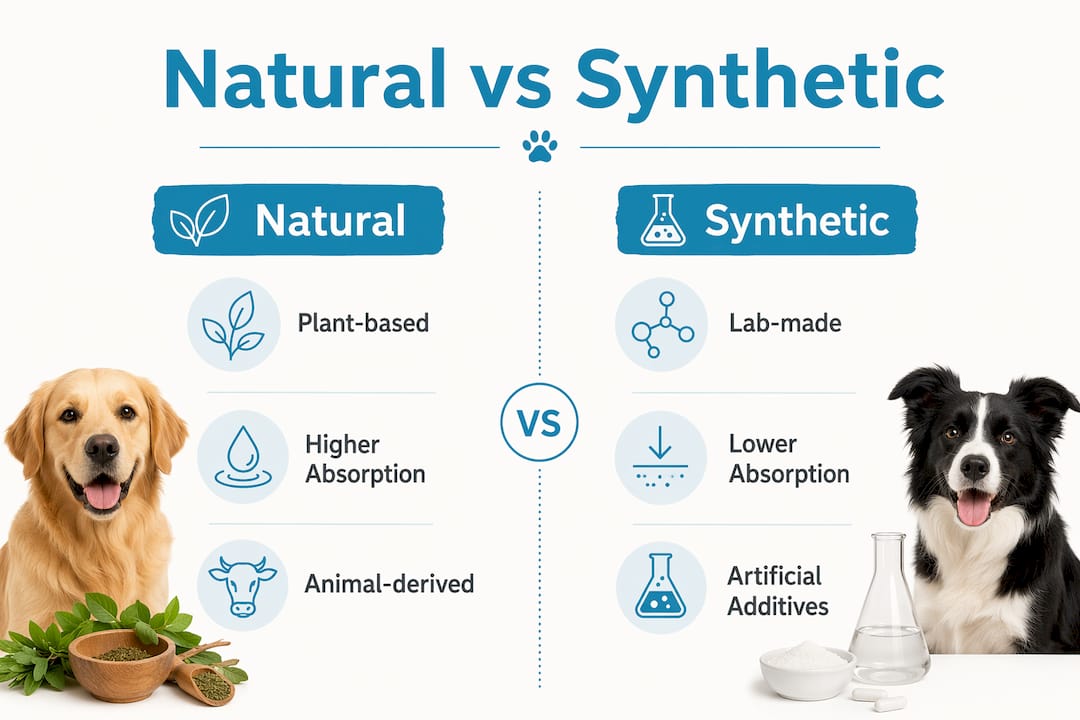
The practical difference between natural and synthetic supplements comes down to bioavailability. Natural ingredients promote absorption through cofactors and enzymes that synthetic isolates simply do not contain. A whole-food source of vitamin E, for example, arrives with tocopherols and plant compounds that help the body absorb and use it. A synthetic isolate arrives alone, and the body processes it less efficiently.

This does not mean every synthetic supplement is useless. It means the source of a nutrient affects how well your pet actually benefits from it. Organ-based supplements, freeze-dried proteins, and whole-food mineral sources consistently outperform their lab-made equivalents in absorption studies. When you read a label and see “natural with added vitamins and minerals,” that is a product blending both approaches, which is legal and common, but worth understanding before you buy.
Pro Tip: Check the ingredient list for the word “dl-” before a vitamin name. That prefix signals a synthetic form. Natural vitamin E reads as “d-alpha-tocopherol,” while the synthetic version reads as “dl-alpha-tocopherol.”
| Feature | Natural supplements | Synthetic supplements |
|---|---|---|
| Ingredient source | Plant, animal, or mined | Lab-produced isolates |
| Bioavailability | Higher due to natural cofactors | Lower without supporting compounds |
| Label disclosure | Required by AAFCO | Required when added to “natural” products |
| Common examples | Fish oil, organ powder, probiotics | Synthetic vitamin D, ascorbic acid |
What are the proven benefits of natural supplements for pets?
The benefits of natural supplements for pets are most clearly supported in four areas: joint health, digestive function, skin and coat condition, and inflammation control. Each of these has clinical evidence behind it, not just marketing claims.
Joint support is where some of the strongest recent data sits. A 2026 study found that 76% of dogs treated with PEA-based joint supplements had successful outcomes, compared to 40% in the placebo group. That gap is significant. It means PEA, a naturally occurring fatty acid compound, produced measurable improvement in mobility and comfort in dogs that conventional placebo treatment could not match.
Digestive health is another area with solid numbers. The same 2026 research found that 94% of dogs and 91% of cats accepted prebiotic-postbiotic digestive chews during a 28-day trial. Palatability matters because a supplement your pet refuses to eat provides zero benefit. The high acceptance rate also suggests these products can realistically be integrated into daily routines without a fight.
Fish oil is the most well-researched natural supplement for pets overall. Omega-3 fatty acids from fish oil reduce inflammatory markers, support skin barrier function, and improve coat quality in both dogs and cats. Veterinary experts consistently cite fish oil and probiotics as the two categories with the strongest evidence for real-world benefit.
The key benefits backed by current research include:
- Joint mobility: PEA supplements show measurable improvement in dogs with mobility issues
- Gut health: Prebiotic and postbiotic chews shift fecal microbiota toward healthier profiles
- Skin and coat: Omega-3 fatty acids from fish oil reduce inflammation and improve coat condition
- Immune support: Probiotics strengthen gut-associated immune function over time
- Inflammation reduction: Natural fatty acid compounds address systemic inflammation without pharmaceutical side effects
Research focus is also shifting beyond visible outcomes. Scientists are now measuring metabolic markers and inflammatory signals to understand how supplements work at a cellular level. That shift means future evidence will be more precise and harder to dismiss.
When and how should pet owners adopt natural supplements responsibly?
Responsible supplementation starts with a clear reason. Supplements work best as targeted interventions for specific needs, not as general wellness boosters added to every pet’s bowl. Holistic vets emphasize that success depends on individual health history and dietary foundation, not broad supplementation across the board.
Signs your pet may genuinely benefit from a supplement include visible joint stiffness after rest, recurring digestive upset, dull or flaky coat, frequent ear infections, or a documented nutritional gap in their diet. These are specific, observable problems that targeted supplements can address. A pet eating a complete, balanced diet with no symptoms is a different case entirely.
The risks of getting it wrong are real. Veterinary experts caution that multivitamins may be unnecessary or harmful in pets already eating complete diets, particularly due to the risk of fat-soluble vitamin toxicity. Vitamins A, D, E, and K accumulate in body fat rather than flushing out in urine. Overdosing them over weeks or months causes serious harm.
Follow these steps to supplement safely:
- Identify a specific health goal. Decide whether you are addressing joint stiffness, digestive issues, skin problems, or a documented deficiency before buying anything.
- Consult your veterinarian. A vet can rule out underlying conditions that supplements cannot fix and recommend appropriate products and doses.
- Document your pet’s baseline. Record mobility, stool quality, coat condition, and energy level before starting. Documenting your pet’s baseline gives you objective data to measure real improvement against.
- Start with one supplement at a time. Adding multiple products simultaneously makes it impossible to identify what is helping or causing a reaction.
- Reevaluate after 4–8 weeks. If you see no measurable change, stop and reassess with your vet rather than continuing indefinitely.
Pro Tip: Keep a simple weekly log in your phone’s notes app. Rate your pet’s mobility, energy, and stool quality on a 1–5 scale each week. After 30 days, the trend becomes obvious.
The “natural” label carries no FDA pre-market approval requirement. Quality assurance falls on owners who research brand transparency, third-party testing, and ingredient sourcing. Look for brands that publish certificates of analysis and use named, traceable ingredient sources.
How do natural supplements fit into a holistic pet care routine?
Natural supplements work best as one part of a broader care plan, not as a standalone fix. Dietary supplements cannot replace proper nutrition. Over-supplementing creates dangerous imbalances, especially with fat-soluble vitamins. The foundation always comes first: a species-appropriate, nutritionally complete diet.
Holistic pet care combines several practices that work together. Supplements fill specific gaps within that system. The most effective approach integrates:
- Balanced diet: Raw, freeze-dried, or high-quality commercial food that meets AAFCO nutritional standards
- Regular physical activity: Daily movement supports joint health, weight management, and mental wellbeing
- Preventive veterinary care: Routine checkups catch problems before they require aggressive treatment
- Targeted supplementation: Fish oil, probiotics, or PEA added based on documented need, not habit
- Stress reduction: Environmental enrichment, consistent routine, and social interaction affect immune function directly
Supplements are increasingly used as part of multimodal integrative care to reduce reliance on prescription medications. That is a meaningful shift in veterinary thinking. It reflects growing confidence that natural products, used correctly, can reduce the pharmaceutical load on aging or chronically ill pets.
Veterinarians recommend open dialogue about supplement goals to tailor safe, effective use and avoid interactions with existing medications. That conversation is not optional. It is the step that separates responsible supplementation from expensive guesswork. Bring your pet’s full medication and diet list to every supplement discussion.
Explore natural pet nutrition tips to understand how diet and supplementation work together as a system rather than competing approaches.
Key Takeaways
Natural supplements for pets deliver measurable benefits when chosen for specific needs, sourced from quality ingredients, and used alongside veterinary guidance and a complete diet.
| Point | Details |
|---|---|
| Natural vs. synthetic sourcing | AAFCO-defined natural supplements have better bioavailability due to whole-food cofactors. |
| Strongest evidence categories | Fish oil, probiotics, and PEA have the most clinical support for real-world pet health benefits. |
| Baseline documentation | Record mobility, coat, and digestion before starting to measure actual improvement objectively. |
| Vet consultation is non-negotiable | Supplements can interact with medications and cause toxicity without professional guidance. |
| Supplements complement diet | No supplement replaces a nutritionally complete diet; it fills specific gaps within one. |
What I’ve learned from watching pet owners supplement without a plan
Most pet owners I’ve seen get into trouble with supplements share one trait: they added products based on what worked for someone else’s dog. A neighbor’s senior Lab improved on glucosamine, so they gave it to their two-year-old Labrador with no joint issues. A friend’s cat thrived on a probiotic, so they added the same one to their cat’s bowl without knowing whether their cat had any gut issues at all.
The excitement around natural alternatives is legitimate. The research on PEA, fish oil, and prebiotics is genuinely encouraging. But “natural” does not mean “harmless in any quantity for any pet.” I’ve seen fat-soluble vitamin toxicity from well-intentioned owners who doubled up on supplements because they figured more was better.
What actually works is boring but reliable: identify one specific problem, confirm it with a vet, choose a product with transparent sourcing and third-party testing, document the baseline, and reevaluate in 30 days. That process takes more patience than grabbing the most popular product on a shelf. It also produces results you can actually trust.
The other thing I’d push back on is the idea that supplements are a substitute for fixing the diet. A pet eating low-quality food with a fish oil capsule on top is still eating low-quality food. Get the foundation right first. Then add targeted supplements where the evidence supports them.
— Blayne
Natural wellness products from Wildrootspet worth knowing about

Wildrootspet carries a range of products built around the same principles this article covers: natural sourcing, ingredient transparency, and targeted nutritional support. The daily wellness formula is designed for pets with pork or beef sensitivities and delivers targeted nutrition without common allergens. For owners looking to add a natural protein boost to existing meals, the fish-based treat topper provides omega-3 support in a low-fat, food-topper format that most dogs accept immediately. Both products reflect Wildrootspet’s focus on quality ingredients that align with what the research actually supports.
FAQ
What is the definition of natural pet supplements?
Natural pet supplements are products made exclusively from plant, animal, or mined sources, as defined by AAFCO. Any product containing synthetic vitamins must disclose that clearly on the label.
Which natural supplements have the strongest evidence for dogs?
Fish oil, probiotics, and PEA-based joint supplements have the most clinical support. A 2026 study showed 76% of dogs on PEA supplements had successful joint outcomes, compared to 40% on placebo.
Can natural supplements replace a balanced pet diet?
No. Supplements fill specific nutritional gaps but cannot substitute for a complete, species-appropriate diet. Over-supplementing, especially with fat-soluble vitamins, creates dangerous imbalances.
Do I need a vet before giving my pet natural supplements?
Yes. A veterinarian can identify whether a supplement is appropriate, recommend safe doses, and check for interactions with existing medications or health conditions.
How do I know if a natural supplement is actually working?
Document your pet’s baseline before starting, including mobility, coat quality, and digestion. Reevaluate those same markers after 4–8 weeks to measure real change objectively.