

Not all pet treats are created equal, and if you’ve been reaching for the same bag of biscuits out of habit, it may be time to rethink what a treat can actually do. The functional pet treat category has grown rapidly, driven by owners who want every bite to count. These products are built around bioactive ingredient classes like omega-3s, probiotics, and botanicals, embedded in a treat format for easy, consistent dosing alongside a balanced diet. This guide breaks down exactly what makes a treat functional, which ingredients deliver real results, and how to find options that live up to their promises.
Table of Contents
- What are functional pet treats?
- Popular functional ingredients and their benefits
- How functional treats support specific pet needs
- What to look for when choosing functional treats
- Our perspective: what most pet owners overlook about functional treats
- Explore functional treat solutions for your pet
- Frequently asked questions
Key Takeaways
| Point | Details |
|---|---|
| Definition | Functional treats deliver targeted health benefits beyond basic nutrition. |
| Ingredient evidence | Not all ingredients are backed by research, so prioritize clear labels and proven actives. |
| Condition targeting | Match treat types to your pet’s individual needs, considering limits of the evidence. |
| Buying smarter | Look for ingredient transparency and avoid vague or artificial formulations. |
| Health support, not cure | Functional treats should complement, not replace, a balanced diet and medical advice. |
What are functional pet treats?
A functional pet treat isn’t just a snack. It’s specifically formulated to deliver a measurable health benefit beyond basic caloric intake. Standard treats reward behavior and build bonds. Functional treats do that too, but they carry an active ingredient designed to support a particular aspect of your pet’s health, whether that’s joint mobility, digestive balance, skin condition, or immune resilience.
The healthy pet treat options category is broad, and not everything marketed as “healthy” qualifies as truly functional. True functional treats follow a clear framework:
- Bioactive ingredient selection: A specific ingredient class chosen for a targeted health outcome
- Effective dosage: Enough of the active ingredient per serving to actually make a difference
- Appropriate delivery format: Treat format that preserves the active ingredient through processing
- Adjunct positioning: Designed to supplement, not replace, a nutritionally complete diet
The distinction matters a lot. Consider the difference between a sweet potato chew (nutritious, natural, but not targeted) and a soft chew with a clinically studied probiotic strain at a disclosed CFU count. One is a wholesome snack; the other is a functional treat.
Here’s a quick comparison to visualize that gap:
| Feature | Standard treat | Functional treat |
|---|---|---|
| Primary purpose | Reward, flavor enjoyment | Targeted health support |
| Ingredient focus | Taste, texture | Bioactive compounds |
| Dosage disclosure | Rarely disclosed | Expected and important |
| Evidence base | Not required | Ingredient-linked research |
| Placement in diet | Flexible, occasional | Ideally consistent |
“The mechanics most functional treat products follow: choose a bioactive ingredient class, embed it in a treat matrix for convenient, consistent dosing, and position it as an adjunct to a complete diet.”
Functional treats shine when they’re part of a thought-out routine. They’re not magic in a bag, but when used consistently and alongside a quality diet, they can genuinely move the needle on your pet’s health.
Popular functional ingredients and their benefits
Once you understand what makes a treat functional, the next step is knowing which ingredients actually deliver results. The market includes dozens of active compounds, but a few categories dominate because they carry the strongest evidence and widest applicability.
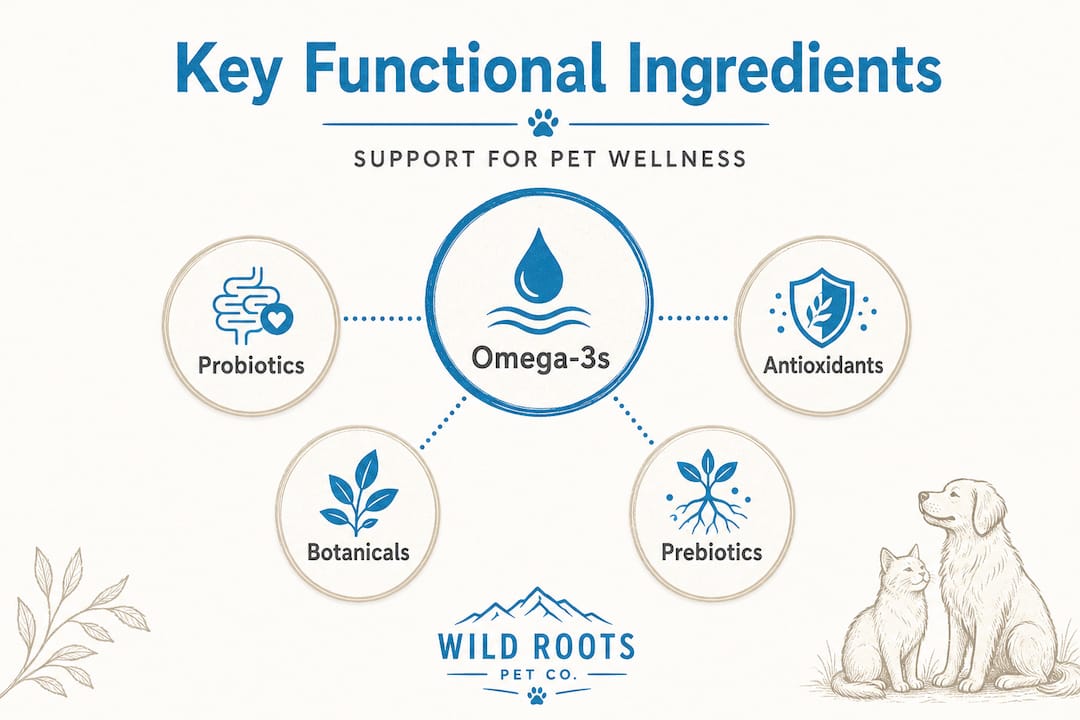
Omega-3 fatty acids (EPA and DHA) These are probably the best-studied functional ingredients for pets. Sourced from fish oil or marine algae, EPA and DHA have a substantial body of research behind them, especially for joint support and coat health. Fish-oil omega-3s have more published literature supporting joint outcomes than nearly any other supplement category. When shopping for treats featuring omega-3s, look for sourcing transparency. The omega-3 oil for pets delivery format also matters because heat during processing can degrade sensitive fatty acids.
Prebiotics, probiotics, and postbiotics Gut health is a major driver in the functional pet treat market. Prebiotics feed beneficial gut bacteria; probiotics introduce live beneficial strains; postbiotics are the bioactive byproducts those bacteria produce. Each works differently, and the best gut-targeted products often combine more than one. The key factor is strain specificity. A vague label that says “contains probiotics” without a strain name and CFU count is a marketing statement, not a functional claim.

Botanicals and antioxidants Ingredients like turmeric, ashwagandha, blueberry extract, and green tea polyphenols fall into this category. They’re used primarily for immune support and skin health narratives. The evidence base here is more varied than omega-3s or probiotics, and dosage consistency is a known challenge. That said, ingredients like turmeric’s active compound curcumin have genuine anti-inflammatory properties, and antioxidants from berry concentrates can complement immune function when present in meaningful amounts.
Here’s a reference table for the most common bioactives you’ll find on treat labels today:
| Ingredient | Primary function | Best-supported benefit | Key quality marker |
|---|---|---|---|
| Fish oil omega-3s | Anti-inflammatory | Joint mobility, skin/coat | EPA/DHA mg disclosed |
| Probiotics | Gut microbiome balance | Stool consistency, digestion | Strain name + CFU count |
| Prebiotics (FOS, inulin) | Feed beneficial bacteria | Digestive regularity | Type and amount listed |
| Turmeric/curcumin | Anti-inflammatory | Joint and immune support | Standardized extract % |
| Blueberry/cranberry extract | Antioxidant | Immune and urinary support | Polyphenol content |
| Collagen/glucosamine | Connective tissue support | Joint health, mobility | mg per serving |
Pro Tip: Don’t just scan for an ingredient name on the front of the package. Flip it over and look for the actual dosage in the guaranteed analysis or supplement facts panel. If it isn’t there, you have no way of knowing if there’s enough active ingredient to matter.
Exploring natural functional ingredients across these categories gives you a much stronger foundation for making informed choices that genuinely serve your pet’s biology.
How functional treats support specific pet needs
Matching the right treat to your pet’s condition is where the real value unlocks. But it’s important to go in with realistic expectations. Not every ingredient works the same way for every animal, and some of the most promising research applies to pets with specific baseline conditions rather than all pets generally.
Gut-targeted ingredient studies often show the strongest benefits in animals that already had loose or inconsistent stools, not necessarily in pets with already healthy digestion. This is a meaningful caveat. It means your dog with solid digestion may see less dramatic improvement from a probiotic treat than a dog dealing with intermittent digestive issues. That’s not a reason to avoid these products, but it is a reason to set appropriate expectations.
Here’s a practical comparison of how ingredient classes map to common pet health needs:
| Health goal | Best-matched ingredient class | Evidence strength | Key limitation |
|---|---|---|---|
| Joint mobility | Omega-3s, glucosamine, collagen | Strong for omega-3s | Needs consistent long-term dosing |
| Digestive health | Probiotics, prebiotics, postbiotics | Moderate, condition-dependent | Benefits vary by baseline gut status |
| Skin and coat | Omega-3s, biotin, zinc | Strong for omega-3s | Processing method affects potency |
| Immune support | Antioxidants, botanicals | Emerging, variable | Dosage standardization is inconsistent |
| Stress and behavior | Ashwagandha, L-theanine, GABA | Early-stage research | Requires consistent daily dosing |
To evaluate whether a specific treat is right for your pet’s condition, work through these steps:
- Identify your primary goal. Be specific. “Better health” is too vague. “Looser stools after switching food” or “stiff back legs after rest” are specific and actionable targets.
- Match the ingredient class to that goal. Use the table above as a starting point, then research the specific ingredient further.
- Check the dose. Find out if the treat provides a meaningful amount of the active ingredient per serving based on your pet’s size.
- Look at the full ingredient list. Functional ingredients shouldn’t be buried alongside a long list of artificial additives. The active compound should be prominent.
- Plan for consistency. One treat won’t do much. Most functional ingredients need 4 to 8 weeks of consistent use before you’ll see tangible results.
Pro Tip: The wellness formula for pets approach works best when the functional treat targets one primary need rather than trying to address everything at once. Focused supplementation in a targeted product is usually more effective than a “kitchen sink” formula with tiny amounts of many ingredients.
What to look for when choosing functional treats
Knowing what to look for is just as important as knowing what to avoid. The pet treat market is not tightly regulated in the same way pharmaceutical products are, which means brands can make vague “supports joint health” claims without rigorous proof. Your job is to read past the front of the bag.
What a trustworthy label looks like:
- Clear ingredient names with no vague proprietary blends hiding the actives
- Disclosed amounts for key bioactive ingredients (mg, CFU, or IU per serving)
- Named probiotic strains (e.g., Lactobacillus acidophilus rather than just “probiotic culture”)
- Ingredient sourcing information, especially for fish or animal proteins
- A guaranteed analysis that includes more than just protein, fat, and moisture
Red flags to watch for:
- “Proprietary blend” with no breakdown of individual ingredient amounts
- Only front-label claims with no supporting information on the back
- Very low-cost products claiming the same benefits as well-sourced alternatives
- Vague phrases like “may support” paired with no dosage information
- Artificial colors, flavors, or synthetic preservatives in a product marketed as natural
“A practical benchmark when evaluating functional treat claims: look for dose disclosure and evidence-consistent ingredient choices to separate meaningful products from marketing noise.”
It also helps to ask whether the claim on the label logically connects to an ingredient that is actually capable of delivering that benefit. A treat claiming to support joint health should contain omega-3s, glucosamine, or collagen at a disclosed level. If the active ingredient you’d expect isn’t present or isn’t dosed meaningfully, that’s a signal to keep shopping.
Understanding pet diet ingredient choices more broadly will sharpen your ability to evaluate these claims quickly and confidently.
Pro Tip: When in doubt, compare the cost per serving rather than the cost per bag. A smaller bag of a well-dosed treat is often a better investment than a large bag with trace amounts of the active ingredient.
Our perspective: what most pet owners overlook about functional treats
Here’s something we hear a lot: “I’ve been giving my dog these joint chews for two weeks and I haven’t seen a difference.” This is one of the most common frustrations in the functional treat space, and it points to a gap between expectation and reality that the marketing around these products rarely addresses honestly.
Functional treats are not pharmaceuticals. They don’t work overnight, and they aren’t designed to override poor nutrition or an otherwise unhealthy lifestyle. The most meaningful results we’ve seen, both in the research and from what our customers report, come from pet owners who treat functional chews the way they treat their own daily supplements: consistently, over time, as part of a broader wellness routine.
The second thing most owners miss is the context dependency of these benefits. A probiotic treat given to an already healthy dog with a resilient gut microbiome may show minimal visible change. That same treat given to a dog with stress-triggered digestive upset may produce genuinely notable improvement within weeks. The ingredient isn’t better or worse in those two scenarios. The pet’s baseline and specific need is what determines whether the benefit is visible.
We also think the industry has a messaging problem. The pressure to stand out on a crowded shelf leads brands to overclaim, using phrases like “dramatically improves” or “clinically proven” in ways that stretch the truth. Most functional treat research shows modest, real, but not dramatic effects. Modest and real is actually valuable, especially over the long term. But it doesn’t sell as easily as “transforms your dog’s joints in 30 days.”
Our honest advice: choose functional treats that target one specific, identified need in your pet, use them consistently for at least six weeks before evaluating results, and make sure they’re part of a diet and lifestyle that already meets your pet’s basic nutritional needs. A functional treat placed on top of a poor-quality diet is like putting a quality tire on a car with no engine.
Explore functional treat solutions for your pet
If you’re ready to back up your intentions with quality products, Wild Roots Pet Co. offers options built around exactly these principles.

Our Daily Wellness Formula is a strong starting point for pets who need broad-spectrum daily support without pork or beef allergens. For cats, our chicken cat treats offer a clean, single-protein option that fits naturally into a functional routine. And for dogs and cats needing more comprehensive support, the Holistic Total Body Support multivitamin and glandular formula delivers a thoughtfully assembled stack of nutrients in a single daily product. Every option we carry is chosen with ingredient transparency and real-world health outcomes in mind, not just shelf appeal.
Frequently asked questions
Are functional treats safe for daily use?
Most functional treats are formulated for daily dosing, but you should always review the ingredient list for cumulative dosing concerns, especially with fat-soluble vitamins, and consult your vet for pets with existing health conditions.
Do functional treats replace supplements or medications?
Functional treats can complement a health regimen, but they should never replace prescribed treatments or medications your veterinarian has recommended for a diagnosed condition.
Which ingredients should I avoid in functional treats?
Avoid treats containing artificial colors, synthetic preservatives, or undisclosed proprietary blends that prevent you from verifying active ingredient amounts.
Can all pets benefit from functional treats?
Benefits are condition-specific and vary by baseline health status, meaning a treat targeting gut health will have the most impact on a pet already experiencing digestive inconsistency rather than one with no issues.
Recommended
- Healthy pet treats: natural options for dogs and cats – Wild Roots Pet Co.
- Natural ingredients for pet diets: healthier choices – Wild Roots Pet Co.
- How to safely use natural dog chews for healthy pets – Wild Roots Pet Co.
- Why Organic Pet Food? Health, Facts, and What Matters Most – Wild Roots Pet Co.