

Introducing new treats to pets is a deliberate, step-by-step process that requires gradual exposure, close observation, and an understanding of your pet’s individual dietary needs. Rush it, and you risk vomiting, diarrhea, or allergic reactions that could set back your pet’s trust in new foods entirely. The good news: a structured approach to the best pet treat introduction works for both dogs and cats, regardless of age or breed. Veterinary nutritionists and natural pet brands like Wildrootspet consistently recommend the same core principle. Go slow, watch closely, and let your pet lead the pace.
How to introduce new treats to pets: what to do first
Before your pet takes a single bite, you need to do two things: choose the right treat and assess your pet’s health baseline. These steps are not optional. Sudden dietary changes can cause allergies, digestive upset, or weight gain, even when the treat is marketed as healthy and natural.
Reading ingredient labels the right way
Ingredient lists tell you more than the front of the package ever will. Look for a named protein source as the first ingredient, such as chicken, salmon, or beef liver. Avoid treats with artificial preservatives like BHA, BHT, or ethoxyquin, and steer clear of corn syrup, artificial colors, and vague terms like “meat by-products.” The Wildrootspet guide on avoiding artificial additives explains exactly which ingredients to flag before purchase.

Single-ingredient treats are the safest starting point for new treat introductions. They contain one protein source and nothing else, which makes it far easier to identify the cause of any reaction. Freeze-dried chicken breast or dehydrated beef liver are classic examples. When a treat has 15 ingredients and your cat develops a rash, you have no idea which one triggered it.
Checking for known allergies before you start
Verify ingredient lists against your pet’s known allergies before offering anything new, even if the treat is labeled natural or grain-free. Common allergens in pets include beef, dairy, wheat, chicken, and lamb. If your dog has reacted to chicken-based kibble before, a chicken-flavored treat is a risk worth skipping. Consult your vet if you are unsure about your pet’s sensitivities, especially for cats with chronic digestive issues.
Pro Tip: Start a treat journal before day one. A simple notebook or phone note where you log the treat name, ingredients, date introduced, and any reactions gives you a clear record that is genuinely useful at vet visits.
Keeping a treat journal is especially valuable for pets with known sensitivities. It removes the guesswork when a reaction occurs and helps you build a safe treat rotation over time. This is one of the most underused tools in the process for introducing new pet foods.
Here is what to prepare before the first introduction:
- Write down your pet’s current known allergens and sensitivities
- Check the new treat’s ingredient list against that list
- Confirm the treat is appropriately sized for your pet’s breed and age
- Have a treat journal ready to log date, treat name, and any observations
- Store the treat packaging in case your vet needs to review it later
What does the step-by-step introduction process look like?
The process for introducing new pet foods and treats follows the same logic as an elimination diet. You introduce one variable at a time, observe the response, and move forward only when you have confirmed safety.
Here is the recommended sequence:
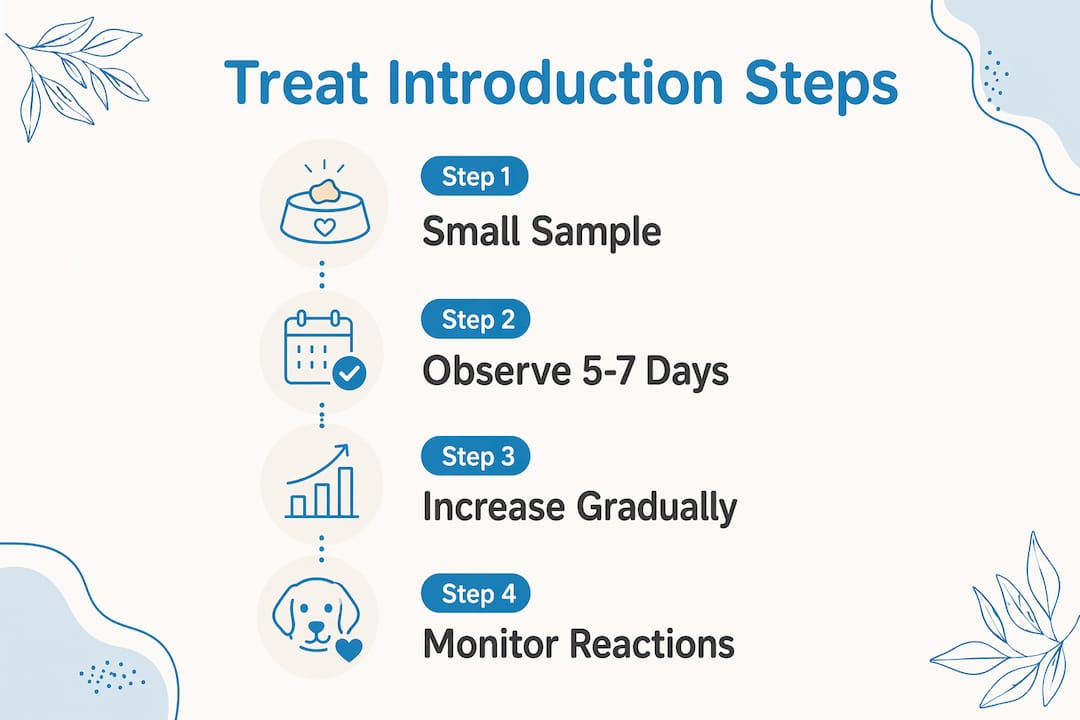
- Day 1: Offer one small piece or a partial bite of the new treat. For a medium-sized dog, this means roughly the size of a pea. For a cat, half that amount.
- Days 1 to 2: Monitor for 24 to 48 hours after the first sample. Watch for vomiting, loose stool, excessive gas, or changes in energy level.
- Days 2 to 4: If no reaction appears, gradually increase the portion size over the next two to three days. Do not jump to full serving size immediately.
- Days 5 to 7: Continue offering the treat at the adjusted portion. Observe stool consistency and overall behavior throughout this window.
- Day 7 and beyond: Only after waiting 5 to 7 days should you consider introducing a second new treat type. This gap isolates any adverse reactions to a single ingredient source.
Pro Tip: Warm the treat slightly in your hand or microwave it for three to five seconds before offering it to your pet. The enhanced scent makes unfamiliar treats far more appealing, especially for cats.
The table below summarizes the timeline and what to watch for at each stage:
| Day | Action | What to observe |
|---|---|---|
| Day 1 | Offer one small sample | Immediate refusal, vomiting, or swelling |
| Days 1 to 2 | Monitor closely | Loose stool, gas, lethargy, or skin changes |
| Days 2 to 4 | Gradually increase portion | Stool consistency, appetite, energy level |
| Days 5 to 7 | Continue at adjusted portion | Behavioral changes, scratching, coat condition |
| Day 7 and beyond | Introduce second treat type if safe | Repeat full observation cycle |
How do you recognize and respond to adverse reactions?
Knowing the difference between a minor digestive adjustment and a genuine allergic reaction can save your pet from unnecessary suffering. Both dogs and cats show physical and behavioral signs when a new treat does not agree with them.
Physical signs to watch for include:
- Vomiting or regurgitation within two hours of eating the treat
- Diarrhea or noticeably loose stools
- Excessive gas or bloating
- Changes in stool color or frequency
- Skin redness, hives, or hot spots
- Swelling around the face, ears, or paws
Behavioral signs are equally telling. A pet that suddenly becomes lethargic, refuses its regular meals, scratches persistently, or shows unusual anxiety after a new treat may be reacting to an ingredient. These signs are easy to miss if you are not actively watching.
Stop offering the new treat immediately if you observe any of these symptoms. Keep the packaging and your treat journal entry ready for your vet. Do not reintroduce the same treat without veterinary guidance.
Minor digestive upset, such as one loose stool on day one, is not always cause for alarm. Even healthy natural treats can cause mild digestive upset if introduced too quickly. The key distinction is duration and severity. A single loose stool that resolves within 24 hours is different from two days of vomiting and lethargy. When in doubt, call your vet.
Common mistakes to avoid during this phase:
- Offering multiple new treats in the same week, which makes it impossible to identify the cause of a reaction
- Ignoring mild symptoms and continuing the introduction anyway
- Discarding the packaging before a vet visit
- Assuming a “natural” label means the treat is safe for your specific pet
What if your pet refuses the new treat?
Reluctance is normal, particularly in cats, who are neophobic by nature and often require multiple exposures before accepting a new food. Dogs tend to be more adventurous, but even they can be suspicious of unfamiliar textures or smells.
Effective strategies for encouraging acceptance include:
- Pair with familiar flavors. Mixing new treats with familiar foods or pairing them alongside a favorite toy reduces the novelty factor. A small amount of natural peanut butter on a new chew, for example, can shift a dog’s perception entirely.
- Use scent to your advantage. Rub the new treat between your fingers to transfer your scent, or warm it briefly to release its natural aroma. Cats especially respond to scent before texture.
- Try interactive delivery. Tossing a treat for a dog to catch, or hiding it inside a puzzle toy, turns the introduction into play rather than a food test. This lowers anxiety around unfamiliar items.
- Repeat exposure without pressure. Place the treat near your cat’s food bowl without requiring them to eat it. Multiple low-pressure exposures over several days often lead to acceptance without any force.
- Rotate textures and formats. Some pets prefer soft treats over crunchy ones, or vice versa. If a freeze-dried option gets rejected, try a soft-baked version of the same protein.
Patience is the most underrated tool in introducing new snacks to dogs and cats. A treat rejected on day one is often accepted by day five, simply because the pet has had time to get used to its presence.
Why does treat variety and moderation matter long-term?
Rotating treat types is not just about keeping your pet interested. Rotating treats prevents boredom and reduces the risk of developing food sensitivities from overexposure to a single protein source. This is the same principle behind rotation feeding in raw and fresh pet diets.
Moderation is equally non-negotiable. Treats should not exceed 10% of your pet’s total daily caloric intake. Exceeding this threshold contributes to obesity and nutritional imbalances, even when the treats themselves are high quality. For a 30-pound dog consuming roughly 700 calories per day, that means no more than 70 treat calories total.
Pro Tip: Check the calorie count per treat on the packaging before you start. Many pet owners are surprised to find that a single dental chew can account for 50 to 80 calories, which is a significant portion of a small dog’s daily allowance.
| Treat type | Long-term benefit | Frequency guideline |
|---|---|---|
| Single-ingredient protein treats | Minimal allergen exposure, easy tracking | Daily, within caloric limits |
| Dental chews | Supports oral hygiene and reduces tartar | Two to three times per week |
| Joint-support treats | Provides glucosamine and omega-3s | As directed on packaging |
| Freeze-dried raw treats | High nutrient density, palatability | Rotate with other types weekly |
Choosing natural treat ingredients over filler-heavy options means your pet gets genuine nutritional value from every treat, not just empty calories. This is where quality over quantity becomes a real health decision, not just a marketing phrase.
Key takeaways
Safe treat introduction requires a gradual, monitored process: start with a tiny sample, wait 5 to 7 days before adding a second treat type, and keep a treat journal to track every reaction.
| Point | Details |
|---|---|
| Start small and slow | Offer one pea-sized sample on day one and observe for 24 to 48 hours before increasing. |
| Wait between new treats | Allow 5 to 7 days before introducing a second new treat to isolate any adverse reactions. |
| Read every ingredient label | Cross-check ingredients against known allergens before offering, even with natural treats. |
| Keep a treat journal | Log treat names, dates, and reactions to give your vet accurate information if issues arise. |
| Respect the 10% calorie rule | Treats must stay at or below 10% of daily caloric intake to prevent weight gain and imbalances. |
Why I think most pet owners skip the most important step
Most of the treat introduction mistakes I see come down to one thing: skipping the journal. Pet owners buy a new bag of treats, offer one to their dog, and move on. Three days later, the dog has loose stools, and nobody can remember what changed. The treat journal is not a bureaucratic exercise. It is the only way to build a reliable picture of what your pet tolerates and what it does not.
The second mistake I see constantly is treating “natural” as a synonym for “safe for my specific pet.” A treat made from wild-caught salmon is genuinely nutritious. But if your cat has a fish sensitivity, that treat is a problem regardless of how clean the ingredient list looks. Individual pet health always overrides general labeling claims.
What I have found actually works is treating the first introduction like a small experiment. You have a hypothesis (this treat should be fine), a method (one small piece, observation window), and a result (reaction or no reaction). That mindset removes the emotional guesswork and replaces it with something you can act on. Treats are one of the best bonding tools you have with your pet. The process of introducing them carefully is worth every extra day of patience.
— Blayne
Find treats worth introducing at Wildrootspet

Wildrootspet carries a curated selection of natural, high-quality treats designed with the kind of careful introduction process described in this article in mind. If your pet has known protein allergies, the Daily Wellness Formula is formulated specifically for pets with pork or beef sensitivities, making it a lower-risk starting point for cautious introductions. For single-ingredient options that simplify allergy tracking, the Dog Star Liver Treats are a clean, high-palatability choice that works well as a first new treat. Pet owners who want to go deeper on holistic feeding practices can explore the Whole Pet Wellness Academy for a full toolkit built around natural pet nutrition.
FAQ
How do I start introducing new treats to my pet?
Offer one small sample on day one and monitor your pet for 24 to 48 hours for any signs of vomiting, loose stool, or behavioral changes before increasing the portion size.
How long should I wait before giving my pet a second new treat?
Wait 5 to 7 days after introducing the first new treat before adding a second type. This window isolates any adverse reactions to a single ingredient source.
What are the signs of an allergic reaction to a new treat?
Common signs include vomiting, diarrhea, excessive scratching, skin redness or hives, facial swelling, and lethargy. Stop the treat immediately and contact your vet if symptoms persist beyond 24 hours.
Are natural treats always safe for pets?
Not automatically. Some pets react to natural treats due to individual sensitivities, so always check ingredient lists against your pet’s known allergens before offering anything new.
How many treats can I give my pet per day?
Treats should account for no more than 10% of your pet’s total daily caloric intake. Check the calorie count per treat on the packaging and factor it into your pet’s overall daily food allowance.