

A pet food storage workflow is a systematic process that keeps your pet’s food fresh, safe, and organized through proper storage conditions, rotation methods, and consistent feeding routines. Nearly 50% of pet food complaints reported to the FDA involve issues from improper storage, including mold growth and rancid fats. That number tells you this is not a minor inconvenience. Getting your storage system right protects your pet’s health and saves you money on wasted food.
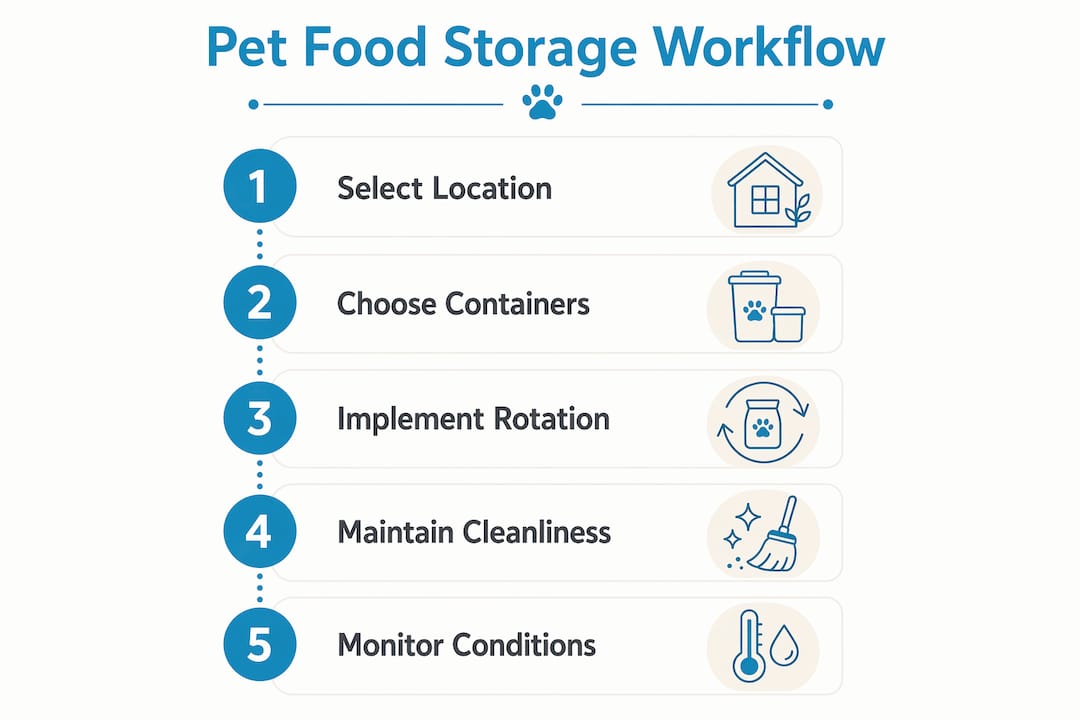
What is the ideal pet food storage workflow?
The core of any effective pet food storage workflow comes down to four pillars: location, containers, rotation, and food type handling. Each pillar builds on the last. Skip one and the whole system breaks down. Pet owners who treat these as a connected routine rather than separate tasks see the biggest gains in freshness and convenience.
The right workflow also reduces daily decision fatigue. When your storage area is organized and your rotation schedule is set, feeding time becomes automatic. You spend less mental energy on logistics and more attention on your pet.
What are the ideal environmental conditions for storing pet food?
Temperature is the single most important factor in pet food preservation. Dry pet food stores best between 50°F and 80°F. Temperatures above 80°F, which are common in garages during summer, accelerate spoilage substantially. That rules out most garages, attics, and cars as storage locations.
Humidity and odor contamination are the next threats. Kibble absorbs odors easily and should never be stored near chemicals, cleaning products, or strong-smelling substances. Laundry rooms and garages are the worst offenders. A pantry, kitchen cabinet, or climate-controlled closet works far better.
The best storage locations share these traits:
- Consistent temperature between 50°F and 80°F year-round
- Low humidity and good air circulation
- Away from direct sunlight, which degrades fats and vitamins
- Far from laundry detergents, pesticides, and cleaning supplies
- Off the floor to reduce pest access and moisture exposure
Pro Tip: Place a small silica gel packet inside your storage bin to absorb excess moisture. Replace it monthly to keep humidity low without any extra effort.
How do you choose the best containers for pet food?
Container choice is where most pet owners make a costly mistake. Fats from kibble leach into plastic when food is poured directly into a bin, causing rancidity and contamination over time. The correct method is to keep kibble inside its original bag and place that bag inside an airtight container. The original packaging includes special barrier layers designed to block light, air, and moisture. Removing food from that bag strips away those protections.
For wet food, the rules differ. Opened canned food should be covered with silicone lids or transferred to a food-grade container immediately. Exposed cans absorb refrigerator odors and dry out within hours.
| Food type | Best container | Key rule |
|---|---|---|
| Dry kibble | Airtight bin with original bag inside | Never pour directly into plastic |
| Opened wet/canned | Silicone-lidded food-grade container | Refrigerate within 30 minutes of opening |
| Raw food | Sealed glass or BPA-free containers | Store on lowest refrigerator shelf |
| Freeze-dried food | Original resealable bag or airtight jar | Keep away from moisture |
When choosing a container size, match it to your purchase frequency. A container that holds exactly one bag of kibble is better than one that holds three, because you open and close it less often. Stainless steel and glass containers are the most durable and odor-resistant options. Food-grade plastic with an airtight seal works as a second choice.
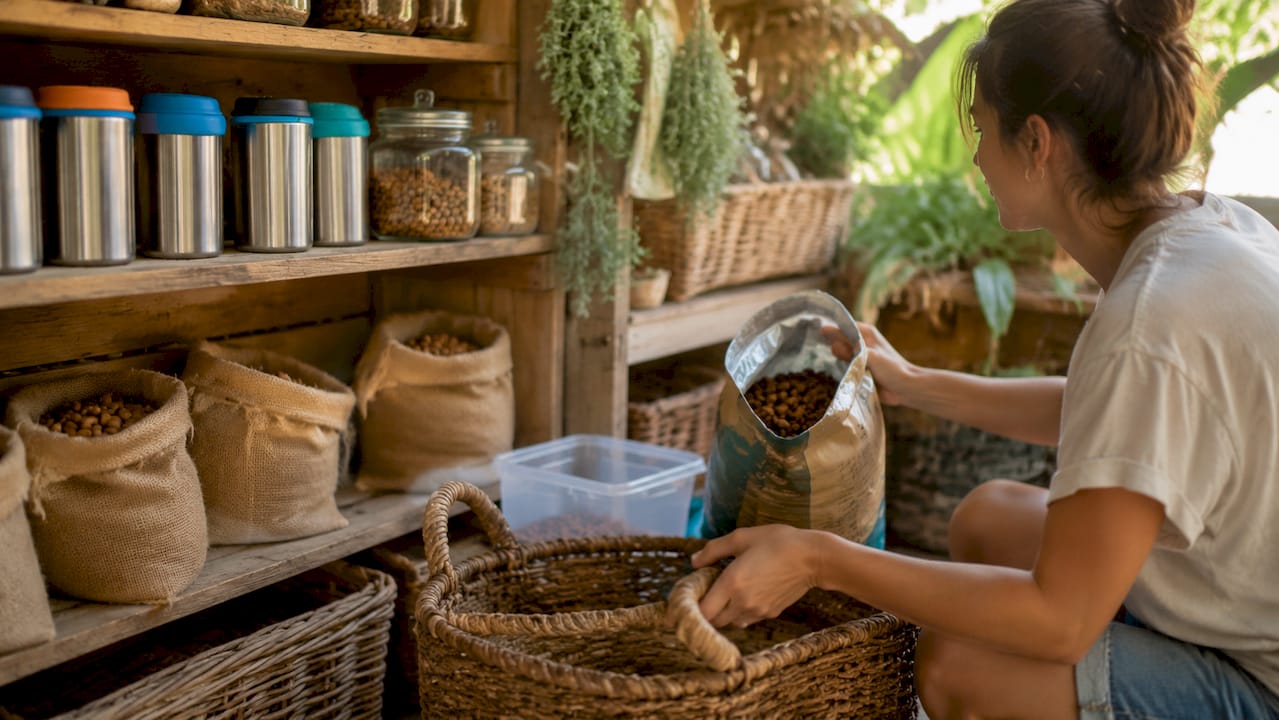
Pro Tip: Wash your storage container thoroughly between every new bag of food. Old fat residue left in the bin will contaminate fresh kibble within days.
What is the best rotation strategy for pet food freshness?
Rotation is the part of pet food management most owners skip entirely, and it is the part that matters most for long-term safety. Two systems exist: FIFO (First-In, First-Out) and FEFO (First-Expired, First-Out). FEFO rotation prioritizes the earliest expiration date rather than the earliest purchase date. FEFO is the preferred method for pet food because expiration dates do not always match the order in which you bought the food.
Here is how to build a simple FEFO rotation routine at home:
- Write the purchase date and expiration date on every bag or can with a permanent marker as soon as you bring it home.
- Place newer stock behind older stock on your shelf or in your pantry.
- Always pull from the front, where the oldest or soonest-expiring food sits.
- Check your entire stock every 2–4 weeks and discard anything past its expiration date.
- Note the open date on any bag you have already started. Kibble should be used within 6 weeks of opening for maximum nutrient integrity, even if the best-by date is far away.
Oxidation begins the moment you open a bag. That six-week window is not a suggestion. Buying smaller bags more frequently is a better strategy than buying in bulk if your pet eats slowly. For more on why rotating proteins also benefits your pet’s nutrition, the protein rotation guide at Wildrootspet explains the full reasoning.
Pro Tip: Set a recurring phone reminder every two weeks labeled “food stock check.” It takes three minutes and prevents you from ever feeding expired food by accident.
How do you store dry, wet, raw, and frozen pet food?
Each food type has its own storage rules. Treating them all the same is the fastest way to waste money and risk your pet’s health.
Dry kibble
Dry kibble is the most forgiving food type, but only when stored correctly. Keep it in its original bag inside an airtight container, in a cool and dry location. Use it within 6 weeks of opening. Buying a bag size your pet finishes in that window is the simplest way to stay on track. For more on the benefits of air-dried formats that extend shelf life naturally, Wildrootspet’s guide on air-dried dog food is worth reading.
Wet and canned food
Opened wet food must be refrigerated immediately and consumed within 48–72 hours, depending on the food type and how it was handled. Cover opened cans with a silicone lid or transfer the contents to a sealed food-grade container. Wet food left uncovered in the refrigerator dries out and absorbs odors from other foods within hours.
Key rules for wet food:
- Refrigerate within 30 minutes of opening
- Use within 48–72 hours maximum
- Never leave wet food in the bowl for more than 30 minutes at room temperature
- Discard any uneaten portions after each meal
Raw and frozen food
Raw food requires the strictest handling. Raw pet food must be defrosted only in the refrigerator on the lowest shelf to avoid bacterial contamination. Defrosting at room temperature creates conditions where harmful bacteria multiply rapidly. Plan 24 hours ahead for defrosting. Keep raw food in sealed glass or BPA-free containers and store it on the lowest refrigerator shelf to prevent drips from contaminating other foods. For a full breakdown of raw feeding protocols, the raw food feeding guide at Wildrootspet covers defrosting, portioning, and hygiene in detail.
| Food type | Refrigerator life after opening | Freezer life |
|---|---|---|
| Dry kibble | Not applicable | Not recommended |
| Wet/canned | 48–72 hours | Up to 1 month (in sealed container) |
| Raw food | 2–3 days | 3–6 months |
| Freeze-dried | Months (sealed) | Not required |
What feeding station setup makes storage easier?
A dedicated feeding zone is the physical anchor of an efficient pet food management strategy. A fixed feeding station that consolidates food storage, bowls, and accessories reduces daily friction and supports better hygiene habits. When everything lives in one place, you stop hunting for the scoop, forgetting to wash the bowl, or leaving food out too long.
Setting up a functional feeding station does not require much space. A small corner of your kitchen or laundry room works well if the temperature stays consistent. The key is keeping all feeding-related items together.
Practical setup tips:
- Use labeled, color-coded containers if you have multiple pets on different diets
- Store the food scoop inside or directly on top of the food container
- Keep a small cleaning brush and pet-safe dish soap at the station
- Place a washable mat under the bowls to catch spills and simplify cleanup
- Post a feeding schedule on the wall or inside a cabinet door to avoid double-feeding
Pro Tip: Wash pet food bowls after every meal with hot water and dish soap. Biofilm builds up on bowls within 24 hours and can harbor bacteria that affect your pet’s digestion.
Key takeaways
A well-built pet food storage workflow combines correct temperature control, airtight containers, FEFO rotation, and a dedicated feeding station to keep every meal safe and fresh.
| Point | Details |
|---|---|
| Control storage temperature | Keep all pet food between 50°F and 80°F and away from garages and direct sunlight. |
| Never skip the original bag | Keep kibble inside its original bag inside an airtight bin to preserve barrier layers. |
| Use FEFO rotation | Prioritize the earliest expiration date and check your stock every 2–4 weeks. |
| Follow food-type rules | Refrigerate wet food within 30 minutes and defrost raw food only in the refrigerator. |
| Build a dedicated feeding station | Consolidate storage, bowls, and supplies in one spot to improve hygiene and consistency. |
Why I stopped buying the biggest bag available
Most pet owners buy the largest bag of kibble because it feels economical. I did the same thing for years. The math looks right until you realize that oxidation starts the moment the bag opens, and a 30-pound bag for a medium-sized dog can easily stretch past that six-week freshness window. You end up feeding your pet food that has been slowly degrading for two months, even if the best-by date says otherwise.
The shift that made the biggest difference in my own routine was treating the feeding station as a system rather than a collection of random items. Once the scoop, the container, the mat, and the cleaning supplies all lived in one place, the whole routine took half the time. Hygiene compliance went up because the soap was right there. Rotation checks became automatic because the dates were written on every bag.
The other mistake I see constantly is storing food in garages. Pet owners assume a sealed container handles everything. It does not. A garage in July can hit 100°F or higher, and no container compensates for that kind of heat. The food degrades, the fats go rancid, and the pet eats it anyway because animals rarely refuse food that smells off to us. Move the food inside. That single change eliminates a large category of spoilage risk.
Small workflow changes compound quickly. Write dates on bags. Set a rotation reminder. Wash the bowl every meal. None of these steps takes more than a few minutes, but together they create a system that protects your pet’s nutrition every single day.
— Blayne
Fresh food deserves a fresh system
If you are putting real thought into how you store pet food, the quality of the food itself matters just as much as the container it lives in. Wildrootspet carries the Raw PMR Pork Meal Blend for cats and dogs, a prey model raw option designed for pet owners who want nutritionally complete, minimally processed meals. It fits directly into the raw food storage and rotation workflow covered in this article.
Wildrootspet also carries freeze-dried pork tenderloin treats that store easily, require no refrigeration before opening, and fit naturally into a rotation-based feeding routine. Browse the full range at Wildrootspet to find options that match your pet’s diet and your storage setup.
FAQ
How long does dry kibble stay fresh after opening?
Kibble stays fresh for up to 6 weeks after opening, even if the best-by date is further out. Oxidation begins immediately, so buy bag sizes your pet finishes within that window.
Should I pour kibble directly into a storage bin?
No. Fats leach into plastic bins and cause rancidity. Keep kibble inside its original bag and place the bag inside an airtight container.
How long can opened wet food stay in the refrigerator?
Opened wet food is safe for 48–72 hours when refrigerated immediately in a sealed, food-grade container. Discard anything beyond that window.
What is the safest way to defrost raw pet food?
Defrost raw food in the refrigerator on the lowest shelf only. Room temperature defrosting allows harmful bacteria to multiply and is never safe for raw pet food.
What is FEFO and why does it matter for pet food?
FEFO stands for First-Expired, First-Out, meaning you always use the food with the nearest expiration date first. It is more reliable than FIFO because purchase order and expiration date do not always match.
Recommended
- Why Rotate Pet Food Proteins: A Dog and Cat Guide – Wild Roots Pet Co.
- Raw Food Feeding Tips for Dogs and Cats (2026) – Wild Roots Pet Co.
- Raw PMR Beef Meal Blend for Cats & Dogs — Prey Model Raw | Raw Instinc – Wild Roots Pet Co.
- What Are Minimally Processed Pet Foods? A 2026 Guide – Wild Roots Pet Co.