

Minimally processed pet foods are defined as diets made from natural ingredients subjected to little or no high-heat alteration, preserving the nutritional integrity, moisture, and natural flavors that heavy processing destroys. Unlike conventional kibble, which undergoes extrusion at temperatures exceeding 150°C, options like raw, freeze-dried, air-dried, and gently cooked foods retain far more of what your pet’s body can actually use. Research published in Frontiers in Veterinary Science in 2026 confirms growing scientific interest in how processing methods affect nutrient bioavailability in dogs and cats. Regulatory bodies like AAFCO and WSAVA provide the quality benchmarks that separate genuinely nutritious options from marketing-driven claims.
What are minimally processed pet foods and how do they differ from kibble?
Minimally processed pet foods sit at the opposite end of the spectrum from extruded dry kibble. Common minimally processed formats include raw, freeze-dried, air-dried, and gently cooked foods, typically made with human-grade ingredients and fewer synthetic additives. The defining characteristic is that the ingredient matrix stays close to its natural state, with heat exposure kept low enough to protect heat-sensitive nutrients, enzymes, and proteins.
Kibble production relies on extrusion, a process that combines high pressure and temperatures above 150°C to form shelf-stable pellets. That convenience comes at a cost. Kibble shows 4.9% lysine blockage compared to 3.2% in fresh diets, meaning a measurable portion of the protein your dog or cat consumes from kibble is chemically bound and unavailable for absorption. For a nutrient as critical as lysine, which supports muscle repair and immune function, that gap matters over months and years of feeding.
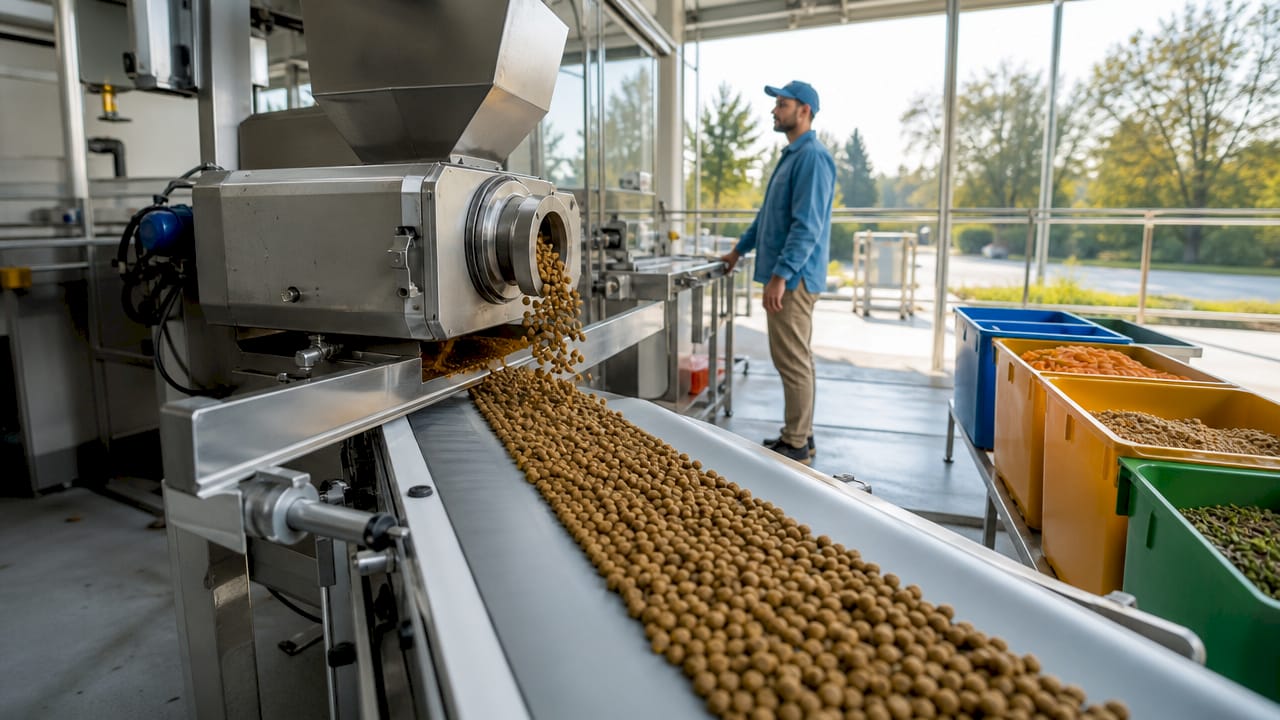
The Maillard reaction is the chemical process responsible for much of this damage. When amino acids and sugars react under high heat, they form new compounds that reduce protein digestibility and create advanced glycation end products. Gentle cooking, freeze-drying, and raw feeding all minimize Maillard reaction products, which is one reason these formats consistently score higher on digestibility measures in comparative studies.
Understanding this distinction is the first practical step toward making a better feeding decision for your pet.
How processing methods affect nutrient quality and palatability
Processing method is the single biggest variable in determining how much nutritional value survives from raw ingredient to bowl. Heat-sensitive nutrients and protein structures degrade during extrusion, while gentle processing better maintains bioavailability and digestibility across the board.
The table below compares the four main processing methods on the factors that matter most to pet owners:
| Processing method | Heat exposure | Moisture retained | Protein bioavailability | Shelf life |
|---|---|---|---|---|
| Extrusion (kibble) | Very high | Very low (8-10%) | Reduced (lysine blockage) | 12-24 months |
| Gently cooked | Low to moderate | High (70-80%) | Well preserved | Refrigerated, weeks |
| Freeze-dried | Minimal (sublimation) | Removed, rehydratable | Excellent | 12-24 months |
| Raw (fresh or frozen) | None | High (70-80%) | Highest | Frozen, months |
Higher moisture content in minimally processed foods aids digestion and nutrient absorption compared to dry kibble. This matters especially for cats, who have a naturally low thirst drive and rely heavily on food moisture to support kidney function.
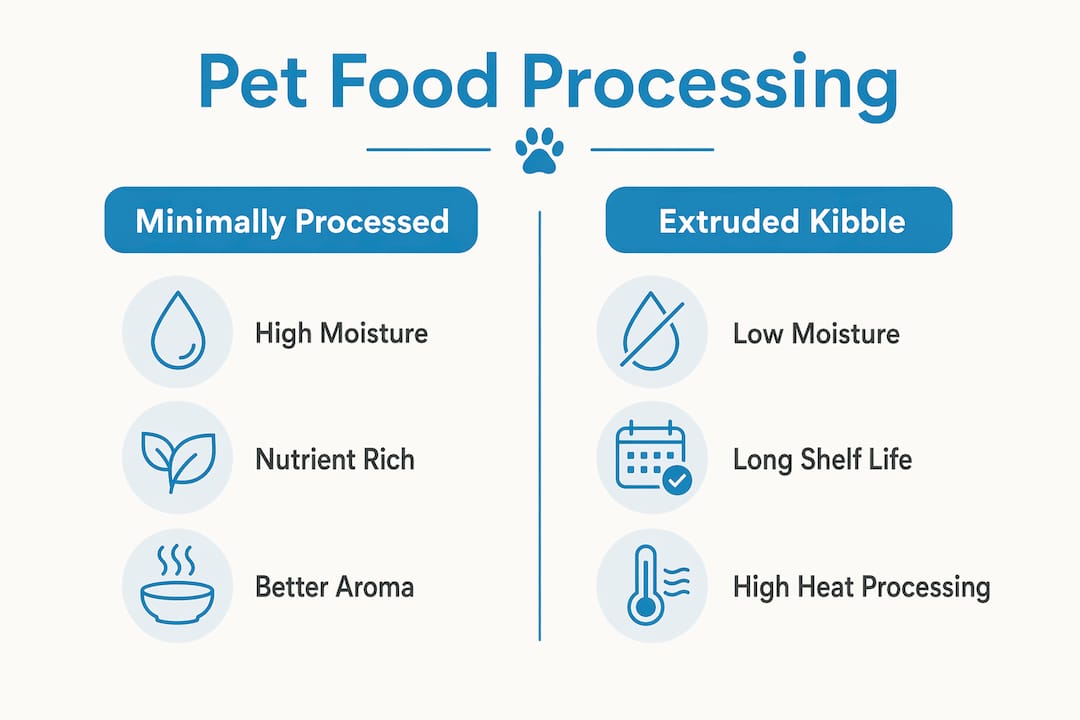
Palatability is the other major advantage. Gentle cooking preserves moisture, aroma, and heat-sensitive nutrients, improving appeal for picky or aging dogs compared to traditional kibble. The sensory qualities that make food attractive to animals, including natural fats, volatile aroma compounds, and texture, survive intact in minimally processed formats.
Pro Tip: If your pet is a reluctant eater, try adding a freeze-dried or gently cooked topper to their current food before committing to a full diet switch. The aroma boost alone often triggers appetite in dogs and cats who have been eating the same kibble for years.
Does the human ultra-processed food definition apply to pet food?
The short answer is no, and conflating the two leads to poor feeding decisions. Human ultra-processed food (UPF) classifications, like the NOVA system, were designed around human metabolic responses to industrial food additives, emulsifiers, and flavor enhancers. Pet food operates under an entirely different regulatory and nutritional framework. You can read more about this distinction in Wildrootspet’s guide on human-grade pet foods.
AAFCO ensures commercial pet foods meet essential nutrient requirements for all life stages, even with some processing involved. A kibble that meets AAFCO’s nutritional adequacy statement is not the same as a bag of ultra-processed human snack food, even if both involve industrial manufacturing. The nutrient profiles are formulated specifically for canine or feline physiology, not human metabolism.
What actually separates quality pet foods from poor ones comes down to these factors:
- Feeding-trial substantiation: Foods tested on real animals over time provide stronger evidence of nutritional adequacy than formulation-only analysis.
- Ingredient transparency: Named protein sources (chicken, salmon, beef) rather than generic “meat meal” or “animal by-products” signal higher quality sourcing.
- Veterinary nutritionist involvement: Brands that employ board-certified veterinary nutritionists in formulation are held to a higher standard of completeness.
- WSAVA compliance: The World Small Animal Veterinary Association framework asks brands to disclose who formulates their food and whether feeding trials have been conducted.
Feeding-trial substantiation and ingredient transparency are the most reliable markers for pet food quality over processing claims alone. A product marketed as “raw” or “natural” with no AAFCO statement and no named nutritionist is not automatically superior to a well-formulated kibble. The label matters as much as the processing method.
Types of minimally processed pet foods and how to choose them
Four formats dominate the minimally processed category, and each has practical trade-offs worth knowing before you buy.
Raw feeding delivers the highest nutrient retention because no heat is applied. Prey Model Raw (PMR) diets, like those formulated by brands such as Raw Instincts, aim to replicate the whole-prey diet of wild carnivores by including muscle meat, organ meat, and raw meaty bones. The main considerations are safe handling, bacterial contamination risk, and nutritional balance. Raw diets require careful sourcing and, ideally, formulation guidance from a veterinary nutritionist.
Freeze-dried foods remove moisture through sublimation, a process that preserves nutrient structure without heat. The result is a shelf-stable product that rehydrates quickly and retains most of the nutritional profile of raw food. Freeze-dried formats work well as complete meals or as toppers added to existing diets.
Air-dried foods use low-temperature airflow over extended periods to remove moisture. The process is slower than freeze-drying but achieves similar results in terms of nutrient preservation. Air-dried foods tend to be dense and calorie-rich, so portion control is important.
Gently cooked foods, like those produced by The Farmer’s Dog, use low-temperature cooking methods that preserve moisture and minimize Maillard reaction damage. These are often the easiest transition for pets moving off kibble because the texture and aroma are familiar but the nutritional profile is significantly better.
When reading labels, look for these quality signals:
- An AAFCO nutritional adequacy statement (not just “for supplemental feeding”)
- Named protein sources listed first in the ingredient panel
- No artificial preservatives like BHA, BHT, or ethoxyquin
- Clear storage and handling instructions
Packaging and storage requirements are a practical reality of minimally processed diets. Fresh and gently cooked foods require refrigeration or freezing, which means planning ahead for travel or bulk buying. Freeze-dried and air-dried options offer more flexibility without sacrificing much nutritional quality.
Pro Tip: Transition slowly. Move from your pet’s current food to a minimally processed option over 7 to 10 days by gradually increasing the new food ratio. Rapid switches can cause digestive upset even when the new food is nutritionally superior.
For more guidance on reading ingredient panels, Wildrootspet’s resource on natural pet food ingredients breaks down what to look for and what to avoid.
Benefits pet owners and vets observe from minimally processed diets
The benefits reported by pet owners and supported by veterinary observation fall into three consistent categories.
- Improved palatability and appetite. Picky eaters and aging pets with reduced appetite respond well to the stronger aroma and moisture content of minimally processed foods. The sensory qualities preserved in these formats are the same ones that trigger natural feeding behavior in dogs and cats.
- Better digestion. Fresh and gently cooked dog foods result in improved coat condition, energy, and digestion in some pets according to veterinary reports. Softer stools, reduced gas, and more consistent bowel movements are among the most commonly reported changes within the first few weeks of switching.
- Coat and skin condition. The intact fatty acids and fat-soluble vitamins in minimally processed foods contribute to coat shine and skin health. These nutrients are particularly vulnerable to heat degradation during extrusion, which is why kibble-fed pets sometimes show improvement when toppers or fresh food are added.
That said, kibble remains a nutritionally adequate and practical choice for many pets. Processing effects vary with ingredient matrix and method, and additives within regulated AAFCO limits are not inherently harmful. The goal is not to condemn kibble but to give you the information to make a deliberate choice rather than a default one.
Key takeaways
Minimally processed pet foods preserve more bioavailable protein, moisture, and heat-sensitive nutrients than extruded kibble, making them a nutritionally superior option for most dogs and cats when properly formulated and sourced.
| Point | Details |
|---|---|
| Processing method matters | Extrusion causes measurable lysine blockage and nutrient loss; raw and freeze-dried formats preserve more bioavailable protein. |
| Moisture supports digestion | Higher moisture content in fresh and gently cooked foods aids nutrient absorption and benefits cats especially. |
| Regulation still applies | AAFCO and WSAVA standards apply to minimally processed foods; always verify the nutritional adequacy statement on labels. |
| Quality signals over labels | Feeding-trial substantiation, named protein sources, and veterinary nutritionist involvement matter more than “natural” or “raw” marketing. |
| Transition gradually | Moving pets to minimally processed diets over 7 to 10 days reduces digestive upset and improves long-term acceptance. |
Why I think most pet owners are asking the wrong first question
Most people who come to minimally processed pet foods start by asking “Is this better than kibble?” That’s a reasonable question, but it’s not the most useful one. The better question is: “What does my specific pet need, and which format delivers that most reliably?”
I’ve seen dogs thrive on well-formulated gently cooked diets and others do just as well on a high-quality kibble with a freeze-dried topper. What I’ve consistently found is that the biggest improvements come not from switching formats wholesale, but from paying attention to ingredient quality and digestibility within whatever format you choose. A raw diet made from poorly sourced meat with no nutritional oversight is not automatically better than a kibble formulated by a board-certified veterinary nutritionist.
The other thing most articles skip over is the sourcing question. Freeze-dried and raw products vary enormously in quality depending on where the protein comes from and how it was handled before processing. I’d rather feed a pet a gently cooked diet from a transparent, vet-formulated brand than a raw diet from a company that can’t tell you where their meat comes from.
My honest recommendation: start with a vet conversation, add a high-quality topper to your current food, and observe your pet’s response over four to six weeks before committing to a full diet change. That approach gives you real data on your individual animal rather than relying on category-level generalizations.
— Blayne
Explore Wildrootspet’s minimally processed options for your pet
Wildrootspet carries a curated selection of minimally processed foods and toppers that align with everything covered in this article.

The Treat Topper Fish Dog Food Topper is a low-fat, single-ingredient option that adds moisture, aroma, and bioavailable protein to any existing meal. It’s one of the simplest ways to test your pet’s response to minimally processed nutrition without a full diet overhaul. For pets ready for a complete raw feeding approach, the Raw PMR Pork Meal Blend from Raw Instincts delivers a prey model formulation for both dogs and cats. Wildrootspet also stocks freeze-dried trail snacks for dogs that make excellent high-value treats or meal toppers with no artificial additives.
FAQ
What are minimally processed pet foods exactly?
Minimally processed pet foods are diets made from natural ingredients altered only slightly by gentle methods such as raw feeding, freeze-drying, air-drying, or low-temperature cooking. These formats preserve more protein bioavailability, moisture, and heat-sensitive nutrients than extruded kibble.
Are raw diets safe for pets?
Raw diets can be safe when properly sourced, handled, and nutritionally balanced, but they carry a higher bacterial contamination risk than cooked or freeze-dried formats. AAFCO-compliant formulations developed with veterinary nutritionist oversight significantly reduce safety concerns.
How do I choose a high-quality minimally processed pet food?
Look for an AAFCO nutritional adequacy statement, named protein sources listed first, feeding-trial substantiation, and evidence of veterinary nutritionist involvement in formulation. Marketing terms like “natural” or “raw” alone are not quality guarantees.
Why does moisture content matter in pet food?
Higher moisture content in minimally processed foods supports digestion and nutrient absorption, and it is especially important for cats, who have a low natural thirst drive. Dry kibble typically contains only 8 to 10% moisture, while fresh and gently cooked foods contain 70 to 80%.
Can I mix minimally processed foods with kibble?
Yes. Adding a freeze-dried or gently cooked topper to kibble is a practical way to improve palatability and nutrient density without a full diet switch. This approach works well for budget-conscious pet owners or pets with sensitive digestion adjusting to new food formats.