

If you’ve spent any time researching better food for your dog or cat, you’ve probably run into the phrase “biologically appropriate pet food” and wondered what it actually means beyond the marketing copy. The concept goes much deeper than simply feeding raw meat. Understanding what is biologically appropriate pet food requires unpacking the origins of the term, the real differences between commercial and home-prepared options, and how nutritional science actually evaluates these diets. This guide covers all of it, so you can make genuinely informed decisions for your pet.
Table of Contents
- Key takeaways
- What biologically appropriate pet food actually means
- What goes into biologically appropriate food
- Nutritional adequacy and what vets actually say
- Safety practices that can’t be skipped
- How to choose, transition, and monitor biologically appropriate diets
- My honest take after years of watching this space
- Feed your pet with confidence at Wildrootspet
- FAQ
Key takeaways
| Point | Details |
|---|---|
| More than just raw feeding | Biologically appropriate pet food includes commercial and home-prepared diets modeled on ancestral nutrition, not only raw meat. |
| Ingredient quality matters | Animal proteins, organs, and bones form the foundation, with nutrient balance and bioavailability being the real measure of quality. |
| Not automatically complete | A diet labeled biologically appropriate is not automatically nutritionally complete; AAFCO compliance is a separate and critical standard. |
| Safety requires real protocols | Raw diets carry pathogen risks that demand strict kitchen hygiene, dedicated utensils, and awareness of vulnerable household members. |
| Veterinary oversight is non-negotiable | Annual exams, bloodwork, and nutritionist guidance are part of responsible biologically appropriate feeding, not optional extras. |
What biologically appropriate pet food actually means
The phrase “biologically appropriate” became popular through the BARF movement, an acronym that originally stood for Bones and Raw Food and was later rebranded to Biologically Appropriate Raw Food by Australian veterinarian Ian Billinghurst in the 1990s. The core idea was simple: feed animals a diet resembling what their wild ancestors ate. For dogs, that meant mimicking wolf prey diets. For cats, small rodents and birds.
Over the decades, the terminology multiplied. You’ll now see BARF, RMBD (raw meat-based diet), and RAP (raw animal products) used interchangeably, though they have meaningful distinctions. A 2025 mini-review clarifies that commercial RMBDs are formulated to comply with AAFCO nutrient requirements, while most BARF diets remain home-prepared recipes modeled on wolf prey without that same regulatory oversight.
Here’s what makes this complicated. The term “biologically appropriate” itself has no single regulatory definition. A brand can print it on packaging without meeting any standardized criteria. That means you need to evaluate what’s inside the bag or container, not just what’s on the front label. “Raw” labeling also has specific AAFCO restrictions. Certain processing techniques disqualify a product from that designation, even if it was never cooked in the traditional sense.
Key terms you should know before shopping or meal-planning:
- BARF: Home-prepared or commercial diet modeled on ancestral prey, emphasizing raw meat, bones, and organs
- RMBD: Any raw meat-based diet, whether home-prepared or commercial
- AAFCO-compliant: Meets the Association of American Feed Control Officials’ nutrient profiles for a specific life stage
- Biologically appropriate: A marketing descriptor, not a regulated nutritional standard
- Prey Model Raw (PMR): A variation that focuses on muscle meat, organs, and edible bone in ratios meant to replicate whole prey
What goes into biologically appropriate food
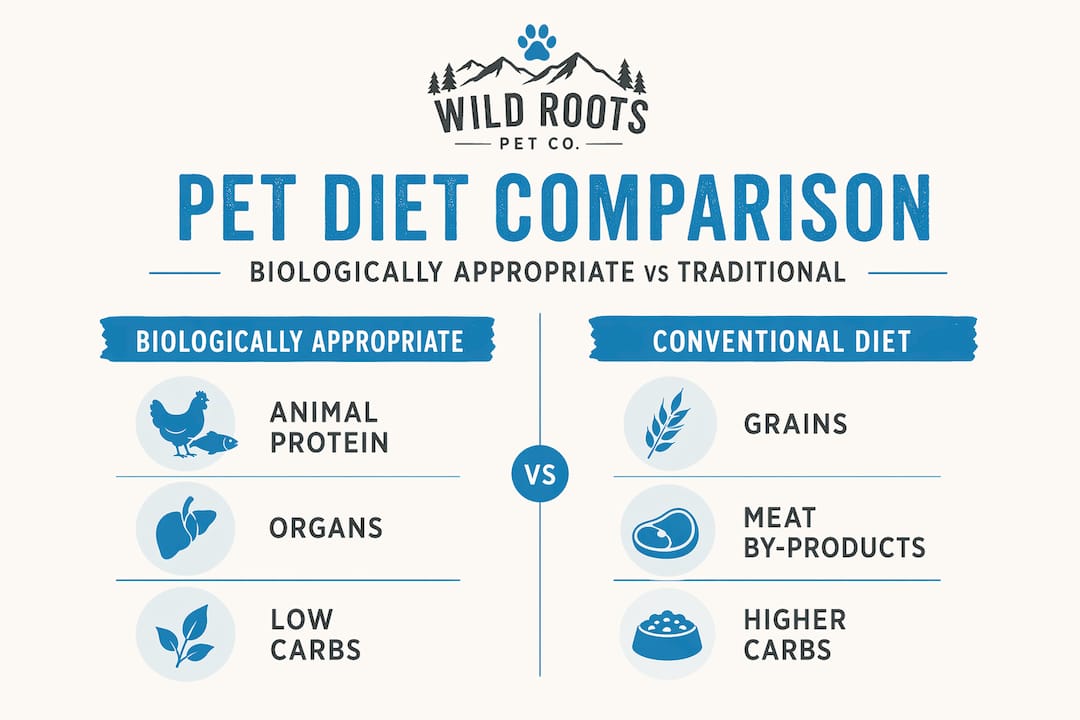
The foundation of any biologically appropriate diet is animal-based protein. Muscle meats supply amino acids. Organs like liver and kidney concentrate nutrients like vitamin A, B vitamins, and iron at levels far higher than muscle meat alone. Edible raw bones provide calcium and phosphorus in a ratio that matters enormously for skeletal health.

Raw meat-based diets typically include uncooked meats, organs, and bones, sometimes supplemented with fruits, vegetables, or cereals. Commercial versions are formulated to balance these components. Home-prepared versions depend entirely on the recipe’s accuracy and ingredient sourcing.
Here’s how the two formats compare across common criteria:
| Factor | Commercial biologically appropriate diet | Home-prepared diet |
|---|---|---|
| Protein sources | Standardized; often multiple proteins | Variable; depends on recipe |
| Nutrient balance | AAFCO-formulated products meet guidelines | Highly variable; often incomplete |
| Organ inclusion | Typically included at set ratios | Often overlooked or inconsistently measured |
| Supplements | Added to meet AAFCO minimums | Rarely included accurately |
| Safety testing | Subject to manufacturer QA processes | No oversight; human error is common |
| Cost | Moderate to high | Low to high depending on sourcing |
Carbohydrates deserve a direct answer: dogs and cats do not require them as a primary macronutrient, and biologically appropriate diets reflect that by keeping grains and starches minimal or absent. Some commercial formulas include small amounts of leafy greens or fibrous vegetables for digestive support, which is not a contradiction of the underlying philosophy. What it constitutes as a red flag is a diet heavy in corn, wheat, or soy as primary ingredients.
Processing temperature is also a real differentiator. Gentle cooking at low temperatures produces up to 120% fewer advanced glycation end-products (AGEs) than heavily processed kibble, which matters because AGEs are linked to oxidative stress and cellular damage over time.
Pro Tip: When reading a commercial biologically appropriate pet food label, look for named protein sources in the first three ingredients, an organ percentage between 10 and 15 percent, and an AAFCO statement confirming nutritional adequacy for your pet’s life stage.
Nutritional adequacy and what vets actually say
Here’s where it gets nuanced. A diet can be philosophically biologically appropriate and still be nutritionally incomplete. These are separate questions. AAFCO nutrient profiles exist to define minimum and maximum levels of proteins, fats, vitamins, and minerals for different life stages. A home-prepared BARF recipe that “looks right” can still fall dangerously short on zinc, iodine, or vitamin D without any visible signs for months.
Veterinary experts note that the nutritional superiority of biologically appropriate diets remains scientifically debated. Most veterinarians view dogs as omnivores, not obligate carnivores, which means they can derive nutrition from diverse sources. The long-term effects of raw or biologically appropriate diets have simply not been evaluated in rigorous, controlled, long-term studies.
What does that mean practically? It means the question is not whether the idea is philosophically sound but whether the specific diet your pet is eating is actually complete and balanced. Those are two entirely different evaluations.
Veterinary nutritionists manage biologically appropriate raw feeding as a clinical process, tracking protein and mineral balance through regular lab work and correcting deficiencies before symptoms appear. That last part is critical. Nutritional deficiencies show up in bloodwork long before your pet looks or acts unwell.
Key monitoring standards recommended for pets on biologically appropriate diets:
- Annual physical examination to assess body condition, coat quality, and organ function
- Serum biochemistry panel to evaluate organ health and nutrient metabolism
- Complete blood count to check for anemia or immune irregularities
- Urinalysis to assess kidney function and urinary health
- Consultation with a board-certified veterinary nutritionist when building or evaluating a home-prepared diet
Pro Tip: Ask your vet to include a serum 25-OH vitamin D level in your pet’s annual bloodwork. This deficiency is particularly common in home-prepared raw diets and rarely caught without specific testing.
Safety practices that can’t be skipped
Raw diets carry real pathogen risks. Salmonella, Campylobacter, Listeria, and even MRSA have been identified in raw pet food samples. These are not hypothetical risks, and they extend beyond your pet. Humans in the household, especially young children, elderly individuals, pregnant people, and anyone immunocompromised, face meaningful cross-contamination exposure.
Pathogens like Salmonella and MRSA require strict hygiene measures when raw pet food is handled, stored, or served. The Food Standards Agency’s risk assessment is explicit: this is not casual food prep. Treat it like raw chicken in your kitchen, because that is exactly what it is.
Here is a practical safety workflow to follow every time:
- Wash hands thoroughly with soap and water before and after handling raw pet food. Twenty seconds minimum, not a quick rinse.
- Use dedicated cutting boards, bowls, and utensils that never cross over to human food prep.
- Store raw pet food in sealed containers at the bottom of the refrigerator or in a separate freezer to prevent drip contamination.
- Thaw frozen raw food in the refrigerator, never on the counter at room temperature.
- Discard any uneaten raw food after 30 minutes at room temperature. Do not leave it in the bowl.
- Clean and sanitize pet food prep surfaces and bowls after every use with hot soapy water or a diluted bleach solution.
Treating raw pet food preparation as a food safety workflow is not overcautious. Cross-contamination risk in households feeding biologically appropriate raw diets requires protocols similar to those in human raw food handling kitchens.
Commercial raw diets from reputable brands add a layer of safety through High Pressure Processing (HPP), which reduces pathogen load without heat. It is worth confirming whether the product you buy uses HPP before assuming it is lower risk than home-prepared options.
How to choose, transition, and monitor biologically appropriate diets
Knowing what biologically appropriate pet food is only gets you so far. Here is how to actually act on it:
When selecting a commercial product, look for an AAFCO nutritional adequacy statement on the label. This is the non-negotiable starting point. It confirms the product was either tested through feeding trials or formulated to meet established nutrient profiles. Without this statement, you have no independent confirmation the diet is complete. Wildrootspet carries prey model raw blends that meet this standard, including options like a beef and salmon meal blend and other protein-varied formats.
Transition gradually. Switching a pet’s diet abruptly is a common mistake that leads to digestive upset, loose stools, and a panicked owner who concludes the diet “didn’t work.” A proper raw diet transition takes seven to ten days minimum. Start by replacing 25 percent of the current diet, then increase incrementally while watching stool consistency and energy levels.
Once your pet is fully transitioned, active monitoring continues:
- Schedule that annual veterinary exam with the bloodwork panel described above
- Keep a feeding journal noting stool quality, energy, coat condition, and appetite changes
- Consult a board-certified veterinary nutritionist if building any home-prepared component of the diet
- Revisit the diet plan at major life stage transitions: puppy to adult, adult to senior, or after any significant health diagnosis
If you want to start exploring biologically appropriate feeding without overhauling everything at once, food toppers are a practical entry point. A high-quality fish-based meal topper adds animal-based nutrition and omega fatty acids to an existing diet without requiring a full transition.
My honest take after years of watching this space
I’ve seen a lot of pet owners come to biologically appropriate feeding for the right reasons and then get steered wrong by marketing that sounds scientific but isn’t. The ancestral diet argument is genuinely compelling, and I believe the core philosophy has real merit. But I’ve also watched people spend years feeding their dogs carefully constructed home-prepared BARF diets, convinced everything was perfect, only to discover through routine bloodwork that their dog was chronically deficient in calcium, iodine, or vitamin E.
The hardest truth I’ve had to communicate is this: “biologically appropriate” is a philosophy, not a quality assurance system. A bag of commercial raw food and a meticulously sourced home recipe are both operating under that banner, and they can be worlds apart in nutritional reality.
What I’ve found actually works is treating this like the clinical nutrition decision it is. Get the baseline bloodwork done. Work with a vet who respects the approach without dismissing the need for evidence. Choose commercial options that carry AAFCO compliance when you’re not working directly with a nutritionist. And stop using visible health signs as your primary feedback mechanism. Pets are remarkably good at appearing healthy while quietly developing deficiencies.
The idea that we should feed our animals in a way that respects their biology is sound. The execution requires rigor.
— Blayne
Feed your pet with confidence at Wildrootspet

Wildrootspet makes it easier to act on everything covered in this article. The product lineup includes prey model raw meal blends built on named animal proteins, formulated to meet AAFCO standards, and sourced with the kind of ingredient transparency that biologically appropriate feeding actually demands. Whether you’re ready to commit to a full raw diet or just want to add nutrient density to what your pet already eats, there’s a practical starting point here.
Try a pork prey model blend for a novel protein option, or explore the daily wellness formula for pets with beef or pork sensitivities. For pets already on commercial diets, the fish meal topper is a low-commitment way to introduce higher-quality animal nutrition right away.
FAQ
What does “biologically appropriate” mean on pet food labels?
It means the diet is modeled on what a dog’s or cat’s wild ancestors would have eaten, typically emphasizing animal proteins, organs, and bones. The term has no standardized regulatory definition and is primarily a marketing descriptor.
Is biologically appropriate food the same as raw food?
Not exactly. Raw feeding is one format within the broader biologically appropriate category, but commercial raw diets and home-prepared BARF recipes differ significantly in nutritional completeness and safety oversight.
Do vets recommend biologically appropriate diets?
Veterinary opinion varies. Many support the underlying philosophy but emphasize that long-term benefits are unproven and that proper diet evaluation, annual bloodwork, and veterinary nutritionist guidance are required regardless of approach.
How do I know if a biologically appropriate pet food is nutritionally complete?
Look for an AAFCO nutritional adequacy statement on the label confirming it meets nutrient profiles for your pet’s life stage. Without that statement, independent nutritional completeness has not been verified.
Are raw biologically appropriate diets safe for households with kids?
They can be, with strict food safety protocols. Pathogens like Salmonella and MRSA can be present in raw pet food, so dedicated utensils, proper storage, and consistent handwashing are non-negotiable, especially with young children in the home.
Recommended
- Why Organic Pet Food? Health, Facts, and What Matters Most – Wild Roots Pet Co.
- Functional pet treats explained: natural benefits for pets – Wild Roots Pet Co.
- Natural ingredients for pet diets: healthier choices – Wild Roots Pet Co.
- What are human-grade pet foods? Your complete guide – Wild Roots Pet Co.