

You have probably seen “human-grade” on pet food packaging and assumed it was just clever marketing. It is not. What are human-grade pet foods is one of the most searched questions in premium pet nutrition right now, and the answer is more specific and legally meaningful than most pet owners realize. This article cuts through the noise to explain the real regulatory standards behind the term, what it means for your dog or cat’s health, and how to make smarter choices at the store or online.
Table of Contents
- Understanding the legal definition of human-grade pet food
- Why more pet owners prefer human-grade foods
- Common misconceptions about human-grade and pet food quality standards
- Balancing quality and sustainability in human-grade pet food choices
- Choosing and safely handling human-grade pet foods for your pet
- Rethinking human-grade pet food: Beyond labels to real health benefits
- Explore Wild Roots Pet Co. for quality human-grade pet foods
- Frequently asked questions
Key Takeaways
| Point | Details |
|---|---|
| Human-grade definition | Human-grade pet food means all ingredients and production meet FDA human food safety standards. |
| Not always complete | Human-grade status does not guarantee nutritional completeness; look for AAFCO certification. |
| Consumer trends | Many pet owners choose human-grade foods to match their standards for family meals. |
| Sustainability balance | Quality human-grade food should balance muscle meat with sustainable organ and by-product use. |
| Safe handling | Store and handle human-grade pet foods using human food safety protocols to preserve quality. |
Understanding the legal definition of human-grade pet food
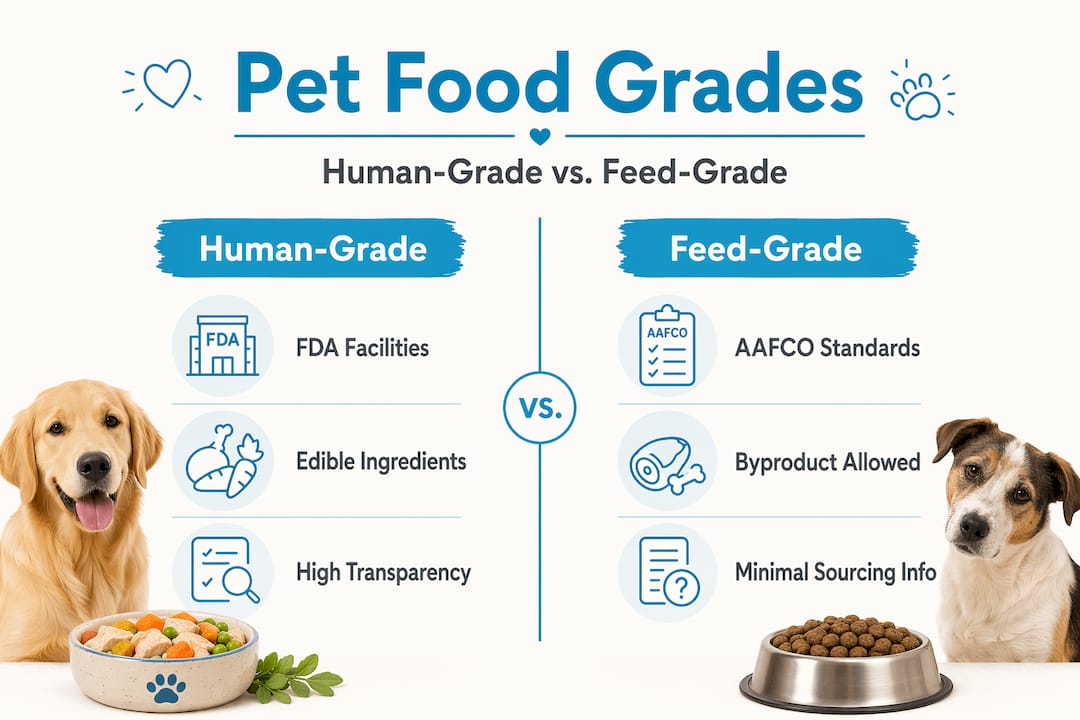
“Human-grade” is not a feel-good phrase a copywriter invented. It is a legal standard. For a pet food to legitimately carry this label, every ingredient and the finished product must meet FDA human food standards under 21 CFR Part 117, the same regulations that govern food made for people.
That means three things have to be true at once. First, every single ingredient must be 100% edible by humans under USDA or FDA inspection. If even one ingredient fails this standard, the entire product loses its human-grade status. Second, the facility where the food is manufactured must be an FDA-registered human food plant, not a feed-grade factory. Third, storage and transportation must follow human food safety protocols throughout the supply chain.
“Human-grade is not just about what goes in the bag. It is about every step from farm to finished product meeting the same standards your grocery store food follows.”
This is a critical distinction from conventional pet food, where feed-grade ingredients are legally permitted. Feed-grade can include materials rejected from the human food supply, such as spoiled grains or low-quality slaughterhouse waste. Feed-grade facilities also operate under looser oversight. When you understand this contrast, the human-grade standard starts to look far less like marketing and far more like a genuine quality floor.
For practical guidance on safe handling of pet food, especially when transitioning to higher-quality options, following human food safety protocols at home matters just as much as what the brand does in its facility.
Now that we understand how “human-grade” is legally defined, let us explore why pet owners are increasingly choosing these products.
Why more pet owners prefer human-grade foods
The shift toward human-grade pet food is real and accelerating. 76% of British dog owners expect their pet’s food to meet the same quality standards as human meals, reflecting a global trend toward human-grade nutrition that is showing up in North American purchasing habits too.
This is not just sentimentality. Most pet owners today treat their dogs and cats as family members, and that shift in relationship has a direct impact on spending decisions. People who would not eat processed junk food themselves are increasingly unwilling to feed the equivalent to their pets.
Here is what is actually driving this trend:
- Health accountability. After several high-profile pet food recalls tied to feed-grade ingredient contamination, owners began reading labels more critically.
- Ingredient transparency. Pet owners want to recognize every word on the ingredient list, the same way they do with their own food.
- Fresh and nutrient-rich formulas. Demand for minimally processed options, including natural ingredients in pet food like whole meats, vegetables, and fruits, has grown significantly.
- Superfoods and functional ingredients. Blueberries, turmeric, and pumpkin are showing up in premium pet formulas because owners understand their benefits for themselves and believe the same logic applies to their animals.
- Treat quality. The same standard extends beyond meals. Healthy natural pet treats made with real proteins, like human-grade chicken jerky, are replacing corn-syrup-laced chews in a lot of households.
The budget shift is real too. A growing number of North American pet owners are actively choosing to spend more on food and less on other pet categories because they see nutrition as the highest-impact investment in long-term pet health.
Understanding why this shift is happening helps clarify what “human-grade” really offers and what it does not.
Common misconceptions about human-grade and pet food quality standards
Here is the biggest trap people fall into: assuming that human-grade automatically means the food is nutritionally complete for their pet. It does not. Human-grade describes ingredient and facility standards, not nutrient balance. A food can be made entirely from premium human-edible ingredients and still be missing critical vitamins or minerals your dog or cat needs to thrive.
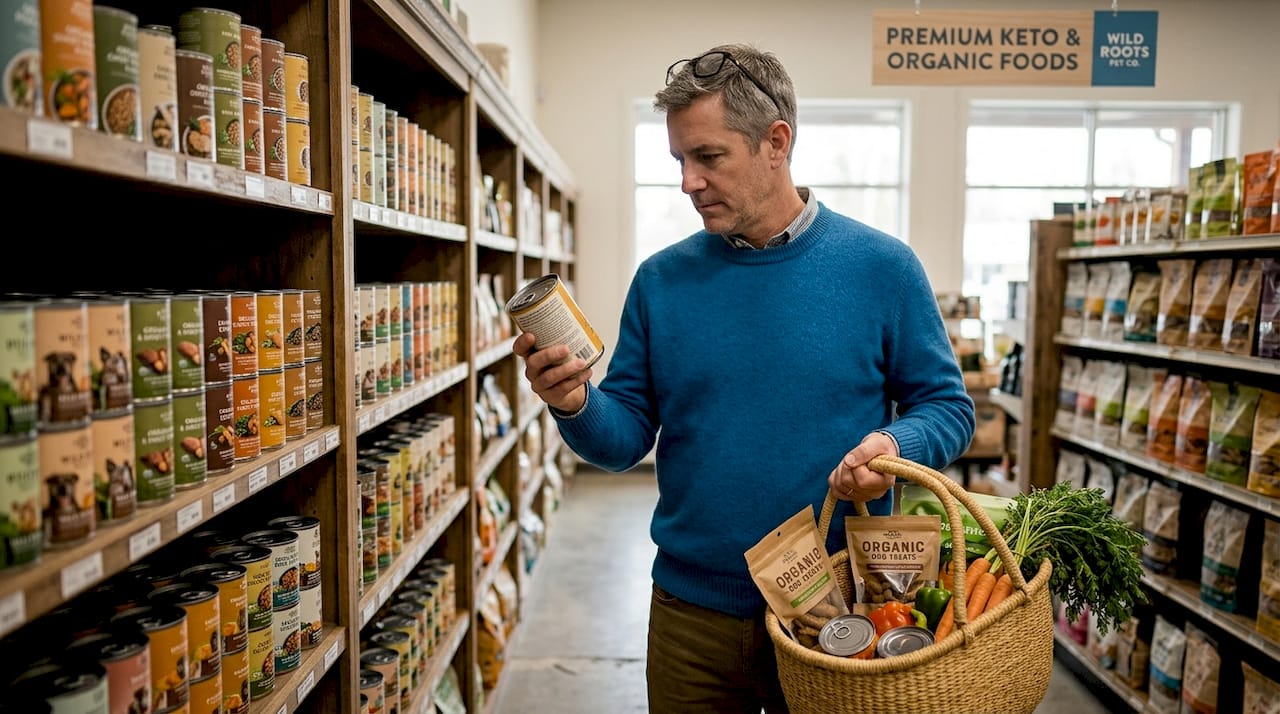
This is where AAFCO (the Association of American Feed Control Officials) matters. AAFCO does not approve or certify pet foods, but its nutrient profiles set minimum nutrient requirements for complete and balanced pet diets. A food labeled “complete and balanced” must meet these nutrient minimums, but that statement says nothing about whether the ingredients are human-grade or feed-grade.
Equally important: human-grade food may not be complete for a pet’s specific life stage without AAFCO certification confirming nutrient balance. A puppy has very different calcium and phosphorus needs than a senior dog. A human-grade food not formulated to those ratios could cause real harm over time, regardless of how clean the ingredients are.
Watch out for these red flags when reading labels:
- “Human-quality” is unregulated. It means nothing legally.
- “Restaurant-quality” is a marketing phrase, not a certification.
- “Natural” has a definition under AAFCO but does not mean human-grade or nutritionally complete.
- Ingredient lists that lead with water can inflate the apparent protein content of fresh foods.
Pro Tip: Always look for two things on the label: a human-grade claim backed by verified facility transparency, AND an AAFCO nutritional adequacy statement. Both matter. One without the other tells only half the story.
The nutritional standards embedded in pet food are more nuanced than most labels suggest. Knowing what to look for protects your pet from beautifully packaged products that underdeliver nutritionally.
Knowing what “human-grade” entails and recognizing common misleading claims sets the stage for assessing pet food choices with full awareness.
Balancing quality and sustainability in human-grade pet food choices
There is a tension in this category that does not get discussed enough. Human-grade muscle meat in large quantities strains food prices and ecosystems, while organ meats and by-products provide sustainable, essential nutrients for pet health. When a brand loads its formula with premium chicken breast, it is competing directly with the human food supply chain, which drives up cost and environmental impact.
Here is how these options compare:
| Ingredient type | Human-grade eligible | Nutritional value | Environmental impact | Typical cost |
|---|---|---|---|---|
| Muscle meat (chicken breast, beef) | Yes | High protein | Higher | $$$ |
| Organ meats (liver, kidney, heart) | Yes (if USDA inspected) | Very high (dense micronutrients) | Lower | $$ |
| Feed-grade by-products | No | Variable | Lower | $ |
| Human-grade by-products | Yes | High (whole-animal nutrition) | Lower | $$ |
Organ meats deserve far more credit than they get in mainstream pet nutrition conversations. Liver, for example, is one of the most nutrient-dense foods on the planet. It contains vitamins A, B12, D, and K at levels no muscle meat can match. A diet built around whole-animal nutrition principles, using muscle meat, organ meat, and bone in the right ratios, is both more sustainable and more complete than one that chases premium muscle meat alone.
Here is how to think about balancing quality with sustainability when choosing a product:
- Look for formulas that combine human-grade muscle meat with organ meats.
- Prioritize brands that source from USDA-inspected facilities for all animal ingredients.
- Check that organ content is listed specifically (not just “animal by-products”).
- Consider freeze-dried or raw options that use whole-animal sourcing as part of their core model.
- Evaluate organic and sustainable sourcing practices at the brand level, not just ingredient level.
Pro Tip: If a brand’s formula lists only chicken breast or ground beef with no organs, ask why. That formula may be human-grade but it is almost certainly nutritionally incomplete without significant supplementation.
With these nuances in mind, let us explore how to practically select and handle human-grade pet foods for your pet’s health.
Choosing and safely handling human-grade pet foods for your pet
Selecting a human-grade pet food is not as simple as grabbing the prettiest bag. Here is a focused checklist for making a genuinely good decision.
What to look for when choosing:
- An AAFCO nutritional adequacy statement for your pet’s life stage
- Documented use of an FDA-registered human food manufacturing facility
- Named protein sources (chicken, salmon, beef) rather than generic “meat”
- Transparent ingredient sourcing with country of origin available
- No artificial preservatives, colors, or flavor enhancers
How to transition your pet safely:
- Start with 25% new food mixed into 75% current food for the first three days.
- Move to a 50/50 split for days four through six.
- Shift to 75% new food for days seven through nine.
- Complete the transition on day ten with 100% of the new formula.
- Monitor stool quality, energy levels, and coat condition throughout.
Safe transitioning to new diets matters especially with human-grade and raw formulas, as the microbiome shift can cause temporary digestive upset even when the food itself is excellent.
Safe storage is equally important. Human-grade pet food requires safe storage and handling according to human food safety protocols to maintain quality and prevent contamination. That means refrigerating opened fresh or raw products promptly, using clean utensils, avoiding cross-contamination with other food prep surfaces, and following any temperature guidance on the package exactly.
Pro Tip: Treat raw or fresh human-grade pet food the same way you would treat raw meat from the butcher. Wash your hands, sanitize surfaces, and never leave it out at room temperature for more than 30 minutes.
When checking ingredient quality and sourcing becomes a habit rather than an occasional task, you will start spotting the difference between genuinely premium formulas and expensive-looking imitations quickly.
Rethinking human-grade pet food: Beyond labels to real health benefits
Here is something the human-grade conversation often misses: the label is a floor, not a ceiling. It tells you the ingredients were edible by human food standards and the facility was regulated at a human food level. What it does not tell you is whether the formula was designed with species-appropriate nutrition in mind.
Dogs and cats are not small humans. A human-grade salad with kale and quinoa does not make an appropriate dog meal, even if every ingredient is FDA-compliant. The real question is whether the formula reflects what your pet’s body is actually built to process and thrive on.
The best approach we have seen combines human-grade standards with holistic pet nutrition insights that account for species biology, life stage, activity level, and ingredient sourcing together. That means looking beyond the label and asking harder questions: Where do the organs come from? What is the calcium-to-phosphorus ratio? Is the fat source a quality one?
Sustainability belongs in this conversation too. Choosing brands that use whole-animal sourcing is not just environmentally responsible. It is often the most nutritionally complete option available, because the trace minerals, fat-soluble vitamins, and amino acid profiles from organs and connective tissue cannot be replicated with muscle meat alone.
The pet owners who see the biggest improvements in their animals’ health, coat condition, energy, and digestion are usually not the ones who just switched to the most expensive human-grade bag on the shelf. They are the ones who combined quality ingredient standards with evidence-based nutritional thinking. That combination is where the real value lives.
Explore Wild Roots Pet Co. for quality human-grade pet foods
You now know what human-grade pet food actually means, what to watch out for, and how to make choices that serve your pet’s real health. The next step is finding products that live up to the standard.

At Wild Roots Pet Co., the focus is on natural, transparent sourcing with formulas designed for dogs and cats that deserve better than feed-grade. The fish dog food topper is a low-fat, nutrient-rich way to elevate any existing meal, while the raw PMR pork meal blend delivers whole-animal prey model nutrition for dogs and cats on a raw diet. For pets with specific sensitivities, the daily wellness formula supports dietary needs without compromising on ingredient quality. Every product is chosen with the same scrutiny you now know how to apply.
Frequently asked questions
What does “human-grade” pet food mean legally?
Human-grade pet food legally requires all ingredients and the final product to be processed and handled according to FDA human food standards under 21 CFR Part 117, the same regulations that apply to food produced for human consumption.
Is human-grade pet food automatically nutritionally complete?
No. Human-grade status relates to ingredient and facility standards only, so the food must still carry an AAFCO nutritional adequacy statement to be considered complete and balanced for your pet’s life stage.
Why is there a sustainability concern with human-grade pet food?
High use of human-grade muscle meat in pet food competes with the human food supply, raising costs and environmental strain, which makes whole-animal formulas using organ meats a smarter and more sustainable choice.
How can I ensure safe storage and handling of human-grade pet foods at home?
Follow the same human food safety protocols you would for your own raw meat: refrigerate promptly after opening, use dedicated utensils, prevent cross-contamination, and never leave fresh or raw food at room temperature for more than 30 minutes.
Are all human-grade pet food claims trustworthy?
No. Terms like “human-quality” and “restaurant-quality” are completely unregulated. Only brands that document FDA and USDA compliance with verified manufacturing facilities and full ingredient transparency are making a legitimate human-grade claim.
Recommended
- Natural ingredients for pet diets: healthier choices – Wild Roots Pet Co.
- Why Organic Pet Food? Health, Facts, and What Matters Most – Wild Roots Pet Co.
- Grain-inclusive pet food: nutrition, benefits, and how to choose – Wild Roots Pet Co.
- Healthy pet treats: natural options for dogs and cats – Wild Roots Pet Co.