

Rotating pet food proteins is the practice of regularly switching the primary animal protein in your dog or cat’s diet to deliver nutritional variety and long-term health benefits. No single protein source provides every essential nutrient your pet needs. Chicken excels in B vitamins, fish delivers omega-3 fatty acids, lamb supplies iron and zinc, and beef brings a dense amino acid profile. Resources like Bruno’s Wild Essentials and Puppy Longevity have documented how combining these proteins fills gaps that any single source leaves behind. Done correctly, protein rotation supports gut health, reduces food sensitivity risk, and keeps mealtimes interesting for even the pickiest eaters.
Why rotate pet food proteins for better nutrition?
Rotating proteins works because different animal sources carry different nutrient profiles. No single protein is nutritionally complete on its own. Feeding only chicken, for example, means your pet misses the anti-inflammatory omega-3s found in fish and the high iron content in lamb. Rotating across proteins naturally fills those gaps over time.
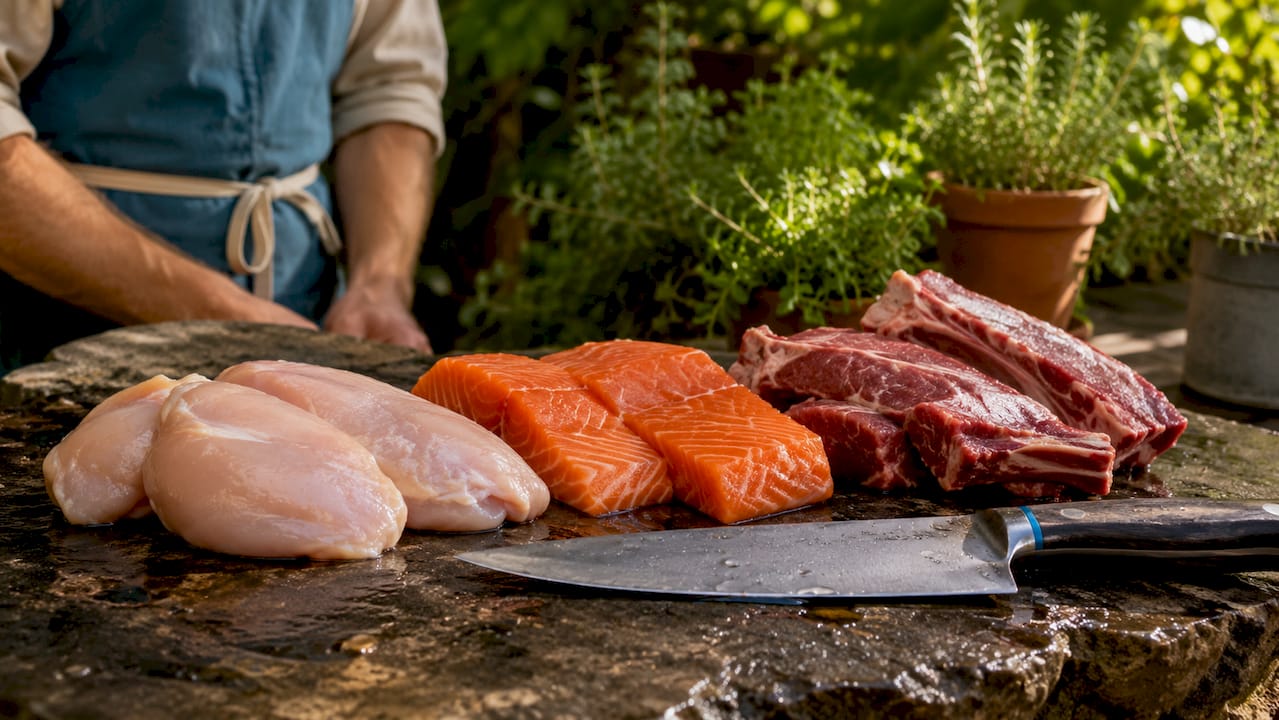
The table below shows how common proteins compare across key nutrients:
| Protein | Key Nutrients | Primary Benefit |
|---|---|---|
| Chicken | B vitamins, lean protein | Muscle support, energy metabolism |
| Fish (salmon, sardine) | Omega-3 fatty acids, vitamin D | Skin, coat, and joint health |
| Beef | Amino acids, zinc, iron | Muscle repair, immune support |
| Lamb | Iron, zinc, B12 | Red blood cell production |
| Duck | Iron, selenium | Antioxidant support, novel protein option |
| Venison | Low fat, B vitamins | Weight management, lean muscle |
Rotating across proteins like chicken, beef, fish, lamb, duck, and venison over a 6–12 month cycle is the recommended approach for balanced nutrition. The goal is true protein variety, not just switching between two brands that both use chicken as the primary ingredient.
Pro Tip: Read the first ingredient on every bag or can. If five different products all list chicken first, you are not rotating proteins. You are rotating packaging.
Does protein rotation reduce food allergies and sensitivities?
The relationship between rotation and allergies is widely misunderstood. Clinical food allergies are immune-mediated and largely genetic. No controlled clinical trials prove that rotation prevents allergies outright. What rotation does address is food intolerance, which develops from chronic, repeated exposure to the same protein over months or years.
Food intolerance and food allergy are not the same thing. An intolerance builds gradually when the digestive system is overexposed to one protein. An allergy triggers an immune response and is present regardless of how often the protein appears in the diet. Rotation reduces intolerance risk by preventing that chronic overexposure.
Watch for these signs that your pet may be developing a food sensitivity:
- Persistent itching or skin irritation with no environmental cause
- Recurring ear infections
- Loose stools or chronic gas that does not resolve
- Vomiting after meals on a consistent basis
- Dull coat or excessive shedding
“Rotation is not a cure for allergies, but it is a reasonable strategy for reducing the likelihood of developing intolerances from monotonous feeding.” — Puppy Longevity
If your pet already has a confirmed food allergy, rotation requires extra care. Introducing a new protein that shares similar peptide structures with the allergen can trigger a reaction. Always consult your veterinarian before rotating proteins for a pet with a known allergy diagnosis.
Pro Tip: Keep a simple food journal for the first month of rotation. Note stool quality, energy level, and any skin changes. This record becomes invaluable if a sensitivity develops later.
How does protein rotation affect gut health and the microbiome?
A diverse gut microbiome is one of the strongest predictors of long-term pet health. The microbiome, the community of bacteria living in your pet’s digestive tract, directly influences immune function, nutrient absorption, and inflammation levels. Dietary variety is the primary driver of microbiome diversity.
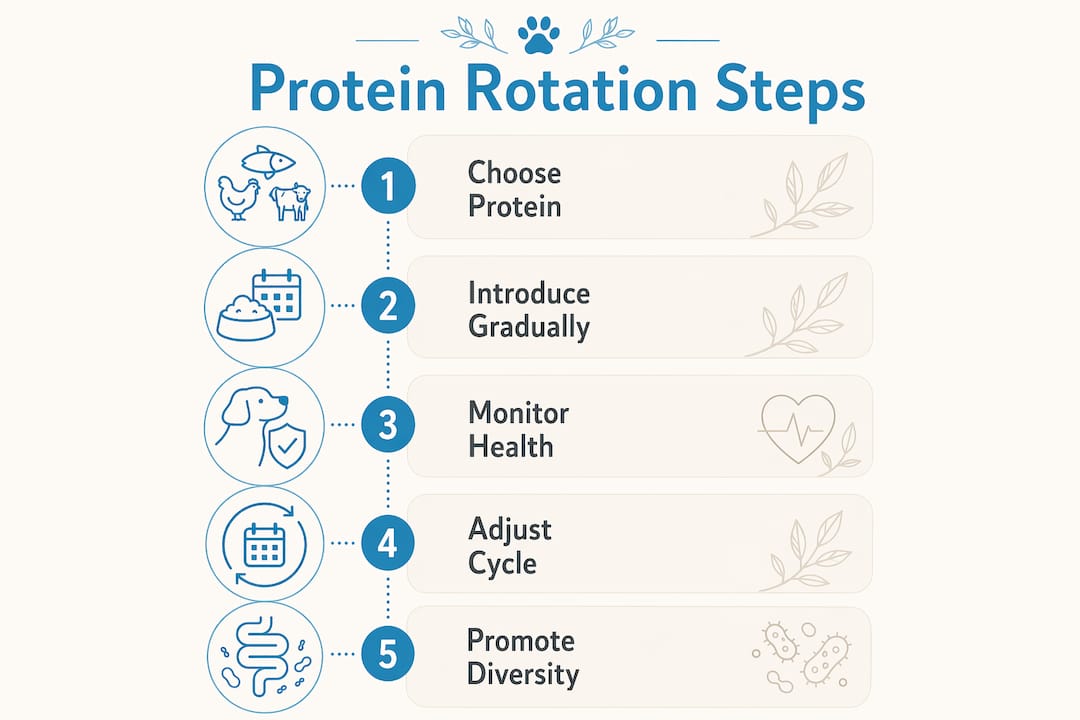
Dogs fed varied diets show significantly more diverse gut microbiomes than those fed a single protein indefinitely. A 2023 University of California, Davis study with 217 dogs found that rotational feeding led to 40% fewer cases of chronic itching and gastrointestinal upset. That reduction reflects a gut better equipped to handle dietary change and immune challenges.
The table below outlines what to expect during the microbiome adjustment period:
| Transition Phase | Timeframe | What You May See |
|---|---|---|
| Initial adjustment | Days 1–3 | Slightly softer stools, mild gas |
| Active adaptation | Days 4–7 | Stools normalizing, appetite stable |
| Full adaptation | Days 8–10 | Normal digestion, improved coat sheen |
Abrupt protein switches cause temporary digestive stress because the microbiome needs time to produce the right enzymes for a new protein source. This is not an allergic reaction. It is a normal biological adjustment that resolves within 7–10 days when the transition is managed gradually.
Pro Tip: Add a small amount of plain canned pumpkin (one teaspoon for small dogs, one tablespoon for large dogs) during the first week of a protein switch. The soluble fiber helps stabilize stools while the microbiome adjusts.
How to rotate pet food proteins safely
Safe rotation follows a predictable structure. Rushing the process causes digestive upset that owners often misread as a sign the new protein does not agree with their pet. The issue is almost always the speed of the switch, not the protein itself.
Follow this step-by-step approach for every protein transition:
- Days 1–2: Feed 75% current food, 25% new protein food.
- Days 3–4: Feed 50% current food, 50% new protein food.
- Days 5–6: Feed 25% current food, 75% new protein food.
- Days 7–10: Feed 100% new protein food and monitor for full adaptation.
Rotate proteins every 2–3 months as a general rule. Some pets with sensitive digestion do better on a 3-month cycle. Active, healthy dogs and cats often tolerate a faster rotation without issue. The recommended rotation schedule prioritizes protein variety over brand variety, so choose each new food based on its primary protein source first.
Every food you rotate into must be complete and balanced, meaning it meets AAFCO nutritional standards for your pet’s life stage. Rotating between a complete diet and a nutritionally incomplete one creates gaps rather than filling them. Wildrootspet’s guide on switching dog food safely walks through the full 7–14 day process with specific ratios for different dog sizes.
Monitor three indicators after each transition: stool consistency, energy level, and coat condition. Improvements in coat shine and energy within 3–4 weeks of introducing fish-based proteins are common and measurable. If loose stools persist beyond 10 days, slow the transition further or consult your vet.
For pet owners considering raw options, the Wildrootspet guide on transitioning to raw food covers the specific considerations that apply when rotating into or out of a raw diet format.
Can protein rotation prevent picky eating?
Picky eating in dogs and cats is often a learned behavior, not a fixed preference. Pets fed the same food daily for months or years develop a strong expectation for that specific flavor and texture. When the food changes, they resist. Rotation prevents that rigid expectation from forming in the first place.
A 2024 survey found that 78% of dog owners reported improved appetite and reduced pickiness after introducing rotational feeding. That result reflects what protein variety does to palatability. Different proteins carry distinct flavor compounds, and pets that experience variety early stay more open to dietary change throughout their lives.
Practical ways to maintain variety without overwhelming your pet:
- Rotate between at least three distinct proteins across a 6-month period
- Mix feeding formats (kibble, freeze-dried, raw, canned) to vary texture alongside protein
- Use high-value single-ingredient treats in a new protein to introduce the flavor before the full meal switch
- Avoid free-feeding during transitions so you can accurately monitor intake and appetite
Palatability research confirms that protein type drives flavor more than any other ingredient in pet food. Rotating proteins is the most direct way to keep meals interesting and prevent the mealtime standoffs that frustrate so many pet owners.
Key Takeaways
Rotating pet food proteins supports balanced nutrition, reduces food intolerance risk, and builds a more resilient gut microbiome when done gradually and with complete, AAFCO-compliant diets.
| Point | Details |
|---|---|
| Rotation fills nutritional gaps | No single protein provides every essential nutrient; variety covers what one source misses. |
| Rotation reduces intolerance risk | Chronic exposure to one protein builds intolerance; variety prevents that overexposure. |
| Gradual transitions protect digestion | A 7–10 day switch prevents digestive upset during microbiome adjustment. |
| Rotation is optional, not required | AAFCO-compliant single-protein diets are adequate; rotation adds modest but real benefits. |
| Picky eating decreases with variety | 78% of owners in a 2024 survey reported better appetite after introducing rotational feeding. |
Rotation is worth it, but it is not a magic fix
I have talked with a lot of pet owners who expect protein rotation to solve every health problem their dog or cat has. That expectation sets them up for disappointment. Rotation is a supportive practice, not a treatment. If your pet has a confirmed allergy, chronic illness, or is on a prescription diet, rotation may not be appropriate at all without direct veterinary guidance.
What I have found genuinely useful is starting rotation early. Puppies and kittens introduced to multiple proteins before 12 months of age tend to accept dietary change far more easily as adults. That flexibility pays off when you need to switch foods for health reasons later in life and your pet does not fight you on it.
The pets that benefit most from rotation are healthy adults with no known sensitivities. For them, cycling through chicken, fish, beef, and lamb every few months is low-risk and meaningfully beneficial. The gut microbiome data from the University of California, Davis study is hard to ignore. A more diverse microbiome means better digestion, stronger immunity, and fewer vet visits for chronic skin and gut issues.
My honest advice: start with a simple two-protein rotation, give each protein at least 8 weeks, and watch your pet’s coat and energy as your primary feedback signals. Those two indicators tell you more than any stool chart. And always confirm that every food you rotate in meets AAFCO standards for your pet’s life stage. The rotation only works if each diet in the cycle is complete on its own.
— Blayne
Build your pet’s rotation diet with Wildrootspet

Wildrootspet carries protein-rotation-ready options that make it easy to cycle through quality sources without sacrificing nutritional completeness. The Raw PMR Pork Meal Blend for cats and dogs is a Prey Model Raw formula built for pets on a rotational feeding program, with pork as a novel protein that complements chicken or beef-based diets. For treats that reinforce the new protein during a transition, the Pork Tenderloin Freeze-dried Treats are single-ingredient, high-protein, and ideal for introducing pork flavor before the full meal switch. Both products are sourced to meet the quality standards that health-conscious pet owners expect from a natural pet nutrition brand.
FAQ
What does rotating pet food proteins mean?
Protein rotation means regularly switching the primary animal protein in your pet’s diet, such as moving from chicken to fish to beef over a set schedule. The goal is nutritional variety and reduced risk of food intolerances from chronic single-protein exposure.
How often should I rotate my pet’s protein?
Rotating every 2–3 months is the standard recommendation for most healthy dogs and cats. Pets with sensitive digestion may do better on a slower 3-month cycle with careful monitoring.
Will rotating proteins cause digestive upset?
A gradual 7–10 day transition minimizes digestive upset during a protein switch. Loose stools or mild gas in the first few days reflect microbiome adjustment, not an allergy or intolerance.
Does protein rotation prevent food allergies?
Rotation does not prevent immune-mediated food allergies, which are largely genetic. It does reduce the risk of food intolerances that develop from repeated, long-term exposure to the same protein.
Is protein rotation necessary for all pets?
Rotation is optional. AAFCO-compliant single-protein diets provide adequate nutrition for healthy pets. Rotation adds modest benefits in nutrition, gut health, and mealtime interest when done correctly.