

Raw food feeding, formally called prey model raw (PMR) feeding, is the practice of building your pet’s diet around whole animal ingredients in ratios that mirror what their ancestors ate in the wild. Done right, it produces shinier coats, firmer stools, and better energy. Done wrong, it creates nutritional gaps that take months to show up and are hard to reverse. These raw food feeding tips cover every stage, from building the right ratios to handling meat safely, so you can get it right from day one.
1. what are the right ratios for a balanced raw diet?
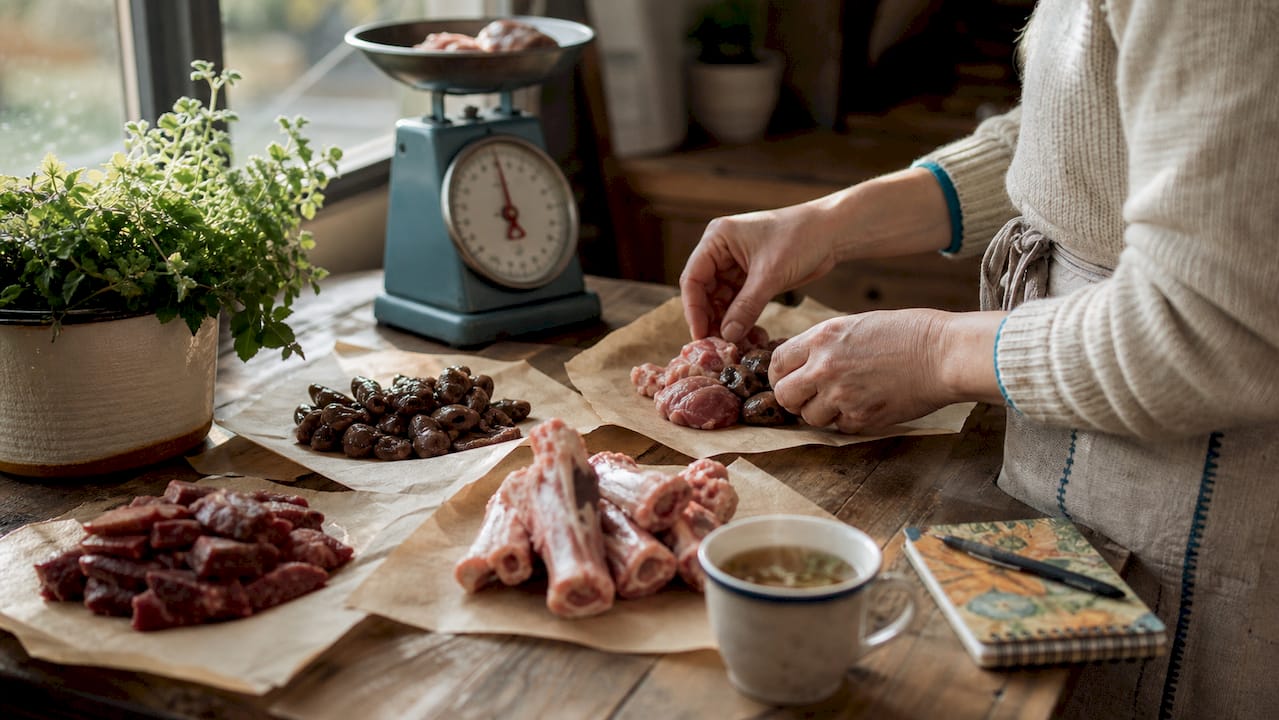
A balanced prey model raw diet consists of 80% muscle meat, 10% raw bone, 5% liver, and 5% other secreting organs. That ratio is not arbitrary. It mirrors the approximate composition of whole prey animals and gives your dog or cat the protein, fat, calcium, and micronutrients they need without synthetic supplementation.
Portion size matters just as much as ratio. Feed adult dogs and cats 2–3% of ideal body weight daily, split across one or two meals. A 50-pound dog gets roughly 1 to 1.5 pounds of food per day. Adjust up for very active dogs and down for seniors or less active pets.
| Component | Percentage | Primary Role |
|---|---|---|
| Muscle meat | 80% | Protein, fat, taurine |
| Raw bone | 10% | Calcium, phosphorus |
| Liver | 5% | Vitamin A, B vitamins, iron |
| Other organs | 5% | Zinc, copper, trace minerals |
Pro Tip: Weigh your pet every four weeks and adjust portions based on body condition, not just the scale. A pet can gain fat while losing muscle, and the scale alone will not tell you that.
2. how to handle and prepare raw pet food safely
Raw pet food carries the same bacterial risks as raw meat for humans. FDA and CDC guidelines recommend treating raw pet food like hazardous raw meat: wash hands thoroughly, disinfect all surfaces, and store food carefully.
Follow these steps every time you prepare a raw meal:
- Thaw raw food in the refrigerator for 24 hours. Never thaw at room temperature, which allows bacteria like Salmonella and Listeria to multiply rapidly.
- Use a dedicated cutting board and knife for pet food only. Label them clearly and keep them separate from your own food prep tools.
- Disinfect all utensils and surfaces after every single feeding session. A diluted bleach solution or food-safe disinfectant spray works well.
- Store unused thawed food in a sealed container in the refrigerator and use it within 48 hours.
- Dispose of uneaten food after 30 minutes. Do not leave raw food sitting in the bowl.
Pro Tip: Keep a small spray bottle of diluted white vinegar near your pet’s feeding station. A quick spray and wipe after each meal takes ten seconds and significantly reduces cross-contamination risk.
3. why protein rotation is non-negotiable
Feeding only one protein source is the most common raw feeding mistake. Single-protein diets cause deficiencies in calcium, iodine, zinc, copper, and vitamins A and D. These gaps do not show up immediately, but they compound over months and can cause serious health problems.
Rotating proteins weekly gives your pet access to a broader range of trace minerals and fatty acids. Beef provides high zinc and iron. Chicken offers lighter fat and good taurine. Sardines and mackerel deliver omega-3 fatty acids that beef and chicken cannot match. Duck and rabbit add variety in amino acid profiles. Cats especially benefit from fish-based rotation because of their high taurine requirement.
- Rotate at least three to four protein sources per month
- Include at least one oily fish source weekly for omega-3 coverage
- Track your pet’s body condition score, stool quality, and coat condition during each rotation
- Watch for loose stools when introducing a new protein, which is normal for the first two to three days
Nutritional imbalances in raw diets are well-documented in peer-reviewed research. Balance requires variety and precise formulation, not just feeding raw meat in any combination. If your pet’s coat looks dull or stools become consistently loose, protein rotation is the first variable to examine.
Pro Tip: Build a simple monthly rotation calendar. Write down which protein you are feeding each week and note any changes in your pet’s digestion or coat. Patterns become obvious fast.
4. how to transition your pet to raw food safely
Transitioning too quickly to a raw diet causes digestive upset in most pets. A gradual 7–14 day transition with active monitoring is the standard best practice. Some sensitive pets need three to four weeks.
Follow this sequence:
- Days 1–3: Replace 25% of your pet’s current food with raw. Keep 75% of the old diet in place.
- Days 4–6: Move to a 50/50 split. Watch stool quality closely. Loose stools are common; vomiting or complete refusal to eat is a signal to slow down.
- Days 7–10: Shift to 75% raw and 25% old food. Most pets adapt well at this stage.
- Days 11–14: Move to 100% raw if stools are firm and energy is stable.
Keep a detailed transition log that tracks the protein type fed, stool consistency, energy level, and any symptoms. This log becomes invaluable if you need to consult a veterinarian. Wildrootspet’s step-by-step switching guide walks through this exact process with specific timelines for dogs of different sizes and sensitivities.
Consult a veterinary nutritionist before starting if your pet has a history of pancreatitis, kidney disease, or immune compromise. These conditions change the safe parameters significantly.
5. how to choose and use raw bones correctly
Raw bones benefit dental health and provide natural chewing satisfaction, but the wrong bone for the wrong pet is a choking or dental fracture risk. Bone selection is one area where getting it wrong has immediate consequences.
| Bone Type | Best For | Risk Level |
|---|---|---|
| Chicken necks | Small dogs, cats | Low if sized correctly |
| Duck necks | Medium dogs | Low |
| Beef rib bones | Large dogs | Medium (monitor closely) |
| Weight-bearing beef bones | Any size | High (tooth fracture risk) |
The core rules for safe bone feeding:
- Match bone size to your pet’s head size. A bone your dog can swallow whole is a choking hazard.
- Never feed cooked bones. Cooking makes bones brittle and causes dangerous splintering.
- Always supervise bone feeding. Remove the bone when it becomes small enough to swallow whole.
- Introduce bones slowly. Start with softer bones like chicken necks before moving to denser options.
Tempering meat before feeding, which means partially warming it to just above refrigerator temperature, improves digestibility for pets with sensitive stomachs. For more detail on safe bone selection by breed and size, Wildrootspet’s guide on raw bones for dogs covers the full spectrum of options.
6. should you add supplements to a raw diet?
Veterinary nutritionists recommend consulting a professional to create a complete, balanced raw diet. Even well-constructed prey model diets can fall short on specific nutrients depending on the proteins you rotate and your pet’s individual health status.
The most common gaps in home-prepared raw diets are vitamin D, iodine, and manganese. These are not covered by the standard PMR ratio unless you include specific ingredients like kelp for iodine or rotate in organ meats from multiple species. A daily wellness supplement designed for raw-fed pets can fill these gaps without disrupting the diet’s natural foundation.
Visible health improvements in raw-fed pets are largely due to higher protein and fat digestibility, not rawness itself. That means a poorly formulated raw diet will not deliver those benefits. Supplements are not a shortcut around bad ratios, but they are a smart safety net for any raw feeder.
Key takeaways
Successful raw feeding depends on correct prey model ratios, strict food safety practices, consistent protein rotation, and a gradual transition supported by detailed monitoring.
| Point | Details |
|---|---|
| Use prey model ratios | Feed 80% muscle meat, 10% bone, 5% liver, and 5% organs daily. |
| Rotate proteins weekly | Cycle at least three to four proteins monthly to prevent nutritional deficiencies. |
| Handle raw food safely | Thaw in the refrigerator, disinfect all surfaces, and discard uneaten food within 30 minutes. |
| Transition over 7–14 days | Gradual switches prevent digestive upset; keep a log of stool quality and energy. |
| Size bones to your pet | Match bone hardness and size to your pet’s head size and chewing style to avoid injury. |
What i’ve learned after years of raw feeding
Most beginners treat raw feeding like a simple swap: ditch the kibble, add raw meat. That thinking is where most problems start. The pets I have seen thrive on raw diets are owned by people who treat it more like cooking for a family member than filling a bowl. They track, they rotate, they adjust.
The single biggest mistake I see is overconfidence in a single protein. Chicken-only diets are everywhere in raw feeding communities, and they consistently produce iodine and zinc deficiencies within six months. The fix is not complicated, but it requires intention.
The second thing I would push back on is the idea that raw feeding is inherently risky from a bacterial standpoint. The nutritional balance question is actually the harder problem to solve. Bacteria risks are manageable with basic hygiene. Nutritional gaps are silent and cumulative.
My honest recommendation: get a veterinary nutritionist to review your rotation plan at least once, especially in the first year. It costs less than one emergency vet visit and gives you a real baseline. Wildrootspet’s practical raw feeding guide is also a solid starting point for building that plan before you walk into the vet’s office.
— Blayne
Build your raw feeding routine with Wildrootspet
Wildrootspet carries products built specifically for pet owners who take raw feeding seriously. Whether you are just starting out or refining an established routine, the right products make consistency easier.

The Raw PMR Pork Meal Blend is formulated to prey model ratios for both cats and dogs, making it one of the most practical options for rotating a new protein into your lineup. For pets with sensitivities, the daily wellness formula fills common nutritional gaps without disrupting a clean raw diet. Wildrootspet also carries single-ingredient treats and natural chews that complement raw meal plans without adding fillers or synthetic additives.
FAQ
What is the prey model raw diet for pets?
The prey model raw diet is a feeding framework built on 80% muscle meat, 10% raw bone, 5% liver, and 5% other organs. It mirrors the natural composition of whole prey animals to provide complete nutrition without synthetic additives.
How much raw food should i feed my dog or cat daily?
Feed adult pets 2–3% of their ideal body weight per day, split across one or two meals. Adjust the amount based on activity level, age, and body condition score rather than weight alone.
What are the biggest raw feeding mistakes to avoid?
Feeding only one protein source and switching too fast are the two most common errors. Single-protein diets cause deficiencies in zinc, iodine, and copper, while rapid transitions cause digestive upset in most pets.
Are raw bones safe for dogs and cats?
Raw bones are safe when sized correctly and fed under supervision. The bone must be large enough that your pet cannot swallow it whole, and you should always remove it once it becomes small enough to pose a choking risk. Never feed cooked bones.
Do raw-fed pets need supplements?
Most raw-fed pets benefit from targeted supplementation, particularly for vitamin D, iodine, and manganese. Even well-rotated prey model diets can fall short on these nutrients, and a veterinary nutritionist can identify specific gaps in your pet’s plan.