

Fiber is defined as an indigestible carbohydrate that moves through your dog’s gut, shaping stool quality, feeding beneficial bacteria, and regulating how fast food travels through the digestive tract. The role of fiber in dog diets goes well beyond preventing loose stools. It supports the gut microbiome, helps dogs feel full on fewer calories, and plays a documented role in managing chronic digestive disease. What most pet owners miss is that fiber is not a one-size-fits-all fix. Used correctly, it is one of the most powerful nutritional tools available. Used carelessly, it creates the very problems you are trying to solve.
What types of fiber exist and how do they affect dogs?
Fiber falls into two categories: soluble and insoluble. Each works differently inside your dog’s body, and knowing the difference changes how you use them.
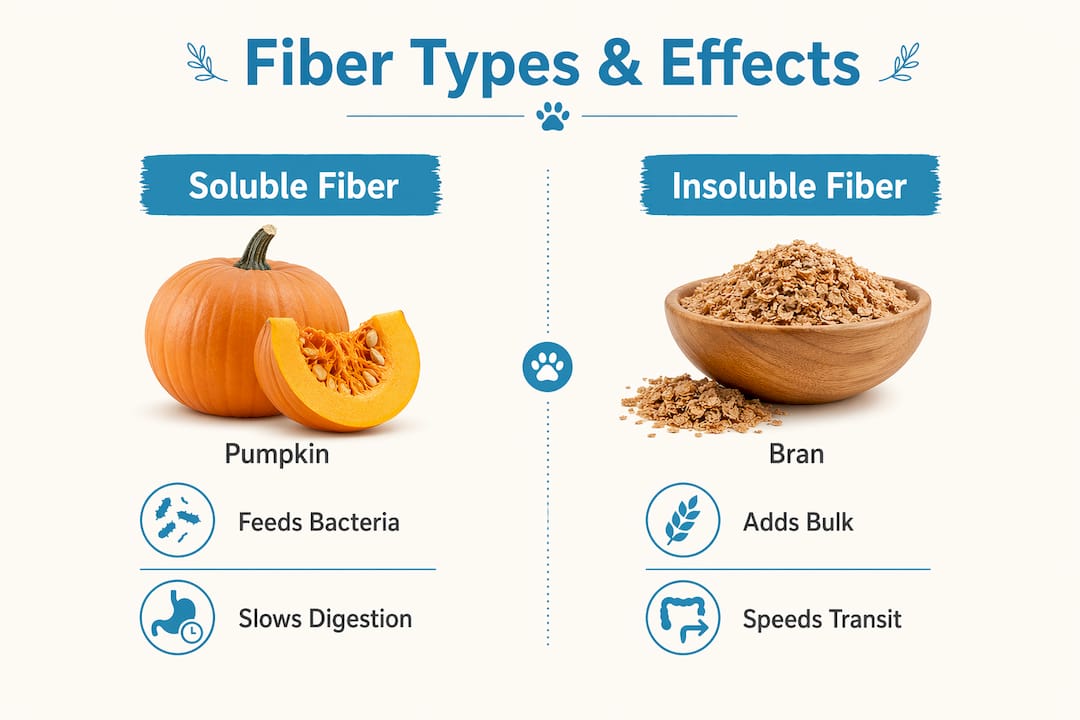
Soluble fiber dissolves in water and ferments in the colon. That fermentation feeds beneficial gut bacteria and slows digestion, which helps dogs feel satisfied longer after a meal. Insoluble fiber does the opposite. It absorbs water, adds bulk to stool, and speeds transit through the intestines. That makes it useful for dogs dealing with constipation or irregular stools.

There is a third category worth knowing: prey fiber. Raw-fed dogs produce smaller, firmer stools with less waste compared to dogs eating high volumes of plant-based fiber. That is because animal-sourced fiber, found in connective tissue, cartilage, and fur, behaves differently than the plant fiber added to most commercial kibble. It produces less bulk and less gas while still supporting stool consistency.
| Fiber type | Source examples | Primary effect | Best used for |
|---|---|---|---|
| Soluble | Pumpkin, psyllium, oats | Feeds gut bacteria, slows digestion | Diarrhea, weight management |
| Insoluble | Beet pulp, cellulose, bran | Adds stool bulk, speeds transit | Constipation, anal gland health |
| Prey fiber | Cartilage, connective tissue, fur | Firms stool, low waste output | Raw and whole-prey diets |
Pro Tip: If your dog has both loose stools and constipation at different times, a blend of soluble and insoluble fiber usually works better than a single source. Pumpkin puree is a practical starting point because it contains both types.
What scientific evidence supports fiber’s benefits in dog health?
The clinical evidence for fiber in canine digestive health is strong and growing. A 2026 study found that median total dietary fiber increased from 1.7 to 4.7 g/100 kcal in dogs with chronic enteropathy. The results were significant: 87.5% of dogs showed improved fecal scores, and 97% showed improved clinical activity scores after 21 weeks. That is not a marginal benefit. It shows that targeted fiber increases can produce measurable, consistent improvements in dogs with serious digestive conditions.
“Fiber lets dogs feel full with fewer calories, making it a key tool in preventing and managing canine obesity.” — American Kennel Club, 2026
The American Kennel Club’s 2026 guidance reinforces this point. Fiber promotes satiety by slowing gastric emptying, which means your dog stays satisfied longer without eating more. That mechanism is especially useful for dogs on weight management programs. A dog that feels full is less likely to beg, scavenge, or overeat at the next meal.
The evidence also includes a clear warning. High-fiber diets can reduce digestibility of essential nutrients if not balanced properly. Too much insoluble fiber, in particular, can bind minerals like calcium and zinc, leading to unintended weight loss and nutritional gaps. The science supports fiber as a targeted tool, not a background ingredient you add without measuring.
Cornell University veterinary research emphasizes that long-term digestive health depends more on overall diet composition and gut microbiome health than on continuous fiber supplementation. That finding reframes the conversation. Fiber is most effective when it is used with purpose and then reassessed, not added indefinitely and forgotten.
What are the nuances and potential drawbacks of fiber use in dogs?
Fiber is a precision tool, and treating it like a general supplement is where most pet owners go wrong. More fiber is not always better. Long-term use without reassessment can create secondary digestive problems, including nutrient malabsorption and chronic loose stools. The goal is to use fiber to resolve a specific issue, then step back and evaluate whether it is still needed.
Hydration is the factor most owners overlook. Adding fiber without adjusting water intake can paradoxically worsen constipation rather than relieve it. Fiber absorbs water in the gut. If your dog is not drinking enough, that fiber pulls moisture from the intestinal lining instead of from ingested fluids, making stools harder and more difficult to pass.
Dogs and cats also respond to fiber differently. Dogs tolerate greater fiber variation than cats, which reflects their different evolutionary diets. Cats are obligate carnivores with a shorter digestive tract and a much lower tolerance for plant-based fiber. The role of fiber in cat nutrition is narrower and requires more caution than in dogs. If you are managing both a dog and a cat, do not apply the same fiber strategy to both.
Key risks to watch for when increasing fiber in your dog’s diet:
- Nutrient binding: Excess insoluble fiber reduces absorption of calcium, zinc, and other minerals.
- Gas and bloating: Sudden increases in soluble fiber cause fermentation spikes that produce uncomfortable gas.
- Chronic loose stools: Too much fiber of any type can loosen stools rather than firm them.
- Reduced caloric intake: High-fiber diets lower caloric density, which is useful for overweight dogs but harmful for underweight or growing dogs.
- Dehydration-driven constipation: Fiber without adequate water intake makes constipation worse, not better.
Pro Tip: When adding fiber to your dog’s diet, increase the amount over 7–10 days rather than all at once. Watch stool consistency daily. If stools become too loose or too hard, adjust the amount before continuing.
How can pet owners safely add fiber to their dogs’ diets?
The safest approach to adding fiber is the “start low, go slow” method. Sudden increases in fiber cause flatulence and diarrhea. A gradual transition over one to two weeks gives your dog’s gut bacteria time to adjust without producing uncomfortable side effects. This applies whether you are switching to a high fiber dog food or adding a single fiber source on top of your dog’s current meals.
Stool quality is your most reliable feedback tool. Firm, well-formed stools that are easy to pick up indicate the right fiber balance. Stools that are too soft, too hard, or produced in unusually large volumes signal that you need to adjust the type or amount of fiber you are using.
Safe and practical fiber sources for dogs include:
- Pumpkin puree (plain, canned): Contains both soluble and insoluble fiber. One to four tablespoons per meal works for most dogs, depending on size.
- Cooked sweet potato: A digestible source of soluble fiber that most dogs find palatable.
- Green beans (plain, cooked or raw): Low in calories, high in insoluble fiber. Useful for weight management.
- Flaxseed: Provides soluble fiber and omega-3 fatty acids. A peanut butter with flaxseed is an easy way to add this to your dog’s routine.
- Psyllium husk: A concentrated soluble fiber supplement. Use small amounts and always with extra water.
- Raw meaty bones and connective tissue: Provide natural prey fiber that firms stools without adding plant bulk.
For dogs managing their weight, fiber is one of the most effective dietary levers available. It increases meal volume without increasing calories, which satisfies your dog’s hunger signals while keeping caloric intake controlled. Pairing fiber with a weight management formula gives you both the structural support and the satiety effect working together.
If you are feeding a raw or minimally processed diet, the distinction between prey fiber and plant fiber matters for stool outcomes. Animal-based fiber sources produce less stool volume and less odor than plant-based alternatives. That is a practical advantage for owners who want digestive support without the high-volume output that comes with beet pulp or cellulose-heavy commercial foods. You can read more about building a varied, balanced diet in this guide on rotating pet food proteins.
Key takeaways
Fiber works best in dog diets when it is matched to a specific need, introduced gradually, and paired with adequate hydration.
| Point | Details |
|---|---|
| Fiber type determines the effect | Soluble fiber supports gut bacteria and satiety; insoluble fiber regulates stool bulk and transit speed. |
| Clinical evidence is strong | A 2026 study showed 97% of dogs with chronic enteropathy improved clinically after targeted fiber increases. |
| More fiber is not always better | Excess fiber binds minerals, reduces caloric density, and can worsen the symptoms it was meant to fix. |
| Hydration is non-negotiable | Adding fiber without increasing water intake can make constipation worse, not better. |
| Prey fiber differs from plant fiber | Animal-sourced fiber produces firmer, lower-volume stools than plant-based alternatives in commercial diets. |
Fiber as a tool, not a trend: my honest assessment
I have watched fiber go from a niche topic in raw feeding circles to a buzzword on every bag of premium kibble. The marketing has outpaced the understanding, and that gap is where dogs suffer.
The owners who get the best results with fiber are the ones who treat it like a prescription, not a pantry staple. They identify a specific problem, whether that is loose stools, anal gland issues, or weight creep, and they choose a fiber source and amount that targets that problem. Then they watch the stool, adjust as needed, and reassess after a few weeks. That is it. There is no mystery to it.
What I see go wrong most often is the “more is better” assumption. An owner reads that fiber helps with digestion, so they add pumpkin, switch to a high-fiber kibble, and throw in some psyllium for good measure. Three weeks later, their dog has gas, loose stools, and is losing weight. The fiber was not the problem. The lack of precision was.
The other thing worth saying plainly: fiber is not a substitute for a quality base diet. If the protein sources are poor, the fat ratios are off, or the food is heavily processed, fiber will not compensate. It works best on top of a solid nutritional foundation. That is why I always look at the full diet picture before recommending any fiber addition. Natural pet nutrition starts with quality ingredients, and fiber is one part of that, not the whole answer.
— Blayne
Wildrootspet products that support healthy digestion
Putting fiber knowledge into practice starts with choosing the right products for your dog’s specific needs.

Wildrootspet carries options that make it straightforward to add quality fiber support to your dog’s meals. The Treat Topper Fish Dog Food Topper is a low-fat addition that supports digestive health and works well alongside fiber-rich whole foods. For owners feeding a raw diet, the Raw PMR Pork Meal Blend delivers natural prey fiber through a balanced, minimally processed format that supports firm stools and healthy digestion. Both options fit naturally into a diet built around real ingredients and intentional nutrition.
FAQ
What does fiber actually do in a dog’s digestive system?
Fiber regulates stool consistency, feeds beneficial gut bacteria, and slows or speeds digestion depending on the type. Soluble fiber ferments in the colon to support the microbiome, while insoluble fiber adds bulk and moves waste through more efficiently.
How much fiber does a dog need daily?
There is no single universal amount. A 2026 clinical study used a target of 4.7 g/100 kcal for dogs with chronic enteropathy, but healthy dogs with no digestive issues need far less. Your dog’s stool quality is the best guide to whether the current amount is right.
Can too much fiber harm my dog?
Yes. Excess insoluble fiber binds minerals like calcium and zinc, reduces caloric absorption, and can cause loose stools or unintended weight loss. The American Kennel Club advises using fiber as a targeted tool rather than a routine additive.
Is fiber for cats the same as fiber for dogs?
No. The role of fiber in cat diets is narrower because cats are obligate carnivores with shorter digestive tracts and lower tolerance for plant-based fiber. Dogs handle a wider range of fiber types and amounts than cats do.
What is the safest way to add fiber to my dog’s diet?
Start with a small amount of a single fiber source, such as plain pumpkin puree, and increase gradually over 7–10 days. Always increase water intake at the same time, and monitor stool consistency daily to find the right balance.