

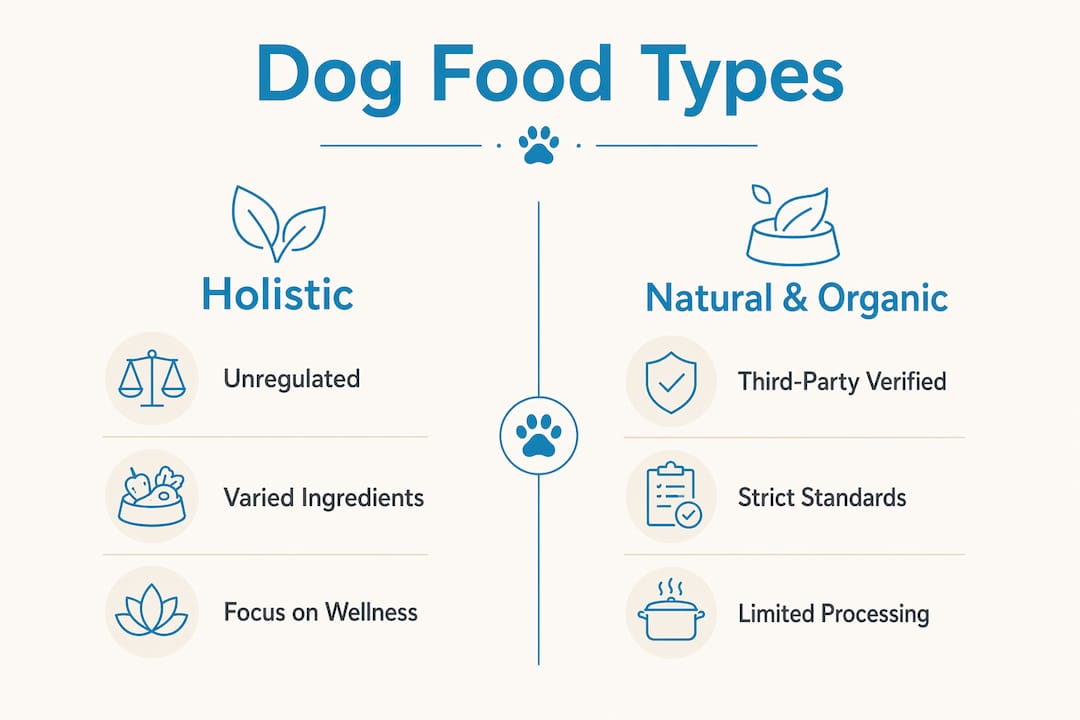
Holistic dog food is defined as a diet designed to support a dog’s complete physical and emotional well-being through high-quality, minimally processed ingredients rather than targeting isolated health symptoms. The term comes from integrative pet nutrition philosophy, which treats the body as an interconnected system where food, digestion, immunity, and behavior all influence each other. What most dog owners don’t realize is that “holistic” on dog food packaging carries no legal definition from the FDA or AAFCO, making it a marketing label rather than a regulated standard. That gap between the philosophy and the label is exactly what this guide helps you close.
What is holistic dog food, and what ingredients define it?
Holistic dog food, in practice, refers to formulas built around whole-food ingredients that support digestion, immunity, skin health, and energy simultaneously. The philosophy behind it aligns with species-appropriate diets built from minimally processed, whole foods that mirror what dogs would naturally consume. Because the term itself is unregulated, the ingredient list is your only reliable quality signal.
When evaluating any product marketed as holistic, look for these core components:
- Named protein sources like deboned chicken, wild-caught salmon, or grass-fed beef listed as the first ingredient, not generic “meat meal”
- Whole vegetables and fruits such as sweet potato, blueberries, and spinach that deliver natural antioxidants
- Probiotics and prebiotics to support gut microbiome balance and nutrient absorption
- Omega-3 fatty acids from sources like fish oil or flaxseed, which support coat quality, joint health, and inflammation response
- Adaptogens and functional herbs like turmeric or ashwagandha, which supplements like probiotics and omega-3s use to support stress resilience and immune function
Beyond ingredients, the AAFCO nutritional adequacy statement on the label tells you whether a food meets baseline nutritional requirements for your dog’s life stage. A food labeled “complete and balanced” by AAFCO standards has cleared a meaningful bar. One labeled “for supplemental feeding only” has not. Human-grade sourcing and transparent supply chains are better quality indicators than any marketing phrase, including “holistic.” Learning to read natural ingredient labels is the single most practical skill you can develop as a health-conscious dog owner.
Pro Tip: Flip the bag over before reading the front. If the first five ingredients don’t include a named protein and at least one whole food, the front-of-bag claims are doing more work than the formula itself.

How does holistic dog food compare to natural and organic options?
These three terms appear on pet food packaging constantly, but they operate under very different standards. Understanding the distinctions protects you from paying a premium price for a conventional product with better branding.
| Category | Regulatory standard | Ingredient sourcing | Processing level |
|---|---|---|---|
| Holistic | None. Unregulated marketing term | Ideally whole foods, but not required | Varies widely by brand |
| Natural | AAFCO defines as no artificial colors, flavors, or preservatives | Must avoid synthetic additives | Still allows high-heat processing |
| Organic | USDA certified; ingredients grown without synthetic pesticides or GMOs | Certified organic supply chain required | Can still be heavily processed |
The critical takeaway from this table is that organic is the only category with genuine third-party verification. Natural has a partial definition from AAFCO, but it says nothing about ingredient quality or processing method. Holistic has neither. A food can be labeled holistic while containing low-quality rendered ingredients processed at temperatures that destroy most of their nutritional value.
High-heat extrusion degrades nutrients even when the starting ingredients are premium. Cold-pressed or freeze-dried formats preserve more bioavailable nutrition because they avoid the extreme temperatures that break down proteins and enzymes. This is why processing method matters as much as ingredient sourcing when you evaluate any food claiming to support whole-body health. A freeze-dried raw topper added to a quality kibble can meaningfully improve the nutritional profile of your dog’s daily meal.
What are the real benefits of holistic pet food?
The benefits of holistic pet food are real, but they come from ingredient quality and formulation, not from the word “holistic” printed on the bag. When a dog consistently eats a diet built from whole, minimally processed ingredients, the downstream effects on health are measurable and observable.
Dog owners who switch to higher-quality diets commonly report improvements in these areas:
- Coat and skin condition: Omega-3 fatty acids reduce inflammatory responses that cause dry skin, excessive shedding, and dull coats. Results typically appear within four to eight weeks.
- Digestive regularity: Whole-food fiber sources and added probiotics support a stable gut microbiome, which reduces gas, loose stools, and inconsistent digestion.
- Energy and weight management: Diets with higher protein bioavailability and fewer empty carbohydrates support lean muscle mass and sustained energy rather than glucose spikes.
- Immune resilience: Antioxidants from whole fruits and vegetables, combined with zinc and vitamin E from quality protein sources, support the immune system’s baseline function.
- Behavioral stability: Diets high in artificial additives can exacerbate stress and anxiety in dogs. Removing synthetic dyes, flavor enhancers, and preservatives can reduce hyperactivity and improve focus.
The limitation worth naming directly is this: because “holistic” is unregulated, a product can carry that label without delivering any of these benefits. The benefits come from the actual diet quality, not the marketing category. Pairing good nutrition with regular veterinary care, appropriate exercise, and mental stimulation is what holistic pet care actually looks like in practice. Nutrition is the foundation, not the whole structure.
How to select and transition your dog to a holistic diet
Choosing a genuinely quality food and transitioning your dog to it safely requires a step-by-step approach. Rushing either part leads to digestive upset and a dog who associates the new food with feeling unwell.
- Start with your dog’s specific needs. Age, breed, activity level, and any existing health conditions determine which nutritional profile fits best. A senior dog with joint issues needs more omega-3s and glucosamine than a healthy two-year-old retriever.
- Read the ingredient list, not the front label. The first five ingredients make up the majority of the formula. Named proteins, whole vegetables, and identifiable fat sources are what you want. Avoid formulas where corn syrup, artificial colors, or unnamed by-products appear in the first five.
- Check the AAFCO statement. Look for “complete and balanced” for your dog’s life stage. If the food was formulated to meet AAFCO standards rather than tested through feeding trials, that distinction matters for long-term use.
- Evaluate the brand’s sourcing transparency. Brands that publish where their proteins are sourced, which farms supply their produce, and how their food is manufactured are demonstrably more trustworthy than those that don’t. Ingredient transparency and high-quality sourcing are the defining quality markers in 2026’s premium pet food market.
- Transition over 10 to 14 days. Start with 25% new food mixed into 75% old food for three to four days. Move to a 50/50 split for three days, then 75% new food for three days, then complete the switch. This gradual approach gives your dog’s gut microbiome time to adjust.
- Consult a veterinarian or veterinary nutritionist. If your dog has a diagnosed condition, food sensitivities, or is on medication, a professional review of any new diet is worth the time. Holistic veterinarians specifically integrate whole-body nutrition with conventional care for a more complete picture.
Pro Tip: Keep a simple log during the transition. Note stool consistency, energy level, and coat appearance every few days. This gives you objective data to evaluate whether the new food is working, rather than relying on memory.
Understanding human-grade pet food standards is another practical step that helps you cut through marketing language and identify genuinely high-quality formulas.
Key takeaways
Holistic dog food delivers real health benefits only when the ingredient quality and formulation back up the label claim, making your ability to read and evaluate an ingredient list the most important skill in this process.
| Point | Details |
|---|---|
| “Holistic” is unregulated | The FDA and AAFCO assign no legal definition to “holistic” on pet food labels. |
| Ingredient list is the real standard | Named proteins, whole foods, and AAFCO adequacy statements are your actual quality benchmarks. |
| Processing method matters | Freeze-dried and cold-pressed formats preserve more nutrients than high-heat extrusion. |
| Benefits are diet-driven, not label-driven | Coat, digestion, immunity, and behavior improvements come from ingredient quality, not marketing claims. |
| Transition gradually | A 10 to 14 day transition prevents digestive upset and helps you accurately assess the new food’s effects. |
Why the label matters less than you think
I’ve spent years watching dog owners pay significant premiums for bags with “holistic,” “natural,” and “premium” printed across the front, only to find generic rendered ingredients and synthetic preservatives in the first five items on the back. The marketing has gotten sophisticated enough that it genuinely fools people who care deeply about their dogs. That frustrates me.
What I’ve found actually works is treating the ingredient list like a nutrition label for yourself. You wouldn’t buy a food marketed as “clean eating” without checking what’s in it. Your dog deserves the same scrutiny. The brands worth trusting are the ones that make their sourcing boring and obvious, not the ones that invest in packaging that looks like a farmer’s market stand.
The other thing most articles won’t tell you is that holistic pet care is not a food category. It’s a mindset. Integrative pet care combines quality nutrition with veterinary medicine, appropriate exercise, mental enrichment, and stress management. A premium bag of food fed to a dog who never goes outside and lives in chronic anxiety is not holistic care. The food is one input in a larger system. Get the food right, then build the rest of the system around it. That’s the approach that actually produces the healthy, energetic, long-lived dogs you see and want for your own.
— Blayne
Start your dog’s wellness journey with Wildrootspet
Wildrootspet carries a curated range of products built specifically for dog owners who want nutrition that matches the philosophy, not just the label.

If your dog has sensitivities to common proteins, the Daily Wellness Formula is formulated for pets with pork and beef allergies, delivering whole-body nutritional support without the common triggers. For coat, skin, and joint health, Omega Pawz liquid omega-3 oil is a simple daily addition that makes a visible difference within weeks. And if you want to go deeper on the full picture of holistic pet wellness, the Whole Pet Wellness Academy gives you a practical, owner-focused toolkit covering nutrition, supplements, and integrative care strategies in one place.
FAQ
What does “holistic” mean on dog food packaging?
“Holistic” on dog food packaging is a marketing term with no legal definition from the FDA or AAFCO. It signals a brand’s philosophy but does not guarantee any specific ingredient standard or nutritional quality.
Is holistic dog food better than regular dog food?
Holistic dog food can be significantly better than conventional options, but only when the ingredient quality and formulation support that claim. Focus on the AAFCO adequacy statement and the first five ingredients rather than the label category.
What ingredients should I look for in holistic pet nutrition?
Look for named protein sources listed first, whole vegetables and fruits, added probiotics, and omega-3 fatty acids from fish oil or flaxseed. Avoid formulas with unnamed by-products, artificial preservatives like BHA or BHT, and corn syrup in the first five ingredients.
How long does it take to see benefits from holistic pet food?
Most dog owners notice improvements in coat quality and digestion within four to eight weeks of a consistent diet change. Behavioral and immune benefits may take longer to observe, particularly if the previous diet contained high levels of artificial additives.
Can holistic dog food replace veterinary care?
Holistic dog food is a complement to veterinary care, not a replacement. Holistic pet care integrates quality nutrition with conventional medicine, exercise, and preventive wellness practices for the best long-term outcomes.