

Safe pet toys are defined by three factors: non-toxic materials, appropriate size, and suitability for your pet’s specific play style. According to the American Veterinary Medical Association and American Humane, thousands of pets suffer injuries from unsafe toys every year, including dental fractures and gastrointestinal obstructions. Those injuries are largely preventable. This choosing safe pet toys guide walks you through the exact criteria veterinarians use to evaluate toys, so you can shop with confidence and stop guessing at the pet store.
What does a choosing safe pet toys guide actually cover?
Pet toy safety is the practice of matching a toy’s material, size, and durability to your individual pet’s anatomy and behavior. Most pet owners focus on price or appearance when buying toys. Veterinary experts focus on three things: hardness, size relative to the pet’s mouth, and whether the toy can be broken into swallowable pieces. Getting those three factors right eliminates the majority of toy-related emergency vet visits.
The American Humane Society and the AVMA both publish guidance on this topic, and their recommendations converge on one point: no toy is universally safe. A rope toy that works perfectly for a gentle Labrador becomes a strangulation and ingestion risk for a powerful Pit Bull. Understanding that distinction is the foundation of every good toy-buying decision you will make.
How do you assess your pet’s play style for toy safety?
Play style determines toy risk more than any other single factor. Dr. Erin Ray of Texas A&M Veterinary Medicine and Biomedical Sciences identifies three broad categories of pet players, and knowing which one describes your dog or cat changes everything about which toys belong in your home.
Shredders are dogs and cats that immediately work to destroy a toy. They tear, pull, and chew until the toy is in pieces. For shredders, plush and squeaker toys are genuinely dangerous. The stuffing inside plush toys can cause intestinal blockages, and squeakers become choking hazards the moment they are freed from the outer shell.
Tuggers love resistance and pulling games. They need toys built for tension, like thick rubber rings or tug ropes made from natural fibers. The risk for tuggers is rope fraying. Once a rope toy starts to unravel, individual strands can wrap around a tooth or be swallowed and tangle in the intestines.
Gentle players are the easiest group to shop for. They carry toys, toss them lightly, and rarely destroy them. Plush toys and soft balls are generally fine for this group, but you still need to inspect toys regularly for wear.
- Shredders: choose solid rubber or hard nylon alternatives rated for aggressive chewing
- Tuggers: choose thick rubber rings or natural fiber ropes; retire immediately when fraying starts
- Gentle players: soft toys are acceptable; inspect weekly for loose parts or tears
Pro Tip: Watch your pet with a new toy for the first 15 minutes before leaving them unsupervised. That single observation session tells you more about their play style than any breed profile.
Observing your pet’s behavior during play is the most accurate way to classify their style. Breed tendencies are a starting point, not a guarantee.
How do size and material affect pet toy safety?
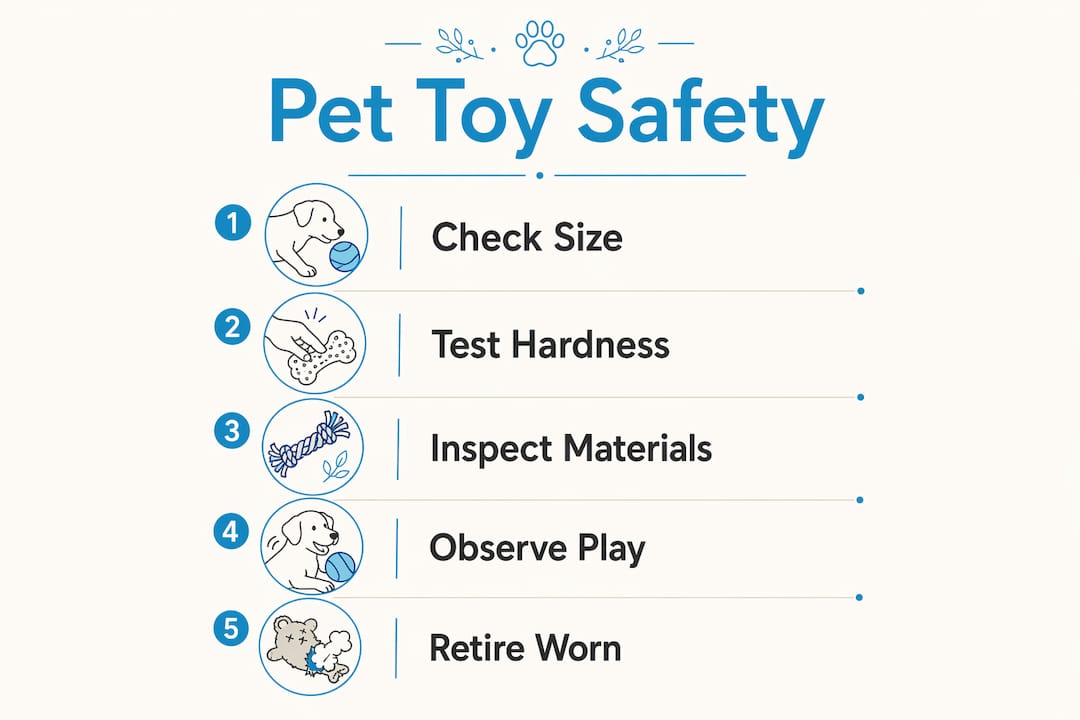
Size is the most overlooked factor in toy selection. A toy must be large enough that your dog cannot fit it entirely in their mouth. If the toy disappears into the mouth, it can be swallowed whole or lodge in the throat. For cats, the same principle applies to small balls and toy mice. When in doubt, go larger.
The thumbnail test for chew toy hardness
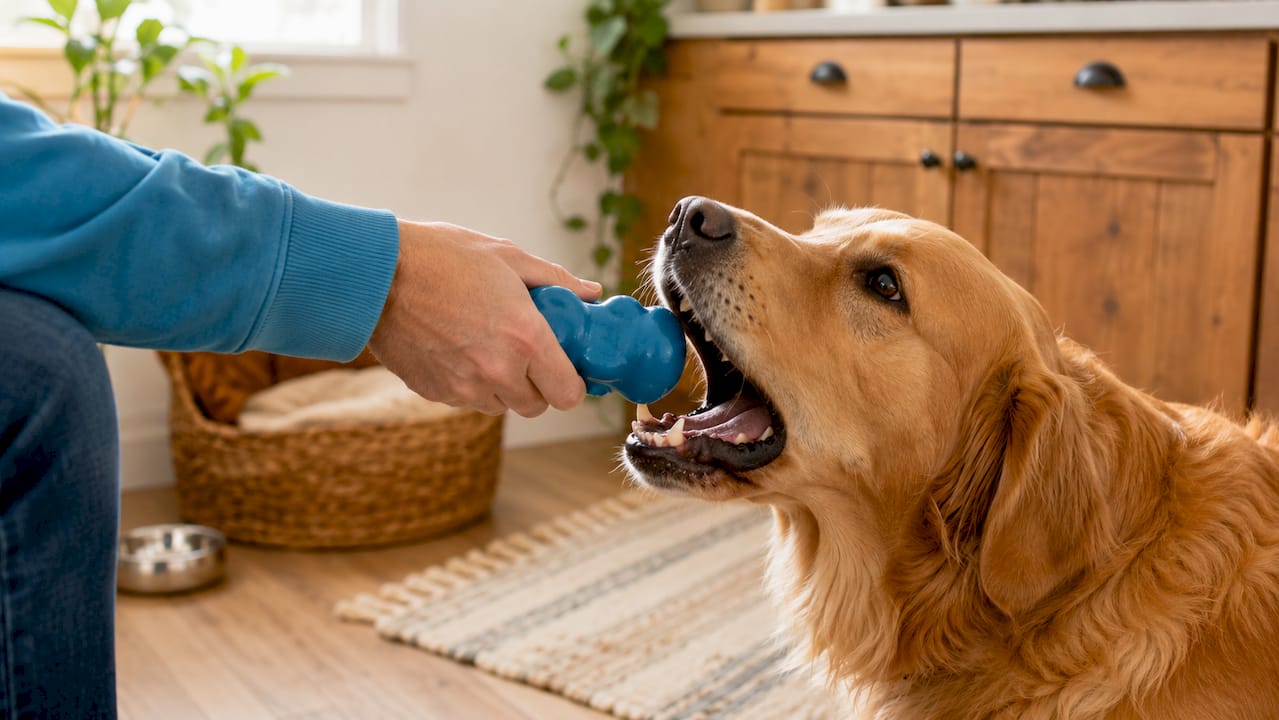
Toy hardness is the top safety concern for dogs that chew. Overly hard toys are a leading cause of tooth fractures, which are painful and expensive to treat. Veterinarians recommend a simple field test before you buy: press your thumbnail firmly into the toy’s surface. If the material gives slightly, the toy is safe for chewing. If there is no give at all, the toy is too hard and will damage your dog’s teeth.
This test, known as the Thumbnail Test, rules out antlers, hard nylon bones, cooked bones, and ice. All of those fail the test and all of them cause fractures. Natural rubber toys from brands like West Paw and Kong typically pass the test. They flex under pressure, which protects teeth while still satisfying the urge to chew.
Pro Tip: Run the Thumbnail Test in the store before purchasing. If the packaging prevents you from touching the toy, skip it and find one you can test directly.
Material safety comparison
| Material | Safety Rating | Key Risk | Best For |
|---|---|---|---|
| Natural rubber (flexible) | High | Minimal if sized correctly | Aggressive and moderate chewers |
| Hard nylon | Low | Tooth fractures, sharp fragments | Not recommended for chewing |
| Plush fabric | Moderate | Stuffing ingestion, squeaker hazard | Gentle players only |
| Rope (natural fiber) | Moderate | Fraying, strand ingestion | Supervised tuggers |
| Cooked bones | Very low | Splintering, GI perforation | Avoid entirely |
| Rawhide | Low | Choking, digestive blockage | Avoid for aggressive chewers |
| Latex | Moderate | Tears into chunks | Gentle players, supervised use |
Natural rubber is the clear winner for most dogs. For cats, wand toys with feathers or fabric attachments are generally safe under supervision, though the attachments should be inspected after every session. You can learn more about non-toxic toy materials and why they matter for long-term pet health.
When should you retire a pet toy?
No toy is truly indestructible, and marketing that claims otherwise creates a false sense of security. Every toy degrades with use. The question is not whether a toy will wear out, but whether you will notice before it becomes dangerous.
Even toys that start at a safe size become hazardous once worn down to swallowable fragments. A large rubber ball that your dog has chewed for months may now be small enough to lodge in the throat. Size is not a fixed property. It changes as the toy wears.
Retire a toy immediately when you notice any of the following:
- Visible cracks, fractures, or sharp edges on rubber or plastic toys
- Missing chunks or pieces that cannot be accounted for
- The toy has worn down to a size that fits easily in your pet’s mouth
- Rope toys showing significant fraying or loose strands
- Plush toys with torn seams exposing stuffing or squeakers
Limiting the number of toys your pet can access at one time makes inspection far easier. Experts advise rotating toys and giving only a few at a time. You cannot monitor the condition of 20 toys scattered around the house. Three to five toys at a time is a manageable number.
One safety detail that most owners miss: keep pet toys and children’s toys stored separately. Children’s toys often contain button batteries, small magnets, and plastics treated with chemicals that are acutely toxic to pets. A dog that gets into a child’s toy box faces a very different set of risks than one playing with its own toys.
Pro Tip: Rotate your pet’s toys every three to four days. Rotation keeps play interesting, reduces obsessive chewing on a single toy, and gives you a natural checkpoint to inspect each toy before it goes back into rotation.
Which toy types are safest for different pets?
The right toy depends on your pet’s age, size, and chewing intensity. Puppies and kittens have softer teeth and need toys that are gentler than what an adult dog requires. Senior pets often have dental sensitivities that make hard chew toys painful. Matching toy type to life stage is as important as matching it to play style.
| Toy Type | Best For | Key Safety Feature |
|---|---|---|
| Flexible rubber chew toy | Adult dogs, aggressive chewers | Passes Thumbnail Test; no splintering |
| Treat-dispensing toy | All adult dogs, especially high-energy breeds | Slows chewing; encourages problem-solving |
| Feather wand | Cats of all ages | Supervised use only; inspect attachment points |
| Soft plush toy | Gentle players, puppies, senior dogs | Check seams weekly; remove if torn |
| Fetch ball (rubber) | Active adult dogs | Must be too large to swallow whole |
| Crinkle mat or puzzle toy | Senior cats, low-energy cats | No small detachable parts |
Treat-dispensing toys deserve special mention. They redirect a dog’s chewing energy toward a controlled activity and slow down the intensity of play. For aggressive chewers that destroy standard toys in minutes, a durable treat dispenser extends playtime and reduces the risk of ingesting large toy fragments. The role of fetch toys in shaping dog behavior is also worth understanding before you add them to your rotation.
For owners who want to go further, identifying quality pet toys for dogs and cats covers construction standards and what to look for beyond materials alone.
Key takeaways
Safe pet toy selection requires matching material hardness, toy size, and play style to your individual pet’s needs, then inspecting toys regularly and retiring them at the first sign of damage.
| Point | Details |
|---|---|
| Match toy to play style | Shredders need solid rubber; gentle players can use plush toys with weekly inspection. |
| Apply the Thumbnail Test | Press your nail into the toy; no give means the toy will fracture teeth. |
| Size above all | A toy must be too large to fit entirely in your pet’s mouth at all stages of wear. |
| Retire damaged toys promptly | Cracks, missing chunks, or reduced size are all signals to discard immediately. |
| Separate pet and children’s toys | Children’s toys contain batteries and chemicals that are acutely toxic to pets. |
What i’ve learned from watching owners get this wrong
Most pet owners buy toys based on what looks fun, not what is actually safe. I understand the impulse. A squeaky plush hamburger is genuinely charming. But after reviewing veterinary guidance from Texas A&M, the AVMA, and Modern Animal, the pattern is clear: the toys that look the most appealing are often the most dangerous for the wrong dog.
The biggest mistake I see is trusting the word “indestructible” on packaging. That label is a marketing claim, not a safety certification. No independent body tests and certifies pet toys the way the CPSC certifies children’s products. You are the quality control. That means the Thumbnail Test, the size check, and the weekly inspection are not optional steps. They are the entire system.
The second mistake is assuming that because a toy worked for a previous pet, it will work for the current one. Every animal is different. A toy that lasted three years with your last dog may be destroyed in 20 minutes by your new one. Play style is individual, and misjudging it increases ingestion risk significantly.
The good news is that once you build the habit of observing your pet’s play style and running basic checks before and after play, the whole process takes about five minutes. That five minutes is the difference between a happy play session and an emergency vet visit.
— Blayne
Safe, durable toys your pet will actually love

Wildrootspet carries toys built around the same principles this article covers: appropriate hardness, non-toxic materials, and size options matched to your dog’s breed and chewing intensity. The durable rubber chew toy for large dogs is USA-made and designed to pass the Thumbnail Test right out of the box. For dogs that need more mental engagement, the dual chamber treat dispenser slows aggressive chewers down and keeps them working safely. Wildrootspet also stocks natural treats that pair well with enrichment toys, so your pet gets both physical and mental stimulation without exposure to artificial additives.
FAQ
What makes a pet toy unsafe for dogs?
A toy is unsafe if it is too hard to pass the Thumbnail Test, small enough to be swallowed whole, or made from materials that splinter or contain toxic chemicals. Cooked bones, hard nylon, and rawhide are the most commonly cited hazards by veterinary experts.
How do i know when to throw away a pet toy?
Retire any toy that shows cracks, sharp edges, missing pieces, or has worn down to a size your pet could swallow. Worn toys become hazardous even if they started at a safe size.
Are plush toys safe for cats?
Plush toys are generally safe for cats under supervision, but the attachments, including feathers, strings, and plastic eyes, should be inspected before and after every play session. Remove any toy with loose parts immediately.
Can i use children’s toys for my pet?
No. Children’s toys should be stored separately from pet toys because they often contain button batteries, small magnets, and chemical treatments that are toxic to animals.
What is the safest toy material for aggressive chewers?
Flexible natural rubber is the safest material for aggressive chewers. It passes the Thumbnail Test, does not splinter, and is available in sizes appropriate for large breeds. Brands like Kong and West Paw produce rubber toys specifically rated for heavy chewing.