

Premium pet treats are defined as snacks made from whole-food ingredients, free of fillers, artificial additives, and by-products, produced through processes that preserve natural nutrients and sensory quality. The term “super-premium” is the recognized industry standard for the highest tier, used by pet food professionals to describe treats with fresh meat above 50–70% of total content. Brands like Pupford and WoofSpark have built their reputations on this standard. Understanding the definition of premium pet treats helps you cut through marketing noise and make choices that genuinely benefit your pet.
What is the definition of premium pet treats?
Premium pet treats are not a marketing category. They are a measurable quality tier defined by ingredient sourcing, formulation, and manufacturing standards. Fresh meat inclusion above 50–70% places a treat in the super-premium category because that level of animal protein delivers complex nutrition that plant-based fillers cannot replicate.
The clearest way to recognize a premium treat is its ingredient list. Short, pronounceable ingredients signal transparency. An ingredient deck that reads “chicken, sweet potato, blueberry” tells you exactly what your pet is eating. One that reads “meat and bone meal, corn syrup solids, propylene glycol” does not.
Ingredient transparency over branding is what separates genuine premium products from premium-priced ones. The label is the product’s honest resume. Read it before you buy.
What ingredients separate premium treats from store-bought?
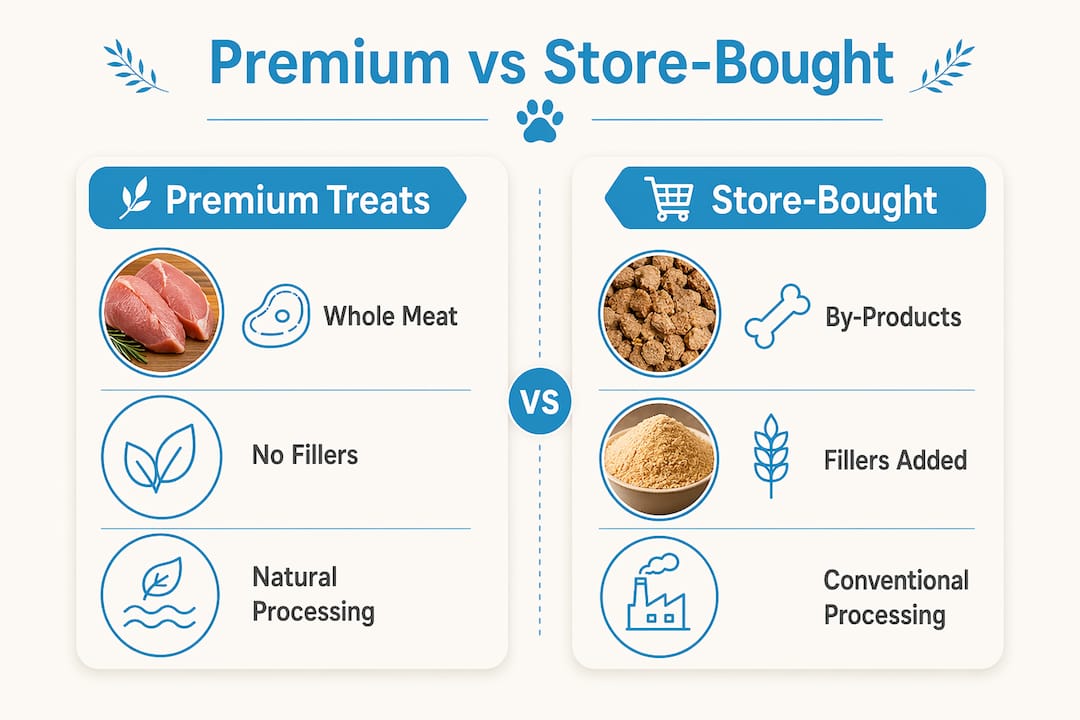
High-quality pet snacks share a consistent set of ingredient standards that mass-market treats rarely meet. The difference shows up immediately when you compare labels side by side.
| Feature | Premium Treats | Standard Store-Bought Treats |
|---|---|---|
| Protein source | Whole muscle meat (chicken, salmon, kangaroo) | Meat meal, by-products, or unnamed “animal digest” |
| Fillers | None | Corn, wheat, soy common |
| Preservatives | Natural (vitamin E, rosemary extract) | BHA, BHT, ethoxyquin |
| Ingredient list length | 3–8 items | 15–30 items |
| Allergen risk | Low (single protein options available) | High (multiple cross-reactive proteins) |
Premium treats exclude by-products, wheat, corn, and soy and focus on whole protein sources like kangaroo, salmon, and chicken. That matters because by-products and fillers dilute the nutritional value of every bite your pet takes.
The best ingredients for pet treats share three traits. They are recognizable as real food. They come from a single, named source. They appear at the top of the ingredient list, meaning they make up the largest portion by weight.
- Whole muscle meats: chicken breast, beef liver, wild-caught salmon
- Functional additions: blueberries, pumpkin, sweet potato
- Natural preservatives: mixed tocopherols (vitamin E), rosemary extract
- Avoided ingredients: corn syrup, artificial colors (Red 40, Yellow 5), sodium nitrite
Pro Tip: Flip the bag and read the first three ingredients. If you cannot picture those ingredients as real food, put the bag back.
Single-ingredient treats are the clearest expression of this standard. One protein, nothing else. They are also the safest choice for pets with food sensitivities.
How does manufacturing technology affect treat quality?
The ingredient list tells half the story. How a treat is made determines whether those good ingredients survive processing and reach your pet intact.
Vacuum microwave dehydration preserves the crunch, aroma, and nutrients of premium dog treats by drying fast under low oxygen. Traditional drying methods use high heat over long periods, which destroys volatile aroma compounds and degrades heat-sensitive vitamins. Vacuum microwave technology heats water evenly from the inside out at low temperature, keeping proteins and natural meat aromas intact.
The result is a treat your dog actually wants to eat. Crunch and aroma retention are critical for treat acceptance. Dogs signal quality through smell first. A treat that smells like real meat gets eaten. A treat that smells like cardboard gets ignored.
Freeze-drying is the other gold-standard method. It removes moisture through sublimation at near-freezing temperatures, preserving nearly all original nutrients. Freeze-dried treats can also be rehydrated, which is useful for senior pets or animals recovering from illness.
Here is how the main processing methods compare:
- Vacuum microwave dehydration: Fast drying, low oxygen, preserves aroma and crunch, no artificial additives needed
- Freeze-drying: Maximum nutrient retention, rehydratable, ideal for raw-diet owners
- Traditional air drying: Slower, higher heat, greater nutrient loss, often requires preservatives
- Baking/extrusion: Common in mass-market treats, high heat destroys many nutrients, requires artificial stabilizers
Pro Tip: When a label says “gently dried” or “freeze-dried,” look for a specific method name. Vague processing claims are marketing. Named methods like freeze-drying or vacuum dehydration are verifiable quality signals.
The premium treat definition is shifting from exclusionary (what is removed) to preservation (what is kept). The best manufacturers now compete on how much nutritional integrity they can protect, not just how many bad ingredients they leave out.
What are the health benefits of premium pet treats?
Premium treats deliver measurable health outcomes, not just better ingredients on paper. The benefits are most visible in pets with sensitivities, allergies, or chronic health conditions.
Premium treats contribute to improved digestion, reduced allergies, joint health support, and better skin condition, especially for sensitive pets. A dog that stops scratching after switching to a single-protein treat is not a coincidence. Corn, soy, and artificial dyes are among the most common dietary allergen triggers in dogs.
Functional premium treats may include omega-3 fatty acids, glucosamine, probiotics, and antioxidant-rich fruits to support joint health, skin, coat shine, and general wellness. These are not supplements added as an afterthought. In well-formulated treats, they are built into the recipe from the start.
The economic argument for premium treats is real. Investing in premium treats can offset vet visits linked to allergies or skin problems caused by fillers. A bag of high-quality snacks costs more per ounce. A dermatology appointment for a dog with chronic skin inflammation costs far more per visit.
The value per benefit ratio reveals that premium treats lower costly health risks from allergies or artificial additives over time, making them economical for pets with special dietary needs. That is the calculation worth making before you reach for the cheaper bag.
You can also read more about why premium pet food matters for your pet’s long-term health outcomes.
How do you choose the right premium pet treat options?
Choosing genuine premium pet treat options requires reading past the front of the package. The front is marketing. The back is truth.
Start with the ingredient deck. Industry experts recommend short, simple, pronounceable ingredients as the clearest sign of whole-food authenticity. If you need a chemistry degree to read the ingredient list, the treat is not premium regardless of what the front label claims.
Consider your pet’s specific needs before selecting a product:
- Allergies or sensitivities: Choose single-protein, limited-ingredient treats with no common allergens
- Senior pets: Look for treats with glucosamine, omega-3s, and soft or rehydratable textures
- Training use: Small, low-calorie treats work best; premium does not mean high-calorie
- Puppies and kittens: Avoid treats with added salt, sugar, or artificial flavors regardless of price point
| Decision Factor | What to Look For |
|---|---|
| Protein source | Named whole meat as first ingredient |
| Ingredient count | Fewer than 10 ingredients preferred |
| Processing method | Freeze-dried, vacuum dehydrated, or air-dried at low temp |
| Certifications | USDA organic, non-GMO, or human-grade sourcing noted |
| Brand transparency | Sourcing information available on website or packaging |
Premium treats are not only for training rewards but serve as wellness tools, especially for pets with allergies or sensitivities needing single-protein or limited-ingredient options. Reframe how you use them. A treat given daily to a dog with a sensitive stomach is a health decision, not a reward decision.
Pro Tip: Check whether the brand publishes sourcing information on its website. Brands that name their farms or fisheries are harder to fake. Brands that say only “premium ingredients” are easier to question.
For a deeper look at natural treat options for dogs and cats, Wildrootspet covers the full range of ingredient-first choices available today.
Key takeaways
Premium pet treats deliver real nutritional value through whole-food ingredients, clean processing methods, and transparent labeling that mass-market treats consistently fail to provide.
| Point | Details |
|---|---|
| Ingredient quality defines premium | Fresh meat above 50–70% and no fillers or by-products are the core standard. |
| Processing method matters | Freeze-drying and vacuum microwave dehydration preserve nutrients and aroma that high-heat methods destroy. |
| Health benefits are measurable | Better digestion, fewer allergic reactions, and improved coat condition are documented outcomes. |
| Long-term cost is lower | Reduced vet visits for allergy and skin issues offset the higher upfront price of premium treats. |
| Label reading is the skill | Short, pronounceable ingredient lists signal authenticity; front-of-pack claims do not. |
What i have learned after years of watching this market evolve
The premium pet treat market has changed more in the last five years than in the previous twenty. When I started paying close attention to this space, “premium” meant the absence of bad things. No corn. No by-products. No artificial colors. That was the whole pitch.
The conversation has moved. The brands worth watching now compete on what they preserve, not just what they remove. EnWave’s vacuum microwave dehydration technology is a good example. It is not a marketing story. It is a measurable process that keeps meat aromas and nutrients intact in ways that traditional drying cannot. That shift from exclusion to preservation is the most important trend in this category right now.
The misconception I see most often is that premium treats are a luxury for pampered pets. They are not. For a dog with a chicken allergy or a cat with inflammatory bowel issues, a single-protein freeze-dried treat is a medical-grade dietary tool. The price difference between that treat and a bag of corn-heavy biscuits is irrelevant compared to the cost of managing a chronic condition.
My honest advice: stop reading the front of the package entirely. Spend that time on the ingredient deck and the brand’s sourcing page. If the brand cannot tell you where its protein comes from, that silence is the answer. The brands that lead with transparency, like those that publish farm names and processing methods, are the ones building products worth buying. Everything else is packaging.
— Blayne
Real premium treats you can trust from Wildrootspet
Wildrootspet carries a curated range of treats built around the standards this article describes: named whole proteins, clean processing, and no fillers.

For cats, the single-ingredient chicken crumbles deliver pure protein with nothing added. For dogs, the poultry chip variety pack offers clean, whole-bird sourcing in a format dogs actually want to eat. If you are feeding a raw diet or want the highest protein density available, the raw PMR pork meal blend for cats and dogs meets every super-premium criterion. Every product page includes sourcing details so you can verify quality before you buy.
FAQ
What is the definition of premium pet treats?
Premium pet treats are snacks made from whole-food ingredients, free of fillers, by-products, and artificial additives, with fresh meat content typically above 30% and super-premium products exceeding 50–70%. The standard is defined by ingredient quality, processing method, and label transparency.
How do premium treats differ from regular store-bought treats?
Premium treats use named whole proteins like chicken or salmon as the primary ingredient, while standard treats rely on meat meals, corn, soy, and artificial preservatives. The ingredient list length and protein source are the fastest ways to tell them apart.
Are premium pet treats worth the higher price?
Yes, for most pets and especially for those with allergies or sensitivities. Premium treats reduce vet visits linked to filler-caused allergies and skin problems, making the higher per-ounce cost economical over time.
What processing methods preserve the most nutrients?
Freeze-drying and vacuum microwave dehydration preserve the most nutrients and natural aroma because both methods use low temperatures and minimal oxygen. Traditional baking and extrusion use high heat that degrades proteins and vitamins.
How do i know if a treat is truly premium?
Read the ingredient list, not the front label. Look for a named whole meat as the first ingredient, fewer than ten total ingredients, and a processing method you can verify. Brands that publish sourcing information are more credible than those that rely on vague marketing claims.