

High-meat pet food is defined as any formula where named animal proteins make up the primary caloric and nutritional foundation, delivering the amino acids cats and dogs need to build and maintain muscle. Most commercial pet foods meet only the bare minimum protein floor set by regulatory bodies, which leaves a significant gap between what your pet gets and what their biology actually demands. Understanding why prioritize high-meat pet food means looking past marketing labels and into the real nutritional science behind what your dog or cat eats every day. The difference between a diet built on whole meats and one padded with plant proteins shows up in muscle tone, coat quality, energy, and long-term health.
Why prioritize high-meat pet food: protein benchmarks that matter
The standard minimum for adult dog protein, set by FEDIAF (the European Pet Food Industry Federation), sits at 18% dry matter. High-meat diets typically deliver 30%–45% crude protein. That gap is not a minor nutritional footnote. It represents the difference between a pet surviving on minimum requirements and one thriving on a diet closer to what their physiology evolved to process.
Crude protein percentage alone does not tell the full story. A food can report 35% protein on the label while sourcing most of that number from corn gluten meal or soy protein concentrate. These plant proteins inflate the percentage without delivering the complete amino acid profile that animal tissue provides. Named animal proteins, such as chicken, beef, salmon, or lamb, supply taurine, L-carnitine, and essential amino acids in forms that a dog or cat’s digestive system absorbs efficiently.
| Protein Source | Typical Crude Protein % | Digestibility | Amino Acid Completeness |
|---|---|---|---|
| Whole chicken (named meat) | 30–40% | High | Complete |
| Chicken meal (named meal) | 60–70% | High | Complete |
| Soy protein concentrate | 35–50% | Moderate | Incomplete |
| Corn gluten meal | 60–65% | Low–Moderate | Incomplete |
| Generic “meat by-products” | Variable | Low | Inconsistent |
The table above shows why the source of protein matters as much as the number on the bag. A food with 28% protein from whole meats outperforms a 35% formula built on plant concentrates in terms of usable nutrition. Pet owners who read only the guaranteed analysis panel miss this distinction entirely.
Which pets benefit most from meat-based diets?
Not every pet needs the same protein level, but several life stages and activity profiles make high-meat diets for pets a clear nutritional priority rather than a premium indulgence.
- Active and working dogs burn through protein rapidly during exercise and need 30%–35% crude protein to support muscle repair and energy. Border Collies, Belgian Malinois, and sporting breeds fall squarely into this category.
- Senior pets face sarcopenia, the gradual loss of muscle mass that accelerates with age. Higher protein intake directly counteracts this process, preserving lean muscle and mobility. Research confirms that seniors need more protein to maintain muscle, not less, which contradicts the outdated advice to restrict protein in older dogs.
- Puppies use protein as the raw material for every tissue they build. A puppy’s nutritional needs during growth phases demand named animal proteins that supply complete amino acid profiles for bone, organ, and muscle development.
- Recovering pets healing from surgery, illness, or injury rely on dietary protein to rebuild damaged tissue. Meat-based proteins accelerate this process more effectively than plant alternatives.
- Sedentary adult pets in good health represent the one group where caution applies. Excess protein in inactive dogs is metabolized by the liver and kidneys and excreted without providing additional benefit. For these pets, a moderate high-meat formula is appropriate, but pushing toward 45% protein without a clinical reason adds unnecessary metabolic load.
Pro Tip: If your dog is a healthy, low-activity adult with no muscle loss or recovery needs, aim for a formula in the 28%–32% protein range from named animal sources rather than the highest percentage on the shelf.
Does protein quality matter more than protein quantity?
Protein quality is the more important variable in any high-protein pet food decision. A 28% protein diet from whole meats delivers more usable nutrition than a 35% formula built on plant concentrates. This is the single most misunderstood fact in pet food marketing.
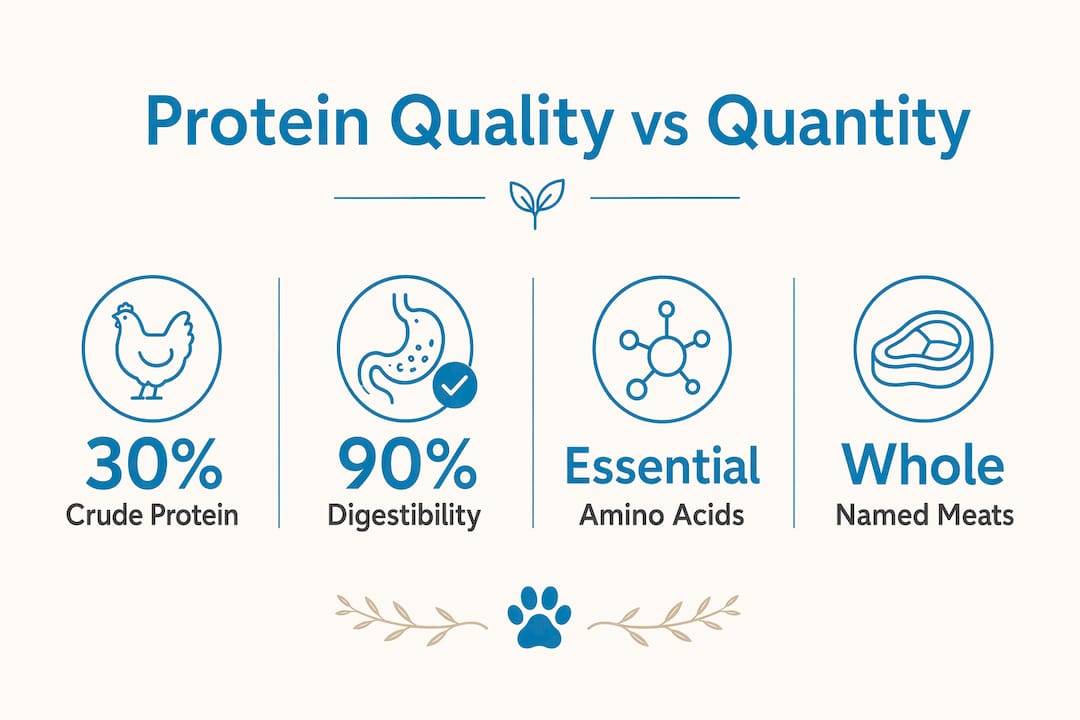
Digestibility determines how much of the protein your pet actually absorbs. Whole chicken, beef, and fish score significantly higher on digestibility scales than corn gluten or soy. The amino acid profile matters equally. Cats, as obligate carnivores, cannot synthesize taurine from plant precursors. Dogs have limited ability to convert plant-based amino acids into the forms their muscles and organs require. Both species depend on animal-derived proteins to meet these needs without metabolic shortcuts.
Reading labels effectively requires knowing what to avoid as much as what to seek out. Watch for these red flags:
- “Meat by-products” without a named species (chicken, beef, pork) indicate inconsistent sourcing and unpredictable amino acid profiles.
- Plant protein concentrates listed in the first five ingredients signal a formula using cheap protein inflation.
- “High-meat” marketing claims on the front of the bag with no named animal protein in the first two ingredients are a contradiction worth noting.
- No AAFCO statement on the label means the formula has not been validated through feeding trial substantiation. AAFCO feeding trials provide evidence-based quality indicators that go beyond what any marketing claim can offer.
Pro Tip: Flip the bag and read the ingredient list before the guaranteed analysis. The first two ingredients tell you more about protein quality than the percentage printed on the front panel.
How to select high-meat pet food that fits your pet’s life
Choosing the right formula starts with the ingredient list, not the front-of-bag claims. Named animal proteins as the first ingredient are the clearest signal of a quality high-meat formula. Chicken, beef, salmon, turkey, and lamb listed by name indicate traceable sourcing and consistent nutritional profiles.
- Check the first two ingredients. Both should be named animal proteins or a named protein plus a named protein meal (chicken meal, salmon meal). If a grain or plant protein appears in the top two, the formula is not genuinely high-meat.
- Convert to dry matter basis. Wet foods appear lower in protein on an as-fed basis because of water content. Divide the as-fed protein percentage by the dry matter percentage to compare wet and dry formulas accurately.
- Match the formula to your pet’s life stage. Puppy formulas require AAFCO “growth” statements. Senior formulas should carry higher protein percentages to address muscle preservation. Adult maintenance formulas work for healthy, moderately active pets.
- Evaluate palatability alongside nutrition. Pets instinctively prefer the flavor and aroma of fresh meat, which means high-meat formulas also solve the picky eater problem. If your cat or dog refuses a food, the best nutritional profile in the world delivers nothing.
- Prioritize manufacturer transparency. Brands that publish AAFCO feeding trial results and list sourcing details on their websites demonstrate accountability that marketing language alone cannot replicate. Quality dog foods include omega-3 fatty acids, digestible carbohydrates, and complete vitamins alongside high meat content.
Pro Tip: Ask the brand directly where their protein sources come from. Manufacturers with nothing to hide answer that question clearly and quickly. Vague responses about “trusted suppliers” are a signal worth taking seriously.
Key takeaways
High-meat pet food delivers superior nutrition when it prioritizes named animal proteins, matches the pet’s life stage, and is validated by AAFCO feeding trials rather than front-of-bag marketing.
| Point | Details |
|---|---|
| Protein benchmarks matter | FEDIAF sets 18% minimum; high-meat diets deliver 30%–45% for meaningful nutritional advantage. |
| Quality beats quantity | A 28% whole-meat formula outperforms a 35% plant-protein formula in usable amino acids. |
| Life stage drives protein needs | Active dogs, seniors, puppies, and recovering pets benefit most from high-meat diets. |
| Label reading is non-negotiable | Named animal proteins in the first two ingredients signal genuine quality, not marketing claims. |
| AAFCO trials validate formulas | Feeding trial substantiation is the most reliable quality indicator beyond ingredient lists. |
What I’ve learned after years of watching pets eat
The most common mistake I see pet owners make is chasing the highest protein number on the shelf. A 50% crude protein label sounds impressive. What it often means in practice is a formula leaning heavily on chicken meal, plant concentrates, and by-products to hit that number, while the actual digestible meat content is lower than a well-formulated 32% whole-chicken recipe.
The pets I’ve seen thrive consistently eat formulas where the first two ingredients are whole named meats, the AAFCO statement confirms feeding trial validation, and the protein percentage sits in a range appropriate for their activity level. A retired Labrador does not need the same formula as a working German Shepherd. Treating them identically because both are “dogs” is where owners go wrong.
Cost is a real factor, and I won’t pretend otherwise. High-meat formulas cost more per bag. But the math changes when you factor in vet bills tied to poor nutrition, muscle loss in aging pets, and the cost of managing chronic conditions that better early nutrition might have delayed. Spending more on food is often the cheaper long-term decision.
Monitor your pet’s response over 8–12 weeks after any diet change. Coat quality, stool consistency, energy level, and muscle definition all tell you whether the formula is working. No label, no matter how well it reads, replaces what you observe in your own animal.
— Blayne
High-meat options from Wildrootspet worth trying
Wildrootspet sources products built around the exact principles this article covers: named animal proteins, transparent ingredients, and formulas matched to real pet needs.

For cats, the chicken cat treats and beef crumbles deliver single-source animal protein that finicky eaters actually accept. For dogs in their growth phase, the Puppy Love Dog Treat Duo provides poultry-based protein to support muscle development from the start. For active or working dogs, the freeze-dried beef adventure fuel offers a high-meat, grain-free formula with traceable sourcing. Every product on the Wildrootspet site lists its ingredients clearly, so you can apply everything covered here before you buy.
FAQ
What percentage of protein counts as high-meat pet food?
High-meat pet food typically contains 30%–45% crude protein on a dry matter basis, compared to the FEDIAF minimum of 18% for adult dogs. The source of that protein matters as much as the percentage.
Is high-protein pet food better for all cats and dogs?
High-protein diets benefit active dogs, seniors, puppies, and recovering pets most. Sedentary, healthy adult pets do not gain additional benefit from very high protein levels, and excess protein is simply metabolized and excreted.
How do I know if a pet food is genuinely high-meat?
Check that the first two ingredients are named animal proteins (chicken, beef, salmon) rather than plant proteins or generic by-products. An AAFCO feeding trial statement on the label confirms the formula has been validated beyond marketing claims.
Can cats eat high-meat dog food in a pinch?
Cats should not eat dog food regularly. Cats are obligate carnivores with specific needs for taurine and arachidonic acid that dog food formulas do not meet at adequate levels. High-meat cat-specific formulas are the correct choice.
Does cooking or processing reduce the quality of meat proteins in pet food?
Processing methods affect protein digestibility. Freeze-dried and raw formats preserve more of the natural amino acid profile than high-heat extrusion. Named meat meals, while heat-processed, still deliver concentrated and digestible protein when sourced from quality animal tissue.