

Novel protein dog food is defined as a diet built around protein sources your dog has never eaten before, making those proteins invisible to its immune system and reducing the risk of allergic reactions. Veterinarians formally call this approach a novel protein diet or novel antigen diet, and it sits at the center of food allergy diagnosis and management for dogs. Common proteins used include rabbit, kangaroo, venison, bison, and duck. About 70% of dog owners are willing to try these foods, with bison, rabbit, and elk leading consumer interest. Understanding what is novel protein dog food, and how to use it correctly, is the difference between a diet that resolves your dog’s symptoms and one that fails quietly.
What is novel protein dog food and why does it matter?
Novel protein dog food works on a straightforward immunological principle. A dog’s immune system can only react to proteins it has encountered before. Feed a dog chicken for years, and its immune system learns to recognize chicken proteins. If that dog develops a chicken allergy, switching to a protein it has never eaten, such as venison or rabbit, removes the trigger entirely.
Common allergenic proteins in dogs include beef at 34%, dairy at 17%, chicken at 15%, wheat at 13%, and egg at 11%. These numbers reflect how frequently dogs are exposed to these ingredients in standard commercial foods. The more often a dog eats a protein, the higher the chance of sensitization over time.

The critical point most pet owners miss is that “novel” is relative to each individual dog. A protein is novel only if your specific dog has never eaten it. Rabbit is novel for a dog raised on chicken and beef. But rabbit is not novel for a dog that ate rabbit-based food as a puppy. There is no universal list of novel proteins.
Veterinarians prioritize novel protein diets for dogs with chronic skin issues and recurring ear infections after other treatments fail. This is not a trend diet. It is a clinical tool with a specific diagnostic purpose.
Why are novel proteins important for dogs with allergies or sensitivities?
Food allergies in dogs show up as skin irritation, chronic ear infections, gastrointestinal upset, and persistent itching. These symptoms often overlap with environmental allergies, which makes food as the cause easy to miss. A novel protein elimination diet is the most reliable way to confirm whether food is the problem.
The elimination trial process is strict by design. Elimination diets require 8–12 weeks of strict adherence with no outside proteins to produce a valid result. That means no treats, no table scraps, no flavored medications, and no chews unless they are made from the same novel protein. One accidental exposure can invalidate weeks of progress.
Novel protein diets differ from hydrolyzed protein diets in a meaningful way. Hydrolyzed diets break proteins into fragments too small for the immune system to recognize, which is a chemical solution to the same problem. Novel protein diets solve it by simply avoiding the trigger altogether. Both approaches work, but they suit different situations.
- Novel protein diets work best when you know your dog’s full dietary history and can identify a truly untested protein.
- Hydrolyzed protein diets work better when your dog has eaten so many proteins that finding a novel one is nearly impossible.
- Combination approaches are sometimes used when a dog fails a novel protein trial but still shows signs of food sensitivity.
Symptom improvement in dogs with skin and digestive conditions is well documented when elimination trials are conducted correctly. The failure rate rises sharply when owners allow hidden protein exposures, which is the most common reason trials produce misleading results.
Pro Tip: Check every treat, dental chew, joint supplement, and flavored medication your dog receives during an elimination trial. Chicken-flavored pill pockets or beef-based dental sticks will break the trial without you realizing it.
What types of novel proteins are used in dog food?
The range of proteins used in novel protein dog food has expanded significantly as consumer demand has grown. Standard options include rabbit, kangaroo, venison, bison, duck, alligator, elk, and ostrich. Emerging options include insect-based proteins such as black soldier fly larvae, and cultivated meat proteins are entering early commercial development.
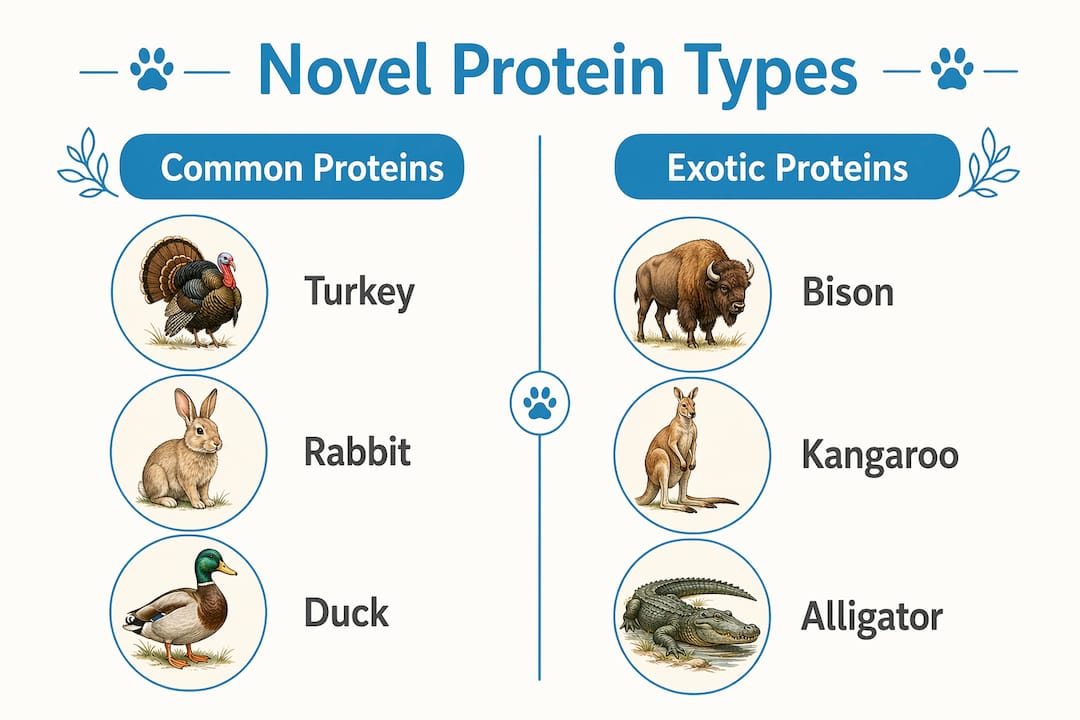
The key to selecting the right novel protein is confirming your dog’s dietary history first, then choosing a protein that genuinely has not appeared in any prior food. This requires reading every ingredient list from every food your dog has ever eaten, including puppy food, treats, and toppers.
Many pet owners mistakenly believe that novel proteins must be exotic or unusual. In reality, turkey can be a novel protein for a dog that has only ever eaten salmon and lamb. The “exotic” label is a marketing description, not a clinical one.
| Protein source | Digestibility | Allergen risk | Availability | Price range |
|---|---|---|---|---|
| Rabbit | High | Very low | Moderate | Moderate to high |
| Kangaroo | High | Very low | Limited | High |
| Venison | High | Low | Moderate | Moderate to high |
| Bison | Moderate to high | Low | Good | Moderate |
| Duck | High | Low to moderate | Good | Moderate |
| Elk | High | Very low | Limited | High |
| Alligator | Moderate | Very low | Very limited | High |
| Insect protein | High | Very low | Growing | Moderate |
Bison and duck are the most accessible novel proteins in North American pet food retail. Kangaroo and alligator offer very low allergen risk but come with higher price points and limited availability. Insect-based proteins are gaining traction as a sustainable and hypoallergenic option, particularly for dogs that have been exposed to most conventional meat proteins.
Consumers looking for novel protein dog foods prefer non-kibble formats such as wet, fresh, and pâté styles. This preference signals a willingness to pay a premium for ingredient quality and sensory appeal, not just allergy management.
How to properly transition your dog to a novel protein diet
Switching your dog’s food requires a structured approach, especially when the goal is allergy management. A rushed transition causes digestive upset and makes it harder to tell whether symptoms are from the new food or the switch itself.
- Confirm the novel protein. Review your dog’s complete dietary history with your veterinarian. Identify every protein source your dog has ever eaten, including treats and supplements. Choose a protein that does not appear on that list.
- Transition over 7–14 days. Follow a safe food switching guide to gradually replace the old food. Start with 25% new food and 75% old food, then shift the ratio every few days.
- Lock down all other protein sources. From day one of the elimination trial, remove every treat, chew, flavored medication, and supplement that contains any protein other than the novel one. This is non-negotiable.
- Maintain the trial for 8–12 weeks. Shorter trials produce unreliable results. Most dogs show meaningful improvement between weeks six and ten if food is the underlying cause.
- Reintroduce old proteins to confirm the diagnosis. After the trial, reintroduce the suspected allergen. If symptoms return, the diagnosis is confirmed. This step is often skipped, but it is what turns a suspicion into a fact.
Hidden ingredients in commercial pet foods are a major source of trial failure. A bag labeled “salmon” may contain chicken fat or pork-derived ingredients. Reading the full ingredient list, not just the front-of-bag claim, is the only way to catch these.
Pro Tip: When in doubt about a product’s ingredients, contact the manufacturer directly. Many companies can confirm whether their processing facilities handle other proteins that could cause cross-contamination.
For dogs moving to a raw or minimally processed novel protein diet, Wildrootspet’s raw feeding guide covers the transition safely and thoroughly.
Novel protein vs. limited ingredient vs. hydrolyzed protein diets
These three diet types are frequently confused, and the confusion leads to poor purchasing decisions. Each targets a different aspect of food sensitivity.
A limited ingredient diet reduces the total number of ingredients in a food to minimize the chance of an unknown trigger. It does not require a novel protein. A limited ingredient food could contain chicken and rice, which are common allergens, just fewer of them. The goal is simplicity, not novelty.
A novel protein diet focuses specifically on the protein source being new to the dog’s immune system. The ingredient list may or may not be short, but the protein must be genuinely untested by that dog’s body.
A hydrolyzed protein diet uses proteins that have been broken into fragments small enough that the immune system cannot recognize them as threats. Hydrolyzed diets are preferable for dogs with highly varied dietary histories where finding a novel protein is impractical.
| Diet type | Core mechanism | Best use case | Key limitation |
|---|---|---|---|
| Novel protein | Untested protein avoids immune response | Dogs with known allergens and clear dietary history | Requires thorough dietary history |
| Limited ingredient | Fewer ingredients reduce exposure risk | Dogs with mild sensitivities or unknown triggers | Does not guarantee novel proteins |
| Hydrolyzed protein | Protein fragments bypass immune recognition | Dogs with extensive dietary histories or failed novel trials | Higher cost, palatability varies |
Many pet owners confuse limited ingredient diets with novel protein diets, which leads them to buy a food that looks right on the front of the bag but does not serve the clinical purpose they need. Your veterinarian can help you determine which approach fits your dog’s specific history and symptom profile. For a broader look at allergy-friendly pet food, Wildrootspet covers the topic in practical detail.
Key takeaways
Novel protein dog food succeeds only when the chosen protein is genuinely new to your dog’s immune system, the transition is gradual, and the elimination trial runs for the full 8–12 weeks with zero outside protein exposure.
| Point | Details |
|---|---|
| Novel means new to your dog | No universal novel protein list exists; novelty depends entirely on your dog’s dietary history. |
| Elimination trials take time | Strict 8–12 week trials with no outside proteins are required to produce valid allergy results. |
| Hidden proteins cause failures | Treats, chews, and flavored medications often contain undisclosed proteins that break elimination trials. |
| Diet types serve different needs | Novel protein, limited ingredient, and hydrolyzed diets each target different aspects of food sensitivity. |
| Veterinary guidance is non-negotiable | Confirming dietary history with a vet before choosing a novel protein prevents costly trial errors. |
Why I think most novel protein trials fail before they start
After spending years reading the research and talking with pet owners who have been through the elimination trial process, the pattern is clear. Most trials do not fail because the dog’s allergy is complicated. They fail because the owner did not know what “strict adherence” actually meant before they started.
The biggest misconception I see is that pet owners treat novel protein diets as a food upgrade rather than a diagnostic tool. They pick kangaroo or bison because it sounds premium, without confirming whether their dog has eaten those proteins before. That is not a novel protein diet. That is just an expensive food switch.
The second mistake is underestimating how many products contain hidden animal proteins. A dental chew, a joint supplement, a flavored heartworm tablet. These all count. One chicken-flavored pill pocket per day for eight weeks means the trial never actually started.
What I have found genuinely works is treating the first two weeks as a preparation phase. Map every protein your dog has ever eaten. Read every label in your cabinet. Then choose the novel protein. Only then do you start the clock on the trial. Patience at the front end saves months of frustration later.
The trend toward wet and fresh novel protein formats is worth paying attention to. Dogs tend to eat these more readily, which reduces the temptation to add toppers or treats that break the trial. If your dog is a picky eater, format matters as much as protein choice.
— Blayne
How Wildrootspet supports dogs on novel protein diets
Managing a novel protein diet is easier when you have products you can trust completely.

Wildrootspet’s Pet’s Daily Wellness Formula is formulated specifically for dogs with pork and beef allergies, making it a practical starting point for dogs that react to the most common commercial protein sources. For dogs showing skin symptoms alongside food sensitivities, Omega Pawz liquid omega 3 oil supports coat and skin health without introducing new protein allergens. Every product at Wildrootspet is selected with ingredient transparency as a priority, so you know exactly what your dog is eating. Explore the full range at Wildrootspet to find options that fit your dog’s specific dietary needs.
FAQ
What is a novel protein diet for dogs?
A novel protein diet is a feeding plan built around a protein source your dog has never eaten before, preventing the immune system from triggering an allergic response. Veterinarians use it as both a diagnostic tool and a long-term management strategy for food allergies.
How long does a novel protein elimination trial take?
A valid elimination trial requires 8–12 weeks of strict adherence with no exposure to any prior protein sources. Shorter trials produce unreliable results and are the most common reason food allergies go undiagnosed.
Can any protein be a novel protein?
Yes. Any protein is novel if your specific dog has never eaten it before. Rabbit, bison, and kangaroo are common choices, but turkey or fish can also be novel depending on your dog’s dietary history.
What is the difference between novel protein and hydrolyzed protein diets?
Novel protein diets use an untested protein to avoid immune reactions, while hydrolyzed diets break proteins into fragments too small for the immune system to recognize. Hydrolyzed diets are the better choice when a dog has eaten so many proteins that finding a novel one is not practical.
Why do novel protein elimination trials fail?
The most common cause of trial failure is hidden protein sources in treats, dental products, and supplements that introduce prior allergens without the owner realizing it. Reading every ingredient label and removing all non-novel protein products before starting the trial prevents this.