

Cold pressed dog food is dry dog food produced by pressing raw ingredients together at low temperatures, typically between 40 and 80°C, forming dense, compact pellets that retain more heat-sensitive nutrients than traditional extruded kibble. If you’ve seen brands like Nulo or Vitomalia on pet store shelves and wondered what sets them apart from standard dry food, the answer lies entirely in how the food is made. The processing temperature is lower, the pellets are denser, and the nutrient profile is closer to the original ingredients. That distinction matters most for dog owners managing sensitive digestion, food allergies, or simply trying to feed their dogs with fewer compromises. Cold pressed pet food sits between raw feeding and conventional kibble, offering a shelf-stable option that doesn’t sacrifice as much nutritional integrity to achieve it.
What is cold pressed dog food and how is it made?
Cold pressed dog food is defined by its manufacturing process. Ingredients including animal proteins, grains, and vegetables are mixed and pressed through a die at low temperatures around 40 to 80°C, which is significantly lower than the 120 to 150°C used in extrusion. The result is a dense, firm pellet rather than the puffed, airy shape of standard kibble. That physical difference is not cosmetic. It reflects a fundamentally different relationship between heat and ingredients.
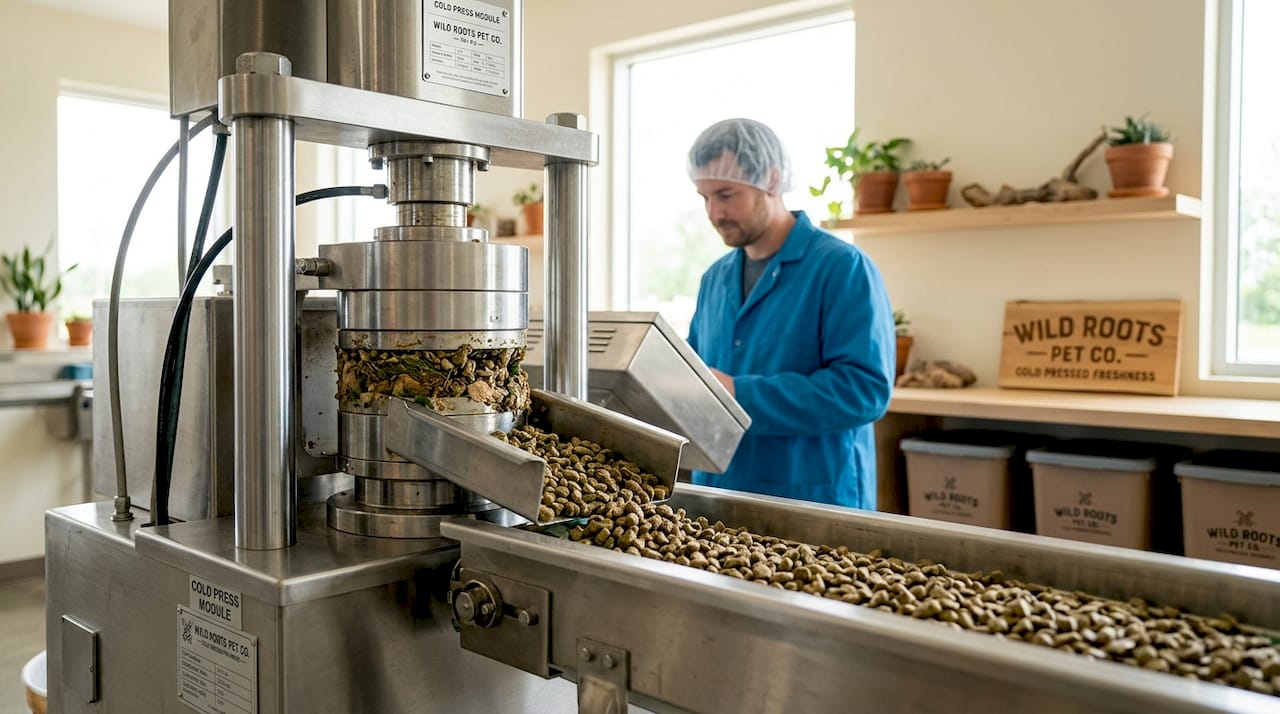
Extrusion works by forcing a wet dough mixture through a barrel under high pressure and heat, then cutting it as it exits. The rapid pressure drop causes the kibble to puff up, creating that familiar lightweight texture. Cold pressing skips the puffing entirely. The pellets stay compact and retain moisture at roughly 8 to 12%, making them shelf stable without the extreme heat treatment.
The nutritional case for cold pressing centers on heat-sensitive nutrients. Vitamins like C and thiamine, plus biotin and lysine, degrade significantly during high-heat extrusion. Manufacturers of extruded kibble often spray synthetic nutrients back onto the finished product to compensate. Cold pressing reduces that degradation, meaning the nutrients present in the original ingredients survive more intact into the final pellet.
- Temperature range: Cold pressing uses 40 to 80°C versus 120 to 150°C for extrusion
- Pellet structure: Dense and compact versus puffed and lightweight
- Moisture content: Approximately 8 to 12%, similar to kibble but achieved without extreme heat
- Nutrient retention: Better preservation of heat-sensitive vitamins and amino acids
- Shelf stability: Achieved through low moisture and pressing, not heat sterilization
Pro Tip: When comparing cold pressed products, look for brands that list whole meat sources in the first two or three ingredients. The pressing method only preserves what’s already there.
Cold pressed vs kibble: benefits, limitations, and what the science says
The most frequently cited benefit of cold pressed dog food is nutrient preservation, and the science supports it to a point. Heat-sensitive nutrients survive better at lower processing temperatures, and that’s a real advantage over standard extrusion. What the science does not support is the broader claim that cold pressed food is categorically superior for all dogs. Limited clinical evidence shows measurable health benefits in healthy adult dogs eating cold pressed versus extruded food. The gap between marketing language and peer-reviewed research is wide here.
The digestibility conversation is more nuanced. Cold pressed pellets have less starch gelatinization than extruded kibble, which affects how the food breaks down in the stomach. Some dogs with sensitive stomachs or a history of bloat may respond better to the denser, slower-dissolving pellet. That said, the evidence on bloat reduction is not conclusive. It’s a plausible mechanism, not a proven outcome.
| Feature | Cold pressed | Extruded kibble | Air dried |
|---|---|---|---|
| Processing temperature | 40 to 80°C | 120 to 150°C | 50 to 70°C |
| Nutrient retention | Higher for heat-sensitive nutrients | Lower, often supplemented post-process | High, similar to cold pressing |
| Pellet texture | Dense, compact | Puffed, lightweight | Firm, chewy |
| Digestibility | Gradual breakdown, less gelatinized starch | Faster breakdown due to starch gelatinization | Moderate, depends on ingredients |
| Shelf stability | Good | Excellent | Good |
| Typical cost | Higher than kibble | Lower | Highest |
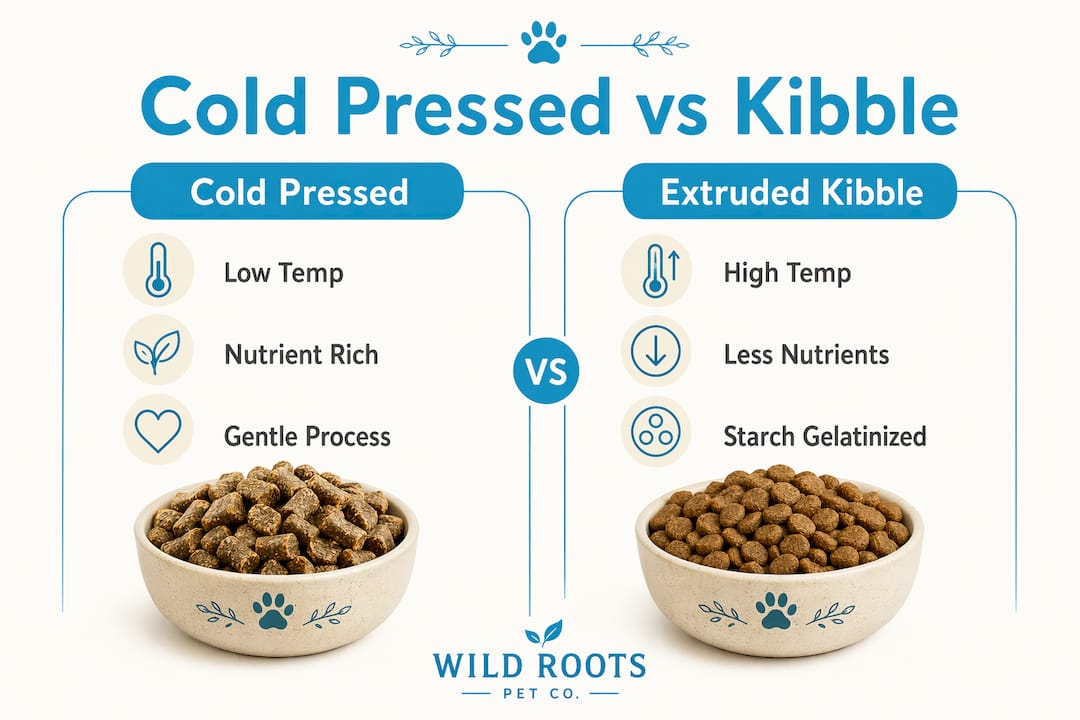
For dogs with sensitive digestion, cold pressed food may offer a gentler option, but owners should evaluate based on their dog’s actual response rather than brand claims. A dog that thrives on a well-formulated extruded food doesn’t need to switch. A dog with recurring loose stools or gas on kibble might genuinely benefit from the structural difference cold pressing provides.
Pro Tip: If your dog has a history of digestive sensitivity, try cold pressed food for a full four weeks before drawing conclusions. Stool quality and consistency are your most reliable indicators, not energy level or coat shine in the first week.
One important clarification: both cold pressed and extruded foods must meet AAFCO or FEDIAF nutritional standards to be sold as complete diets. Processing method and nutritional completeness are separate questions. A cold pressed food with poor ingredient sourcing is not automatically better than a well-formulated extruded kibble. You can explore how air dried dog food compares as another lower-heat alternative worth considering.
What ingredients are in cold pressed dog food?
Cold pressed dog food typically uses animal proteins such as chicken, beef, salmon, or lamb as primary ingredients, combined with grains like oats or barley, vegetables, and added vitamins and minerals. The ingredient list looks similar to premium extruded kibble on paper. The difference is in how those ingredients are handled before and during processing.
Processing temperature alone does not guarantee superior ingredient quality. A cold pressed food made with low-grade meat meals and fillers is not a better choice than a well-sourced extruded food. The “cold pressed” label describes a method, not a sourcing standard. Dog owners researching cold pressed dog food ingredients should look past the processing claim and evaluate the actual ingredient list.
Here’s what to look for when reading a cold pressed dog food label:
- Named protein source first: “Chicken,” “salmon,” or “lamb” should appear before grains or vegetables
- Whole food ingredients: Recognizable items like sweet potato, oats, or carrots indicate less processing of individual components
- AAFCO or FEDIAF statement: Confirms the food meets minimum nutritional standards for the stated life stage
- Guaranteed analysis: Check crude protein, fat, fiber, and moisture percentages against your dog’s needs
- Additive transparency: Synthetic vitamins are not inherently bad, but a shorter additive list often signals better base ingredient quality
Do not assume cold pressed equals fewer additives or superior sourcing. Some cold pressed brands use the same protein meals and by-products found in budget kibble. Reading the full ingredient list and guaranteed analysis is the only reliable way to assess quality. For dogs with specific protein sensitivities, a product like Wildrootspet’s daily wellness formula offers a formulated option designed around known allergen avoidance. Understanding natural ingredients for pet diets can also sharpen your ability to evaluate any food label, cold pressed or otherwise.
How to feed cold pressed dog food safely and effectively
Switching your dog to cold pressed food requires the same gradual transition you’d use for any food change. Abrupt switches cause digestive upset regardless of how good the new food is. A structured transition protects your dog’s gut microbiome during the adjustment period.
- Days 1 to 3: Replace 25% of your dog’s current food with cold pressed food
- Days 4 to 6: Move to a 50/50 split between old and new food
- Days 7 to 9: Shift to 75% cold pressed and 25% old food
- Day 10 onward: Feed cold pressed food exclusively if no digestive issues appear
Calorie density in cold pressed food varies by brand, so never assume the same cup measurement applies as with your previous kibble. Denser pellets often mean more calories per gram. Always follow the manufacturer’s feeding guidelines and adjust based on your dog’s weight and activity level. Overfeeding is a common mistake when owners switch from lighter kibble to denser cold pressed pellets.
Monitor stool quality and digestion over multiple feeding cycles rather than expecting instant results. Firm, well-formed stools indicate good digestibility. Loose stools or increased gas in the first week may reflect the transition itself, not a problem with the food. Give the process at least two full weeks before drawing conclusions.
Cold pressed pellets absorb moisture readily, which makes them easy to soften with warm water for senior dogs or puppies. Store opened bags in a cool, dry place and seal tightly after each use. The physical pellet structure that makes cold pressed food interesting also makes it more susceptible to moisture damage than standard kibble. A slow feeder bowl can help dogs who eat too quickly, since the denser pellets benefit from slower consumption and more thorough chewing. For broader guidance on transitioning your dog’s diet safely, the same principles apply whether you’re moving to cold pressed or raw food.
Pro Tip: Add a small amount of warm water to cold pressed pellets about five minutes before serving. This activates the natural aromas, improves palatability for picky eaters, and supports dogs with dental sensitivity.
Key takeaways
Cold pressed dog food preserves more heat-sensitive nutrients than extruded kibble, but ingredient quality and AAFCO-compliant formulation matter more than processing method alone.
| Point | Details |
|---|---|
| Processing temperature | Cold pressing uses 40 to 80°C versus 120 to 150°C for extrusion, preserving more nutrients. |
| Nutrient retention advantage | Vitamins C and thiamine, biotin, and lysine survive better at lower processing temperatures. |
| Digestibility difference | Denser pellets dissolve more gradually, which may benefit dogs with sensitive stomachs. |
| Ingredient quality still matters | Cold pressed label does not guarantee superior sourcing; always read the full ingredient list. |
| Transition carefully | Shift gradually over 10 days and follow manufacturer portion guidelines, not kibble equivalents. |
Why I think the cold pressed conversation misses the point
I’ve spent years watching the pet food industry cycle through processing trends, and cold pressing is genuinely interesting. The science behind lower-temperature nutrient retention is real. But the marketing around it has outpaced the evidence, and that creates a problem for dog owners trying to make good decisions.
The honest truth is that most dogs eating a well-formulated extruded kibble are doing fine. Cold pressed food is not a correction for a broken system. It’s a refinement that makes the most difference for a specific subset of dogs: those with sensitive digestion, recurring loose stools, or a history of bloat. For those dogs, the structural difference in how the pellet breaks down in the stomach is worth exploring.
What I’d push back on is the assumption that cold pressed automatically means better. I’ve seen cold pressed products with ingredient lists that would embarrass a budget kibble brand. The pressing method is only as good as what goes into it. If you’re evaluating cold pressed dog food for allergies or digestive issues, spend more time on the ingredient list than on the processing claim. Your dog’s stool quality over four weeks will tell you more than any marketing copy ever will.
— Blayne
Explore natural dog food options at Wildrootspet
If you’re moving toward cold pressed or other lower-heat dog foods, pairing your dog’s meals with high-quality toppers and supplements makes a real difference in palatability and nutritional completeness.

Wildrootspet carries the Treat Topper Fish Dog Food Topper, a low-fat meal enhancer that works well over cold pressed pellets, adding omega-rich nutrition without disrupting your dog’s calorie balance. For dogs with pork or beef sensitivities, the Pet’s Daily Wellness Formula provides targeted nutritional support designed around known allergen profiles. Both products are formulated with natural ingredients and suit dogs on specialized or sensitive-stomach diets. Browse the full range at Wildrootspet to find options that complement whatever feeding approach works best for your dog.
FAQ
What is cold pressed dog food exactly?
Cold pressed dog food is dry dog food made by pressing ingredients at low temperatures between 40 and 80°C, forming dense pellets that retain more heat-sensitive nutrients than standard extruded kibble processed at 120 to 150°C.
Is cold pressed dog food healthier than regular kibble?
Cold pressed food preserves more heat-sensitive vitamins and amino acids, but limited clinical evidence shows measurable health benefits in healthy adult dogs. Ingredient quality and AAFCO-compliant formulation matter more than processing method alone.
Can cold pressed dog food help with allergies?
Cold pressed food does not inherently reduce allergen risk, since common allergens like chicken or beef are present in both cold pressed and extruded foods. Dogs with food allergies benefit more from a novel protein or limited-ingredient diet than from a specific processing method.
How do I transition my dog to cold pressed food?
Transition gradually over 10 days by replacing 25% of the current food on days 1 to 3, reaching 100% cold pressed by day 10. Monitor stool quality throughout and follow the manufacturer’s portion guidelines, since cold pressed pellets are often more calorie-dense than standard kibble.
Does cold pressed dog food dissolve in water?
Cold pressed pellets absorb moisture readily and soften quickly in warm water, making them a practical option for senior dogs, puppies, or dogs with dental issues. This rehydration property also reflects how the pellets break down gradually in the stomach compared to puffed extruded kibble.