

Hypoallergenic pet treats are formulated to reduce allergic reactions by excluding the proteins and ingredients most likely to trigger an immune response in dogs and cats. If your pet scratches constantly, battles recurring ear infections, or has chronic digestive upset, the culprit is often a protein in their food, not a grain or filler. Understanding why choose hypoallergenic pet treats starts with knowing that true food allergies target specific proteins, with beef, chicken, dairy, wheat, and soy topping the list of offenders. Brands like Royal Canin and Purina Pro Plan have built entire therapeutic lines around this science, and the demand for allergy-friendly options has never been higher.
How do hypoallergenic treats prevent allergic reactions?
The science behind allergy-friendly pet food comes down to two strategies: novel protein diets and hydrolyzed protein diets. Both approaches work by preventing the immune system from recognizing and attacking a protein it has been sensitized to.
Novel protein diets
A novel protein is simply a protein your pet has never eaten before. Because the immune system has no memory of it, it cannot mount an allergic response. Common novel proteins include venison, duck, rabbit, kangaroo, and turkey. A pet that has eaten chicken its entire life and developed a sensitivity will typically tolerate duck or rabbit without issue. The key is strict avoidance of all previously eaten proteins during the trial period.

Hydrolyzed protein diets
Hydrolyzed protein diets take a different approach. Enzymatic hydrolysis breaks proteins into fragments so small that the immune system cannot recognize them as a threat. Hydrolyzed proteins fall below 10,000 Daltons in molecular weight, which is below the threshold needed to trigger IgE-mediated immune responses. This means a pet allergic to chicken can often tolerate a hydrolyzed chicken product because the protein is no longer structurally intact.
Pro Tip: If your vet recommends a hydrolyzed diet, stick to it exclusively during the trial. Even a single treat with an intact protein can reset the elimination clock.
| Factor | Novel Protein Treats | Hydrolyzed Protein Treats |
|---|---|---|
| Mechanism | Uses unfamiliar proteins the immune system ignores | Breaks proteins below immune recognition threshold |
| Best for | Pets with known sensitizations to common proteins | Pets with severe or multiple protein allergies |
| Availability | Widely available over the counter | Often requires veterinary prescription |
| Cost | Moderate | Higher due to processing |
| Diagnosis use | Suitable for elimination trials with strict sourcing | Gold standard for diagnostic elimination diets |
What allergens are hiding in your pet’s treats?
The most common pet food allergens are beef, chicken, dairy, wheat, and soy. These proteins appear in the majority of commercial treats, which is exactly why treats are often the overlooked variable when a pet’s allergy symptoms persist despite a diet change.
Recognizing the symptoms matters as much as knowing the allergens. Food allergy reactions in pets typically show up as:
- Skin symptoms: Persistent itching, red or inflamed skin, hot spots, and hair loss
- Ear problems: Recurring ear infections, dark discharge, and head shaking
- Digestive issues: Vomiting, diarrhea, and excessive gas
- Paw chewing: Constant licking or chewing at paws, which signals systemic inflammation
- Eye discharge: Watery or goopy eyes that recur without an obvious cause
The connection between treats and symptoms is easy to miss. A pet owner can switch to a novel protein kibble and still feed chicken-based treats, which completely undermines the dietary change. Avoiding these allergens in treats is not optional if you want real results. Every item your pet eats during an elimination trial must be free of the suspected allergen.
Pro Tip: Keep a simple food diary for two weeks before starting an elimination trial. Log every treat, chew, flavored medication, and table scrap. You will likely spot the allergen faster than you expect.
Reading ingredient labels on treats requires the same scrutiny you give to food. Check for artificial ingredients and hidden allergens in flavoring agents, broths, and coating sprays, which often contain proteins not listed prominently on the front of the package.
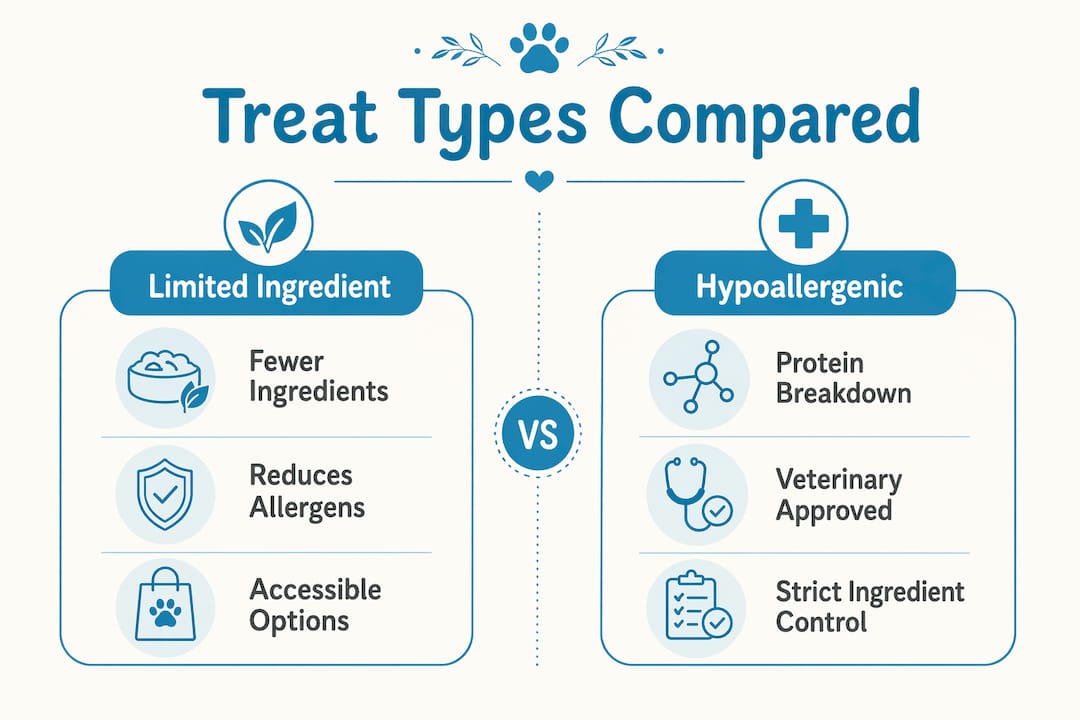
Limited ingredient diets vs. true hypoallergenic diets
These two categories are frequently confused, and the difference matters significantly for your pet’s health outcomes. Limited ingredient diets and true hypoallergenic diets serve different functions, and choosing the wrong one can delay a diagnosis by months.
A limited ingredient diet, often called an LID, reduces the total number of ingredients in a product to make it easier to identify which one is causing a reaction. These products are available over the counter and are useful for pets with mild sensitivities or for owners who want to simplify their pet’s diet as a precaution. They are not manufactured under the strict controls required for a true diagnostic elimination trial.
A veterinary therapeutic hypoallergenic diet is a different product entirely. Only veterinary therapeutic foods manufactured on dedicated lines with strict quality controls can be used reliably for diagnostic elimination diets. Cross-contamination during manufacturing is the main reason over-the-counter “hypoallergenic” labels are unreliable for diagnosis. A product can legally carry that label while being produced on shared equipment that processes chicken, beef, or soy.
| Factor | Limited Ingredient Treats | Veterinary Hydrolyzed Treats |
|---|---|---|
| Ingredient control | Reduced, not guaranteed | Strict, dedicated manufacturing |
| Diagnosis utility | Low to moderate | High |
| Prescription required | No | Usually yes |
| Cross-contamination risk | Present | Minimal |
| Best use case | Mild sensitivities, general simplification | Confirmed or suspected food allergy diagnosis |
The practical takeaway is straightforward. If your vet has confirmed a food allergy or you are running a formal elimination trial, use a veterinary therapeutic diet and treats. If you are exploring whether your pet has a sensitivity, a limited ingredient option from a brand with transparent sourcing is a reasonable starting point.
How to choose and introduce hypoallergenic treats safely
Selecting the right treat for a sensitive pet requires more than grabbing a bag labeled “natural” or “grain-free.” Follow these steps to make a choice that actually supports your pet’s health.
- Confirm the allergen first. Elimination-provocation trials are the gold standard for diagnosing food allergies. Blood and saliva tests do not reliably identify food allergens. A proper trial requires 8–12 weeks of exclusive feeding with no other food sources.
- Read the full ingredient list. The protein source is the priority. Look for a single, named protein like turkey, venison, or rabbit. Avoid products with “natural flavors,” “broth,” or “animal digest,” as these terms can mask common allergens.
- Check for single-ingredient options. Single-ingredient treats such as dehydrated rabbit ears, freeze-dried duck liver, or pure turkey strips eliminate the guesswork entirely. There is no ingredient list to decode.
- Verify manufacturing practices. Contact the brand or check their website for information on dedicated production lines and allergen testing. This step separates reliable products from marketing claims.
- Introduce gradually. Even a safe novel protein can cause digestive upset if introduced too quickly. Follow a safe treat introduction protocol by offering a small amount on day one and increasing over five to seven days while monitoring for reactions.
- Consult your veterinarian. Pets with confirmed allergies need individualized plans. A vet can recommend specific therapeutic brands, confirm the elimination trial protocol, and rule out environmental allergies that mimic food allergy symptoms.
Pro Tip: During an elimination trial, replace flavored medications like chewable heartworm preventatives with unflavored alternatives. Many chewable tablets contain beef or pork liver flavoring that will invalidate your results.
Novel protein treats available commercially include options like freeze-dried venison, dehydrated rabbit, turkey-based raw blends, and duck jerky. These give you practical, palatable choices that do not require a prescription while still supporting an allergen-free pet diet.
Key takeaways
Hypoallergenic pet treats work by removing common allergens and using novel or hydrolyzed proteins that the immune system cannot recognize or attack.
| Point | Details |
|---|---|
| Proteins cause allergies | Beef, chicken, dairy, wheat, and soy are the top allergens in commercial pet treats. |
| Two proven mechanisms | Novel proteins avoid immune memory; hydrolyzed proteins fall below the IgE trigger threshold. |
| Labels can mislead | “Hypoallergenic” is not a regulated term; only veterinary therapeutic diets guarantee manufacturing controls. |
| Elimination trials take time | A proper food allergy diagnosis requires 8–12 weeks of exclusive feeding with no exceptions. |
| Treats matter as much as food | Feeding an allergenic treat during a diet change completely undermines the allergy management plan. |
The “hypoallergenic” label is not the whole story
I have seen pet owners spend months rotating through expensive food bags, convinced they are doing everything right, while their dog keeps scratching. Nine times out of ten, the problem is the treat bag sitting on the counter. The food gets scrutinized; the treats get a pass.
Hypoallergenic is a marketing term, not a regulated standard. Any brand can print it on a package. What actually matters is the ingredient list, the manufacturing process, and whether the product matches your specific pet’s allergy profile. A venison treat is only useful if your pet has never eaten venison before. A hydrolyzed chicken product is only reliable if it was produced on a dedicated line free from cross-contamination.
My honest advice is to stop trusting the front of the bag and start reading the back. Work with your vet to identify the actual allergen through a proper elimination trial before spending money on specialty products. Patience is the hardest part of allergy management, but an 8-week trial done correctly will tell you more than any blood test or expensive food rotation ever will. Once you know the allergen, choosing the right treat becomes simple.
— Blayne
Find the right treat for your sensitive pet at Wildrootspet
If your pet needs allergy-friendly options backed by real ingredient transparency, Wildrootspet carries a curated selection of novel protein and single-ingredient treats designed for sensitive dogs and cats. Every product is chosen with natural, high-quality sourcing in mind.

The Raw Turkey Meal Blend from Raw Instincts is a standout option for pets that have never eaten turkey, making it a practical novel protein choice for elimination trials and long-term allergy management. For pets that tolerate beef, the Dehydrated Beef Kidney from Raw Instincts delivers a single-ingredient, minimally processed treat with no hidden allergens. Browse the full selection at Wildrootspet to find the treat that fits your pet’s unique needs.
FAQ
What are hypoallergenic pet treats?
Hypoallergenic pet treats are formulated to minimize allergic reactions by excluding common allergens like beef, chicken, dairy, wheat, and soy, and using novel or hydrolyzed proteins instead. They are designed for pets with confirmed or suspected food sensitivities.
Are hypoallergenic treats safe for all pets?
Novel protein treats are safe for most pets, but the right choice depends on your pet’s specific allergy history. A treat labeled hypoallergenic is only effective if it excludes the proteins your individual pet reacts to.
How long does a food allergy elimination trial take?
A proper elimination trial requires 8–12 weeks of exclusive feeding with no other food, treats, or flavored medications. Shorter trials produce unreliable results.
What is the difference between limited ingredient and hypoallergenic pet food?
Limited ingredient diets reduce the number of ingredients to simplify allergen identification, while true hypoallergenic diets use hydrolyzed proteins and are manufactured under strict controls to prevent cross-contamination. The two serve different purposes depending on allergy severity and diagnosis status.
Can i diagnose my pet’s food allergy with a blood test?
No. Blood and saliva tests do not reliably diagnose food allergies in pets. The elimination-provocation trial is the only validated diagnostic method currently available.