

The BARF diet for dogs is defined as a raw feeding regimen built on Biologically Appropriate Raw Food principles, popularized by Australian veterinarian Dr. Ian Billinghurst in his 1993 book on raw feeding. The diet centers on raw muscle meat, edible bones, organ meats, and vegetables to replicate what a dog’s ancestors ate before commercial kibble existed. A typical adult dog on BARF receives roughly 2–3% of its body weight in food daily. Understanding the diet’s structure, benefits, and real risks is the first step toward making a sound decision for your dog.
What is the BARF diet for dogs?
The BARF diet is a structured raw food approach, not a casual switch to table scraps. Dr. Ian Billinghurst built it on the premise that dogs thrive on the same diet their wild ancestors ate: whole prey, raw bones, and plant matter. The acronym also stands for “Bones and Raw Food,” and both definitions describe the same core feeding philosophy.
The diet follows a nutritional ratio most practitioners call the 80/10/10 rule: 80% muscle meat, 10% raw edible bone, and 10% organ meat. Some versions shift to 70/10/10 and add 10% vegetables and fruits. The exact split varies by practitioner, but the underlying logic stays the same: mirror the macronutrient profile of whole prey.
BARF differs from standard commercial kibble in one fundamental way. Kibble is cooked, processed, and formulated to meet AAFCO nutritional standards. BARF is uncooked and, when prepared at home, carries no mandatory regulatory oversight. That gap between intention and execution is where most problems arise.
What are the main components of the BARF diet?
Every BARF meal is built from four ingredient categories. Each plays a specific nutritional role, and skipping one creates gaps that compound over time.
- Muscle meat is the primary protein and fat source. Beef, chicken, turkey, lamb, and pork all qualify. Muscle meat provides amino acids, B vitamins, zinc, and iron.
- Raw edible bones supply calcium and phosphorus. Chicken necks, wings, and backs are common choices because they are soft enough to chew safely. Never use cooked bones; cooking makes them brittle and prone to splintering.
- Organ meats deliver concentrated micronutrients. Liver is the most critical organ, providing vitamin A, vitamin D, copper, and B12. Kidney, heart, and spleen round out the organ category.
- Vegetables, fruits, and supplements fill micronutrient gaps. Leafy greens, carrots, blueberries, and kelp are frequent additions. Some owners add fish oil for omega-3 fatty acids and vitamin E as an antioxidant.
The 80/10/10 ratio is a starting framework, not a complete formula. Nutritional balance requires supplementation of calcium, phosphorus, essential fatty acids, and trace minerals beyond what the ratio alone provides. Many owners following BARF ratios without supplementation unknowingly create deficiencies that show up months later as coat problems, joint issues, or immune dysfunction.
Pro Tip: Work with a board-certified veterinary nutritionist, not just a general-practice vet, to formulate a BARF recipe. The American College of Veterinary Nutrition (ACVN) maintains a directory of specialists who can build a recipe specific to your dog’s age, weight, and health status.
What are the potential benefits and risks of the BARF diet?
Reported benefits
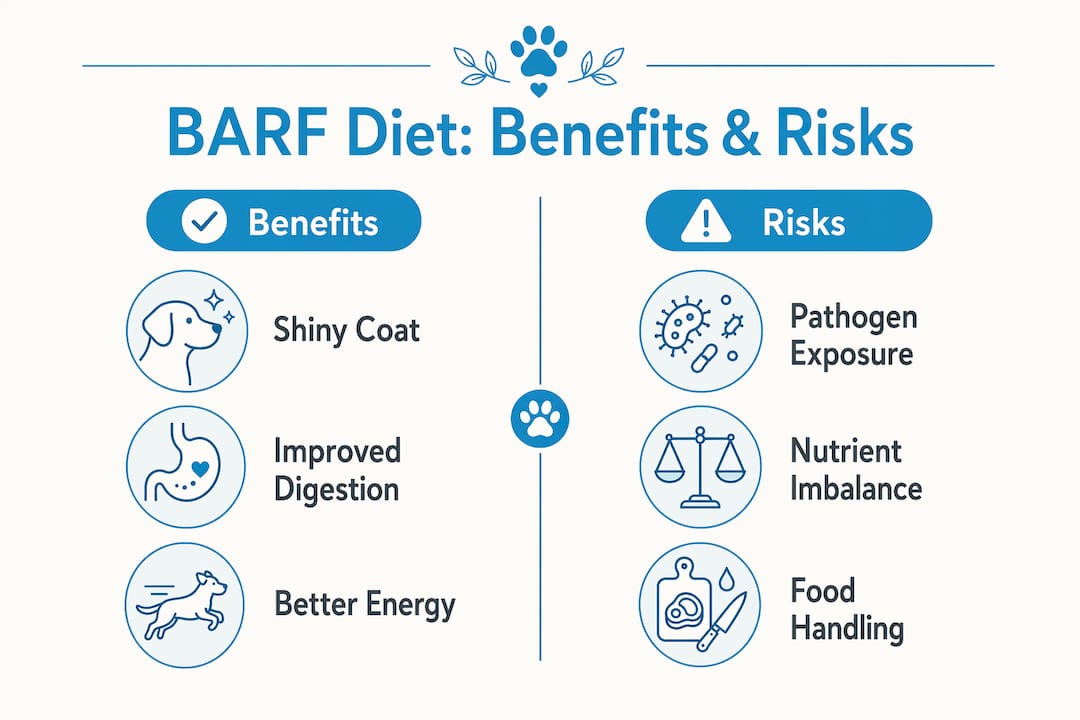
Dog owners who switch to a raw food diet for dogs frequently report improvements in coat shine, reduced stool volume, better breath, and cleaner teeth. Raw bones provide mechanical abrasion that scrapes plaque from tooth surfaces, which no kibble can replicate. Digestive ease is another common observation, particularly in dogs with grain sensitivities.

These reports are largely anecdotal, but they are consistent enough across thousands of owners to take seriously. The high-meat content in BARF aligns with a dog’s carnivore-leaning biology, which may explain improved digestion in dogs that previously struggled with plant-heavy commercial formulas.
Real and documented risks
The risks of raw feeding are not theoretical. A 2014 FDA study found approximately a 33% risk of pathogen exposure in frozen raw meat diets purchased online, with a 10% contamination rate involving drug-resistant bacteria. That contamination rate matters because antibiotic-resistant infections are a serious public health concern.
- Salmonella, Listeria, and E. coli are the three most common pathogens found in raw dog food. Dogs can carry and shed these bacteria without showing symptoms.
- Antibiotic-resistant bacteria appear in roughly 1 in 10 raw commercial products tested, according to FDA data. These strains are harder to treat if they infect a human household member.
- Bone injuries are a real emergency risk. Raw bones can splinter and cause intestinal obstruction or perforation. Emergency vets treat these cases regularly.
- Household transmission is the most overlooked risk. Raw feeding poses direct risks to immunocompromised people, children, elderly adults, and pregnant individuals through contact with a dog’s saliva and feces.
A common misconception is that dogs are immune to foodborne pathogens because of their acidic stomach. Dogs do have a gastric pH of 1–2 and shorter intestines, which help neutralize some bacteria. That physiology reduces risk; it does not eliminate it. Dogs can still become ill and can still transmit pathogens to people.
Pro Tip: Treat raw dog food like raw chicken in your own kitchen. Use separate cutting boards, wash hands thoroughly after handling, and sanitize food bowls after every meal. Freeze meat at 0°F for at least three days before use to reduce, though not eliminate, pathogen load.
How does BARF compare to other raw and commercial diets?
Understanding where BARF sits among feeding options helps you choose the right approach for your situation.
| Diet type | Ingredients | Plant matter | Regulatory oversight | Formulation complexity |
|---|---|---|---|---|
| Home-prepared BARF | Raw meat, bones, organs, vegetables | Yes | None | High |
| Prey Model Raw (PMR) | Raw meat, bones, organs only | No | None | High |
| Commercial raw (RMBD) | Raw meat, bones, organs, supplements | Varies | AAFCO standards apply | Low to medium |
| Home-cooked raw-inspired | Lightly cooked meat, vegetables | Yes | None | High |
| Commercial kibble | Processed meat, grains, supplements | Yes | AAFCO standards apply | None |
Prey Model Raw (PMR) is the strictest version of raw feeding. PMR excludes all plant matter on the grounds that dogs are obligate carnivores in practice, not omnivores. BARF includes vegetables and fruits, which PMR practitioners reject. Neither approach has a clear scientific advantage over the other in peer-reviewed literature.
Commercial raw meat-based diets (RMBDs) are regulated to meet AAFCO nutritional standards, while home-prepared BARF diets carry no such oversight. That regulatory gap is significant. A commercial RMBD from a reputable manufacturer has been tested for nutritional completeness. A home-prepared BARF recipe has not, unless a veterinary nutritionist formulated it.
Freeze-drying does not kill bacteria but preserves them in a dormant state. Bacteria reactivate when the food is rehydrated or ingested. Freeze-dried raw products carry the same pathogen risks as fresh raw, which many owners do not realize when they choose freeze-dried as a “safer” option.
How do you safely implement a BARF diet?
Switching to a raw food diet for dogs requires planning, not just enthusiasm. Follow these steps to reduce risk and improve outcomes.
- Consult a veterinary nutritionist first. Get a formulated recipe before you buy a single ingredient. A recipe built for your dog’s specific weight, age, breed, and health conditions prevents the nutrient imbalances that derail most home BARF attempts.
- Source meat from human-grade suppliers. Buy from butchers or suppliers certified for human consumption. Human-grade meat faces stricter pathogen testing than pet-grade meat. Check for USDA inspection labels.
- Transition gradually over 2–4 weeks. Start with a single protein, such as chicken, and introduce new proteins one at a time. A gradual transition prevents digestive upset and lets you identify any protein sensitivities early.
- Practice strict hygiene protocols. Wash all surfaces, bowls, and utensils with hot soapy water after every meal. Store raw meat frozen and thaw only in the refrigerator, never at room temperature.
- Add supplements as directed. Fish oil, vitamin E, kelp, and a balanced calcium-phosphorus supplement are standard additions for most home BARF recipes. Do not skip supplementation because the base ratio looks complete.
- Monitor your dog’s health monthly. Track coat condition, stool consistency, energy level, and body weight. Schedule a blood panel every six months for the first year to catch nutritional deficiencies before they become clinical problems.
- Rotate proteins regularly. Rotating protein sources across beef, chicken, turkey, pork, and fish prevents single-nutrient overload and broadens the amino acid profile your dog receives.
Pro Tip: For BARF diet for puppies, the stakes are higher. Puppies need precise calcium-to-phosphorus ratios during bone development. An imbalanced puppy diet causes skeletal deformities that cannot be reversed. Always use a veterinary nutritionist-formulated recipe for dogs under 12 months.
Check Wildrootspet’s raw feeding best practices guide for a detailed breakdown of safe preparation and handling techniques.
Key takeaways
The BARF diet delivers real potential benefits for dogs, but only when formulated correctly, sourced from human-grade suppliers, and paired with strict hygiene practices.
| Point | Details |
|---|---|
| BARF definition | Biologically Appropriate Raw Food: raw meat, bones, organs, and vegetables fed in structured ratios. |
| Core ratio | The 80/10/10 rule is a starting point, not a complete formula; supplementation is required. |
| Pathogen risk is real | FDA testing found a 33% pathogen exposure rate in frozen raw diets; hygiene protocols are non-negotiable. |
| Regulatory gap | Home-prepared BARF has no AAFCO oversight; commercial RMBDs do, making them a lower-risk starting point. |
| Transition carefully | Introduce one protein at a time over 2–4 weeks and monitor blood panels every six months in year one. |
My honest take on BARF after years of watching owners try it
I have watched hundreds of dog owners approach BARF with the best intentions and stumble on the same two problems: they underestimate the formulation complexity, and they overestimate their dog’s pathogen resistance.
The internet makes BARF look simple. Buy some chicken, add a chicken neck, throw in some liver, done. That version of BARF is not nutrition. It is a recipe for deficiency. The 80/10/10 ratio is a framework that requires supplementation to become a complete diet, and most owners skip that step entirely.
What I find genuinely encouraging is the growing availability of quality commercial raw blends that take the guesswork out of formulation. These products meet AAFCO standards, use human-grade ingredients, and still deliver the fresh, minimally processed nutrition that makes raw feeding worth considering. They are not a compromise. They are a smarter entry point.
My recommendation: if you want to feed raw, start with a commercial RMBD or a veterinary nutritionist-formulated recipe. Use it for six months. Learn how your dog responds. Then, if you want to transition to home-prepared BARF, you will have a baseline to work from and a vet relationship that supports you. Jumping straight to DIY BARF without that foundation is where most owners run into trouble, and where most dogs pay the price.
— Blayne
Wildrootspet’s raw feeding products for BARF diet owners
Dog owners serious about raw feeding need products that are formulated correctly, not just marketed well.

Wildrootspet carries the Raw PMR Pork Meal Blend and Raw PMR Beef Meal Blend, both built on Prey Model Raw principles with human-grade ingredients. These blends work as a complete raw meal or as a base you can build a BARF recipe around. For owners who want to add palatability and extra nutrition to any meal, the Treat Topper Fish and Treat Topper Beef are low-fat, single-source toppers that complement any raw feeding routine without disrupting nutritional ratios.
FAQ
What does BARF stand for in dog nutrition?
BARF stands for Biologically Appropriate Raw Food, or alternatively Bones and Raw Food. Dr. Ian Billinghurst introduced the term in 1993 to describe a raw feeding approach modeled on ancestral canine diets.
Is the BARF diet safe for dogs?
The BARF diet carries documented risks including Salmonella, Listeria, and E. coli exposure, with FDA testing showing roughly a 33% pathogen exposure rate in frozen raw diets. Safety depends on human-grade sourcing, strict hygiene, and a veterinary nutritionist-formulated recipe.
What do you feed on a BARF diet?
A BARF diet includes raw muscle meat, raw edible bones, organ meats (especially liver), and vegetables or fruits. The standard ratio is 80% muscle meat, 10% bone, and 10% organs, with supplements added for nutritional completeness.
Can puppies eat a BARF diet?
Puppies can eat a BARF diet, but the calcium-to-phosphorus ratio must be precisely calibrated during bone development. An imbalanced puppy BARF recipe causes skeletal problems, so a veterinary nutritionist-formulated recipe is required for dogs under 12 months.
How is BARF different from Prey Model Raw?
BARF includes vegetables, fruits, and supplements alongside raw meat and bones. Prey Model Raw (PMR) excludes all plant matter and focuses strictly on whole-prey animal components. Both approaches require careful formulation to meet complete canine nutritional needs.